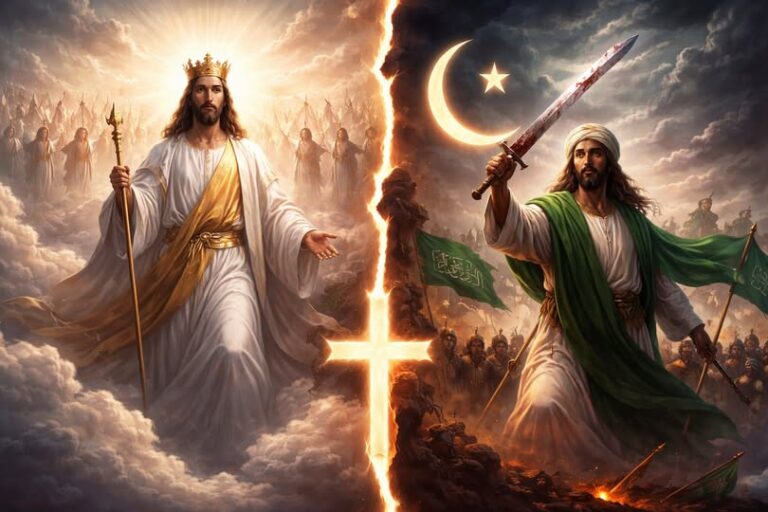
One of the most persistent mistakes in modern prophecy teaching is the claim that the Jews will accept the Antichrist as their Messiah. The Bible does not say that. More than that, the prophetic pattern of Scripture points the other direction. The Antichrist is not presented as a false Jewish messiah rising naturally out of Israel’s covenant hope. He is presented as the final pagan oppressor, the climactic enemy of God’s people, and the ultimate expression of the same beastly rebellion that runs from Babel through the hostile empires of Scripture.
That matters because bad prophecy teaching never stays in the realm of charts and speculation. It changes how people read the Bible. It changes how they think about Israel. It changes how they frame the final conflict. The true Jewish King is Jesus Christ. The final Antichrist is His counterfeit enemy, not the natural outgrowth of Jewish messianic expectation. Once that contrast is kept clear, a great deal of popular prophecy teaching begins to collapse.
The Bible Does Not Say the Jews Will Accept the Antichrist
This has to be said plainly because too much bad theology survives by repetition. The Bible does not say the Jews will accept the Antichrist as their Messiah. There is no verse that teaches it. There is no passage that states it. People arrive at that conclusion by misreading prophecy texts and forcing them into a framework that Scripture itself does not support.
Once that bad assumption is removed, the discussion becomes much clearer. The Antichrist is not presented in Scripture as a specifically Jewish problem. He is a world deceiver. He is a blasphemous ruler. He is tied to false worship, beast power, and global rebellion. The biblical warning is not that the Jews are uniquely vulnerable to him. The biblical warning is that fallen humanity is vulnerable to counterfeit authority when it rejects the truth of God.
John 5:43 Does Not Teach It
John 5:43 is constantly abused in this discussion. Jesus says, “I have come in My Father’s name, and you do not receive Me. If another comes in his own name, him you will receive.” That verse gets dragged into Antichrist discussions as though Jesus were predicting that the Jews would one day receive the Antichrist as Messiah. He was not doing that. He was rebuking unbelief. He was exposing the blindness of those rejecting Him. He was not giving later readers a prophecy formula they could use to build an ethnic theory about support for the final beast.
The point of the verse is that rejecting the true revelation of God leaves people open to false claimants. That principle is universal. It applies to Jews and Gentiles alike. It applies in every age. When men refuse the truth, they become easier prey for lies. Turning John 5:43 into a prophecy formula about the Jews receiving the Antichrist is not exegesis. It is misuse of the text in service of a bad inference.
The Bible’s Pattern Rejects a Jewish Antichrist
The problem is not merely that a Jewish Antichrist is unproven. The problem is that the Bible’s own prophetic pattern points the other way. Scripture does not build toward a final false Jewish messiah arising from Israel’s covenant line. It builds toward a final pagan oppressor arising from the same stream of hostile power that has always set itself against Yahweh and His people. The Antichrist stands in continuity with beast kingdoms, not with the house of David.
That is the pattern in Daniel and Revelation. The beasts are pagan empires. Their rulers are arrogant, blasphemous, violent, and hostile to the covenant people. The final beast does not suddenly break that pattern and emerge as some Jewish redeemer gone bad. He is the culmination of that same line of rebellion. Scripture moves from Babel to beast empires to the final blasphemous ruler. It does not move from Babel to beast empires to a Jewish Antichrist. That theory reverses the pattern the Bible actually gives.
The King of the North Matters
This point should be stated directly because it cuts through a great deal of nonsense. The Antichrist stands in the King of the North pattern. That matters because the King of the North is not a Jewish messiah figure. He is an external oppressor, a hostile ruler coming against the covenant people from outside. Daniel does not build toward a counterfeit son of David rising from within faithful Israel. Daniel builds toward a blasphemous northern enemy.
That means the prophetic trajectory points away from the Jewish messianic line and toward the world of Israel’s historic enemies. The final enemy comes from the same broad stream of pagan opposition that repeatedly attacks the people of God. He is not the flowering of Jewish messianic expectation. He is the latest and worst enemy in the long line of anti-God rulers.
Gog of Magog Confirms the Northern Pattern
The Gog material does not muddy the issue. It confirms it. Gog is not a Jewish covenant king, and he is not a Russian bogeyman imported from modern geopolitics. He is the leader of a hostile northern coalition arising from the same broad world as Israel’s historic pagan enemies. The names associated with Gog belong to the Anatolian and surrounding northern sphere, not to modern Russia. The popular Russia reading is a late and badly forced interpretation driven by Cold War imagination, not by serious exegesis.
That matters because Gog strengthens the same pattern already seen in the King of the North material. The final enemy comes from the world of pagan northern oppression, not from the line of Jewish messianic hope. He is the invader, not the promised son. He is the oppressor, not the rightful king. Gog does not weaken that pattern. He confirms it.
Daniel 9:27 Does Not Require Messianic Acceptance
Another source of confusion is Daniel 9:27. Many assume that if the coming ruler makes a covenant with many, that must mean Israel trusts him as Messiah. But a covenant is not the same thing as messianic coronation. Nations make treaties with powerful neighbors out of fear, necessity, leverage, and political calculation. Israel itself made disastrous alliances in the Old Testament without treating pagan rulers as the promised son of David. Even if Daniel 9:27 involves a pact that touches Israel, that still does not mean the Jews receive the Antichrist as Messiah.
That distinction matters because it keeps the categories clear. A ruler can impose, secure, or manipulate a covenantal arrangement without being viewed as the redeemer of Israel. He can function as an external power using diplomacy, pressure, and false peace as part of his rise. That fits the broader biblical pattern far better than the claim that Israel must mistake a pagan oppressor for the true Messiah.
The Historical Types Are Pagan Oppressors
The clearest historical foreshadowings of the final enemy are not Jewish kings. They are pagan tyrants. Pharaoh is one of the earliest and most obvious. He hardens himself against Yahweh, enslaves the covenant people, and tries to destroy the male seed. He stands as an anti-messianic ruler using pagan state power against God’s redemptive plan. He is not a random villain. He is one of the early biblical templates for a ruler who sets himself against God and His people.
Then there is Antiochus Epiphanes, one of the most important types of the final enemy in the whole prophetic pattern. He is a northern oppressor. He blasphemes, persecutes the faithful, desecrates the sanctuary, and exalts himself arrogantly. He is not a Jewish messiah claimant. He is a pagan king from the north. That is not a side detail. That is the pattern. Pharaoh, Assyria, Babylon, Antiochus, Gog, the beast kingdoms, and the King of the North all point in the same direction. The final enemy arises from the line of pagan imperial rebellion against Yahweh and His people.
The Two Witnesses and the Faithful Remnant Undercut the Misreading
This is another point that should stop the bad argument cold. Revelation does not read like a story in which the Jewish people as a whole rally around the Antichrist as Messiah. Revelation 11 places the ministry of the two witnesses in Jerusalem itself, and the beast kills them to the delight of the wider world. That is not the picture of a welcomed Jewish redeemer. It is the picture of a beast making war on God’s prophetic testimony in the very city people claim would naturally receive him.
The same pattern appears in the sealing of the 144,000. Whatever debates people have about every detail, the larger point is still clear. Revelation envisions a faithful remnant from Israel marked out as belonging to God. That fits the broader biblical pattern of remnant and resistance. It does not fit the lazy claim that Jewish expectation naturally bends toward the beast. The final enemy’s relationship to the faithful in Israel is hostile from the start, which is exactly what we would expect if he stands in continuity with Pharaoh, Antiochus, Gog, and the King of the North.
2 Thessalonians 2 Is About Usurpation, Not a Slogan
Another bad argument says the Antichrist must literally use one exact phrase such as “I am God,” or he does not qualify. But 2 Thessalonians 2 is not about a magic sentence. It is about blasphemous self-exaltation. The man of lawlessness exalts himself above every so-called god or object of worship and takes for himself what belongs to God alone. The issue is not a slogan. The issue is usurpation.
That means the real question is not whether the final deceiver says the one sentence some prophecy teacher is waiting for. The real question is whether he places himself in the role of final human hope, gathers to himself the kind of allegiance and honor that belong only to the Lord and His Christ, and turns what belongs to God into something centered on himself. If he does that, the substance of the warning is already present.
Why the Mahdi Matters
This is why the Mahdi belongs in the discussion. In Islamic eschatology, the Mahdi is not a side figure. He is the expected end-time caliph, Allah’s direct representative on earth, and the ruler to whom the faithful are expected to give fealty. He is not merely admired as a competent leader. He stands in the place of supreme earthly religious and political authority within that system. That means the shallow objection, “Muslims would not worship him,” misses the point from the start.
In strict Islamic language, Muslims would deny worshipping the Mahdi because worship belongs to Allah alone. But that verbal denial does not settle the real issue. The issue is whether the Mahdi can receive the kind of supreme submission, devotion, and messianic loyalty that makes him the final human hope within that system. He can. He is not just obeyed as a ruler among rulers. He is treated as the decisive end-time caliph whose authority carries divine sanction. In practical terms, that goes far beyond ordinary political support.
The Mahdi’s Role Goes Beyond Mere Allegiance
This is where people often undersell the problem. Saying that Muslims merely give the Mahdi allegiance can sound too soft, as though he were just another king receiving normal obedience. But the Mahdi is not presented that way. He functions as Allah’s vicegerent in the last days, the great caliphal leader through whom justice, conquest, order, and victory are expected to come. He occupies the role of final earthly deliverer in Islamic expectation.
That means the comparison does not collapse just because Muslims would avoid the word worship. The question is not whether they would use Christian theological vocabulary. The question is whether the Mahdi receives the kind of total religious-political devotion that places him above ordinary rulers and makes him the object of supreme earthly loyalty. He does. The label is not the decisive issue. The role is.
The Mahdi and the Religious Enforcement of His Rule
Another point that strengthens the comparison is that the Mahdi does not stand alone in Islamic eschatology. He is accompanied by Isa within a framework where the Islamic Jesus confirms the Islamic order rather than standing above it as the crucified and risen Lord of all. That helps explain how the movement can deepen from political loyalty into something far more coercive and spiritually charged. The final system does not need to begin with naked blasphemy on day one. It can arrive clothed in religious legitimacy, signs, confirmation, and public pressure.
That pattern fits the biblical logic of escalation. The final rebellion gathers force through deception, signs, and coercion. In Revelation, the beast is not left without a religious machinery that supports his rise. In 2 Thessalonians 2, the lawless one comes in the working of Satan with power and lying wonders. So the issue is not whether the Mahdi begins by demanding the fullest form of devotion immediately. The issue is whether a religiously charged end-time structure can carry him toward open blasphemy and coercive supremacy. It can.
The Crisis Escalates as the Tribulation Unfolds
Another weak objection says the Mahdi cannot fit because he would not begin by openly demanding worship. But the final rebellion does not have to start at its most exposed point. The crisis escalates. The mask slips. The blasphemy becomes more open as the Tribulation deepens. A counterfeit messiah does not need to arrive announcing the full horror of what he is. He can begin as the great deliverer, the righteous unifier, the answer to chaos, and only later reveal the fuller blasphemous shape of his rule.
That actually fits the biblical pattern better than the simplistic objection does. The final deceiver is dangerous because he first comes as a false savior. By the time the wheels are falling off, many of those under his authority are already trapped inside the system. At that stage, some may indeed turn away from him, and one would hope many do turn to Christ, but the cost of doing so becomes severe. In the framework you are addressing, rejecting the caliph is not treated as a minor disagreement. It becomes the kind of rebellion that can bring death, including beheading. That is not an argument against the comparison. It is exactly the kind of coercive beast-system pressure Revelation prepares believers to recognize.
Satan Is Not Bound by the System He Uses
This point also matters. The objection assumes the final deceiver must remain bound by the rules of the religious system that first made him plausible. But Scripture points the other way. The beast receives his authority from the dragon. The lawless one comes in the working of Satan. That means the final phase of his rule does not have to stay neatly inside the earlier boundaries that made him attractive to his followers.
In other words, Satan is not raising up a false deliverer in order to remain consistent with the rules that introduced him. He is using the system until it has served its purpose, and then the full satanic nature of the rule comes into view. Early on, the figure may appear within forms his followers can accept. Later, when the crisis peaks and the mask comes off, the demand for absolute submission becomes more explicit. The false caliph becomes what the biblical text says the final enemy becomes: openly blasphemous, openly usurping, and openly hostile to all who refuse him.
Christ Is Not the Assistant of Another Redeemer
From a biblical standpoint, this is the heart of the issue. Christ is not the assistant of another redeemer. He is not the support figure for someone else’s kingdom. He is the Son of David, the risen Lord, and the one to whom all authority in heaven and earth belongs. Any end-time system that lowers Jesus and elevates another ruler into the place of final human hope is operating in the spirit of antichrist.
That is why the Mahdi matters in this lesson. He fits the counterfeit pattern because he stands where no man should stand. He gathers to himself the final earthly hope of his followers, receives the fealty of the faithful as Allah’s direct representative, and occupies the place of supreme earthly authority in the last days. Whether Muslims use the word worship is not the decisive test. The decisive issue is whether he occupies a role of counterfeit messianic supremacy. He does.
Why This Misreading Matters
The problem is not that people think they found a verse that literally says, “The Jews will accept the Antichrist.” Usually they are making an inferential claim. They argue that certain passages, taken together, point in that direction. But that inference fails because it runs against the actual prophetic pattern of Scripture. The final enemy is framed as the culmination of pagan beast power, the northern oppressor, the Gog-like invader, and the blasphemous ruler who attacks the people of God. He is not framed as the natural object of Jewish messianic expectation.
That matters because bad inferences still shape how people read prophecy. Once the Jews are treated as the most likely support base for the Antichrist, the discussion drifts toward ethnic suspicion instead of biblical pattern. The focus moves away from beast power, false worship, coercive empire, and pagan oppression, and toward the idea that Jewish expectation itself somehow bends toward the beast. But Scripture points in a different direction. It points to Jesus as the true Jewish Messiah and to the final enemy as His pagan counterfeit.
Conclusion
The Bible does not say the Jews will accept the Antichrist. The Bible’s own pattern rejects the idea. The final enemy comes out of the line of pagan oppressors, not out of the line of covenant hope. He stands in continuity with the beast kingdoms, the King of the North, Gog of Magog, Pharaoh, and Antiochus Epiphanes. He is the northern invader, the blasphemous ruler, the beastly enemy, and the counterfeit king.
The Mahdi belongs in this discussion because the objection against him is often shallow and misleading. The issue is not whether Muslims would use the word worship. The issue is whether the Mahdi can receive the kind of supreme end-time devotion, fealty, and counterfeit messianic loyalty that places him in the role of final earthly deliverer under Allah’s authority. He can. And as the Tribulation intensifies, there is no reason to assume Satan remains bound by the system he first used to make that figure plausible.
Christians need to stop repeating prophecy traditions that run against the grain of Scripture. The true Jewish King is Jesus Christ. The false king is the pagan oppressor who exalts himself against God, gathers the nations into rebellion, and wages war against God’s people. That is the pattern Scripture gives, and that is the truth that should be said plainly.
Discussion Questions
- Why is it important to distinguish between a political covenant in Daniel 9:27 and actual messianic acceptance, and how does that difference weaken the common claim that the Jews must welcome the Antichrist?
- How do the King of the North, Gog of Magog, Pharaoh, and Antiochus Epiphanes work together as a prophetic pattern, and why does that pattern point to a pagan oppressor rather than a Jewish messiah figure?
- In what ways do the ministries of the Two Witnesses and the sealing of the 144,000 challenge the idea that Jewish expectation naturally bends toward the beast?
- Why is the objection “Muslims would not worship the Mahdi” too shallow, and how does the Mahdi’s role as caliph, Allah’s representative, and end-time deliverer make the comparison more serious?
- How does the lesson’s argument about escalation help explain the movement from false peace and religious legitimacy to open blasphemy, coercion, and persecution later in the Tribulation?
Want To Know More
- The Islamic Antichrist – Joel Richardson. This is still the most direct follow-up for the Mahdi portion of the lesson because it argues that Islamic end-times expectations present a counterfeit deliverer who parallels the biblical Antichrist in important ways.
- Antichrist Before the Day of the Lord: What Every Christian Needs to Know about the Return of Christ – Alan E. Kurschner. This is useful for readers who want a focused biblical study on the Antichrist and the order of end-time events without relying on pop prophecy shortcuts.
- The Man of Sin: Uncovering the Truth about the Antichrist – Kim Riddlebarger. This is a strong broader study of the Antichrist theme and helps push the reader back toward actual exegesis instead of sensational speculation.
- The Bible and the Future – Anthony A. Hoekema. This one is broader than the others, but that is why it helps. It gives a more grounded framework for eschatology as a whole, which is useful when dealing with prophecy claims that go beyond what the text supports.
- Antichrist: Two Thousand Years of the Human Fascination with Evil – Bernard McGinn. This adds historical depth by tracing how Christians have understood, developed, and often misused the figure of Antichrist across the centuries.
About the Author