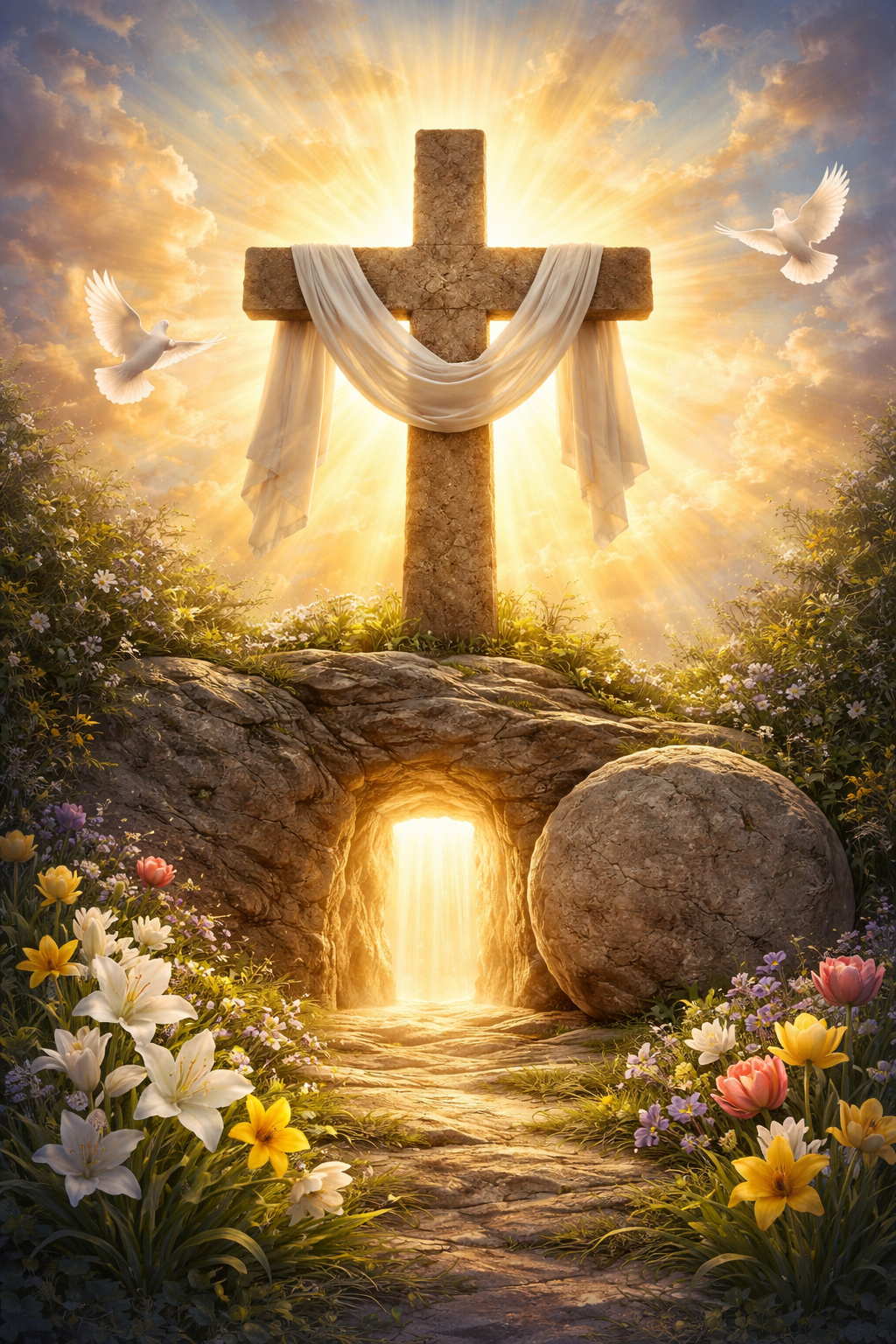
Easter stands at the very center of the Christian faith, not as a later addition or a borrowed cultural practice, but as the annual remembrance of the resurrection of Jesus Christ, the defining event upon which Christianity rises or falls. The New Testament does not present the resurrection as a symbolic idea or a seasonal theme, but as a real historical moment that reshaped the understanding of Scripture, death, and the future of humanity.
From the earliest days of the Church, believers gathered because they were convinced that Christ had risen, and that conviction naturally led to both weekly and annual patterns of remembrance. The claim that Easter is rooted in paganism does not emerge from early Christian history, but from modern misunderstandings that collapse under careful examination of Scripture, language, and historical practice.
The Resurrection and Its Passover Foundation
The timing of the crucifixion and resurrection is not incidental to the meaning of Easter, but essential to it. Jesus was crucified during Passover, a feast that commemorates Israel’s deliverance from Egypt through the blood of a lamb. The New Testament deliberately frames Christ’s death within that context, identifying Him as the fulfillment of what Passover pointed toward. When the early Church spoke of the resurrection, they did not detach it from Passover, but understood it as the completion of the story that Passover had always been telling. This is why the earliest term for Easter was Pascha, a direct continuation of the Hebrew Pesach, preserving both the timing and the theological meaning of the event.
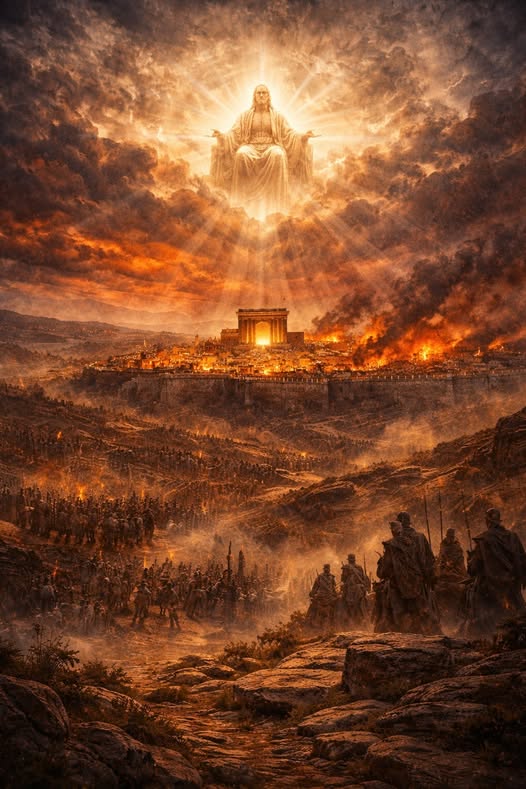
This connection also carries weight within the broader biblical worldview. The resurrection is not only about individual salvation, but about the defeat of death and the overthrow of the rebellious spiritual powers that held the nations in darkness. The story that began with the scattering of the nations and their subjugation under lesser spiritual authorities begins to reverse as Christ rises, having disarmed those powers and begun reclaiming the nations as His inheritance. In that sense, Easter is not merely a commemoration of life after death, but a declaration that the authority structures of a fallen world have been decisively challenged and are moving toward their final judgment.
The Growth of Christian Observance
As the Church grew, the remembrance of the resurrection developed into a structured pattern of worship that reflected the events of the final week of Jesus’s life. This development did not arise from borrowing pagan festivals, but from a desire to more fully enter into the narrative already preserved in Scripture. Good Friday became a time of solemn reflection on the crucifixion, Holy Saturday carried the weight of the tomb, and Easter Sunday became the celebration of the resurrection itself. These were not disconnected traditions, but a unified remembrance of a single sequence of events that defined the Christian message.
One of the most significant practices to emerge was the Easter Vigil, a gathering that began in darkness and moved into light as the resurrection was proclaimed. This was often the moment when new believers were baptized, symbolizing their participation in Christ’s death and resurrection. The structure of the vigil reflects deeply biblical imagery, drawing on themes of creation, deliverance, and new life. Rather than reflecting pagan ritual, it demonstrates how the early Church read the entire biblical narrative through the lens of the resurrection and shaped its worship accordingly.
The Name “Easter” in Its Proper Context
Much of the confusion surrounding Easter comes from the English name itself, which differs from the terminology used in most other languages. Across the Christian world, the celebration is typically called Pascha or some variation of it, maintaining a direct linguistic connection to Passover. This consistency reinforces the historical reality that the celebration is rooted in the events of the crucifixion and resurrection as they occurred during the Passover season.
The English word Easter, along with the German Ostern, has often been linked to a figure named Eostre based on a brief reference from the Venerable Bede. However, this connection rests on a single historical mention without supporting evidence of widespread worship, established rituals, or theological influence on Christianity. Even if a local seasonal term or month name had pre-Christian roots, that does not establish that the Christian celebration itself was derived from pagan worship. Language frequently preserves older terms even as their meanings are reshaped within new contexts, and the use of a particular word does not redefine the substance of what is being celebrated.
The Ishtar Claim and Why It Fails
The claim that Easter is connected to Ishtar is based entirely on a superficial similarity in pronunciation within English, but this resemblance does not reflect any real linguistic or historical connection. Ishtar belongs to the Akkadian language family, while Easter develops from Germanic linguistic roots, and the two are unrelated in both origin and development. When examined within their proper linguistic frameworks, the supposed connection disappears completely.
Beyond language, there is no historical evidence that early Christians associated the resurrection with Ishtar or incorporated any elements of her worship into their practices. The early Church operated within a Jewish framework, was often in direct opposition to surrounding pagan systems, and consistently defined its identity through the life, death, and resurrection of Christ. The idea that it secretly adopted or blended with Mesopotamian goddess worship is not supported by any primary sources and reflects a modern myth rather than a historical reality.
Why These Misconceptions Continue
These claims persist because they fit into a broader narrative that attempts to portray Christianity as a composite of borrowed religious ideas rather than a coherent continuation and fulfillment of the biblical story. That narrative gains traction because it simplifies complex historical developments into easily repeatable claims, even when those claims lack evidence. In reality, Christianity emerged from a Jewish context, was shaped by the Hebrew Scriptures, and spread through communities that were often persecuted precisely because they refused to participate in pagan religious systems.
The early Christians did not construct their central celebration by drawing from surrounding cultures, but by reflecting on what they believed God had done in history through Jesus. Their worship practices, their calendar, and their theology all developed from that conviction, not from an attempt to merge with external traditions. Understanding this historical context helps clarify why the supposed pagan origins of Easter do not align with the actual evidence.
Conclusion
Easter is firmly rooted in the historical and theological framework of the New Testament, grounded in the events of the crucifixion and resurrection and deeply connected to the Passover narrative that precedes it. The use of the word Easter in English does not redefine the nature of the celebration, and attempts to link it to figures like Ishtar rely on linguistic misunderstandings rather than historical evidence. When examined carefully, the origins and development of Easter consistently point back to the central claim of Christianity that Jesus Christ rose from the dead, and that this event marks the turning point of both human history and the spiritual order described throughout Scripture.
Discussion Questions
- How does understanding the connection between Passover and the resurrection deepen the meaning of Easter beyond a simple annual celebration?
- Why is it important to distinguish between linguistic developments, like the word “Easter,” and the actual theological content of the holiday?
- What role does the resurrection play in the broader biblical story, especially in relation to the defeat of death and the authority of rebellious spiritual powers?
- Why do you think claims about pagan origins of Christian holidays, like Easter, continue to spread despite weak historical evidence?
- How should Christians respond when confronted with claims that Easter is connected to Ishtar or other pagan traditions, both in terms of accuracy and tone?
Want to Know More?
- Paul F. Bradshaw and Lawrence A. Hoffman, eds. – Passover and Easter: Origin and History to Modern Times
This is one of the strongest resources for tracing the historical relationship between Passover and Easter, showing how the Christian celebration grows directly out of its biblical and early liturgical setting rather than from pagan religion. It is especially helpful for understanding how Pascha developed within both Jewish and Christian contexts. - Andrew McGowan – Ancient Christian Worship: Early Church Practices in Social, Historical, and Theological Perspective
McGowan provides a clear picture of how early Christian worship was structured around practices like baptism, Eucharist, and the celebration of Easter. This work reinforces that Easter belongs within the framework of early Christian theology and communal life, not as a later cultural borrowing. - Paul F. Bradshaw and Maxwell E. Johnson – The Origins of Feasts, Fasts, and Seasons in Early Christianity
This book carefully traces the development of the Christian calendar, including Holy Week and Easter. It demonstrates that these observances emerged from biblical reflection and church practice, not from pagan fertility traditions or seasonal rituals. - Alden A. Mosshammer – The Easter Computus and the Origins of the Christian Era
Mosshammer’s work is more technical, but it is invaluable for understanding how seriously the early Church treated the dating of Easter. It highlights the central role of Pascha in shaping Christian identity, chronology, and theological reflection. - Ronald Hutton – The Stations of the Sun: A History of the Ritual Year in Britain
Hutton’s research is particularly useful for addressing modern claims about Easter’s supposed pagan origins. His analysis provides a grounded historical perspective that helps dismantle popular myths, especially those attempting to connect Easter to Ishtar or to overstate the evidence for Eostre.
About the Author