Psalm 82 is one of the clearest and most important passages in Scripture for understanding the Divine Council Worldview. It is not a side issue, and it is not a strange relic from an outdated supernatural framework. It is one of the places where the Bible openly shows that the story of redemption is larger than human sin alone. Scripture presents not only the rebellion of man, but also the corruption of the nations by rebellious spiritual powers, and Psalm 82 stands right in the middle of that story. It opens with God judging the rulers of the unseen realm, and it ends by looking forward to the moment when God will arise and inherit the nations for Himself.
That final request is the key to the whole psalm. Psalm 82 is not content simply to condemn the corrupt powers. It looks beyond their judgment to the restoration of rightful rule. The nations had been under lesser rulers who became corrupt. The psalm, therefore, asks when God Himself will rise, judge the earth, and take direct possession of the nations. Once that point is seen clearly, the connection to Christ becomes unavoidable. The resurrection is the rise of the true King, and the ascension is the enthronement of that risen King above the powers who had misruled the nations. Psalm 82 is therefore not just a psalm of judgment. It is a psalm that points forward to Easter and Ascension.
The Divine Council in Psalm 82
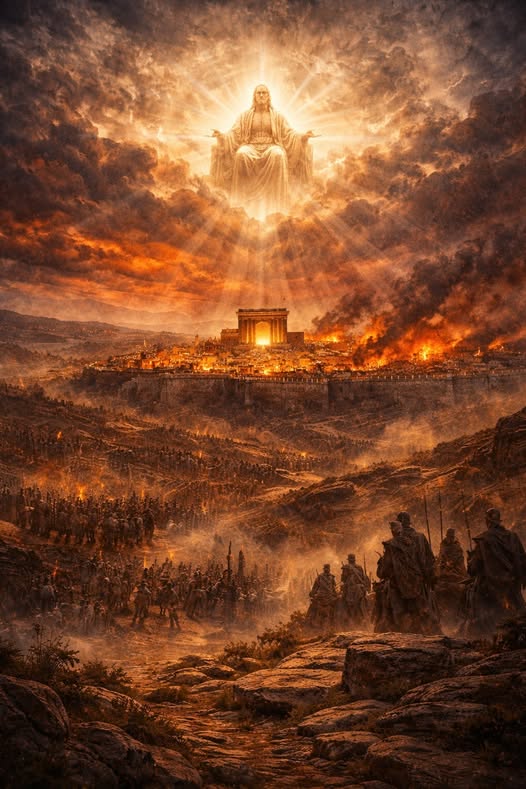
The opening verse places us immediately in the unseen realm: “God has taken His place in the divine council, in the midst of the gods He holds judgment.” The scene is judicial. Yahweh is standing in the assembly of other elohim and bringing charges against them. The word elohim here should not be flattened into a mere metaphor for human judges. Scripture uses the term more broadly for inhabitants of the spiritual world. Yahweh alone is uncreated, incomparable, and sovereign, but He is not the only being the biblical writers describe with this language. Psalm 82 presents Him judging other spiritual beings who had real authority but abused it.
That matters because the accusations in the psalm fit the broader biblical story of the nations. These rulers are condemned for judging unjustly, showing partiality to the wicked, and failing to defend the weak and needy. This is not simply a local problem in Israel’s court system. It is the moral collapse of the powers connected to the nations themselves. The background here is Deuteronomy 32:8–9, where the nations are divided according to the sons of God, while Yahweh takes Israel as His own inheritance. After Babel, the nations are handed over under judgment, but that arrangement was never meant to result in permanent corruption.
These rulers were supposed to operate under God’s authority. Instead, they led the nations deeper into idolatry, injustice, and oppression.
Once that framework is in place, Psalm 82 becomes much sharper. The world’s corruption is not explained only by human sin in isolation. Scripture also describes the nations as being spiritually misruled. The injustice of the world is therefore both earthly and heavenly. Human beings are responsible for their rebellion, but the Bible also says there are powers behind the darkness, and Psalm 82 brings those powers into the dock.
Why This Cannot Be About Human Judges Alone
Attempts to reduce Psalm 82 to a statement about human rulers fail to do justice to the text. The setting is the divine council, not an earthly courtroom. The beings addressed are called “gods” and “sons of the Most High,” language that fits the heavenly host far better than Israelite magistrates. The wider canonical context also points in this direction. Job speaks of the sons of God presenting themselves before Yahweh. Deuteronomy 32 speaks of the nations being divided in relation to heavenly beings. Daniel speaks of princes associated with Persia and Greece. The biblical writers repeatedly show that the history of nations has an unseen dimension.
The sentence in verse 7 especially resists the human-judge reading: “Nevertheless, like men you shall die, and fall like any prince.” If these were merely mortal rulers, the statement would lose most of its force. Human beings die. That is not surprising. The shock of the verse is that these beings hold exalted status, yet even they will be brought down. Their authority will not shield them from judgment. That is why the line bites so hard. It is not stating the obvious. It is pronouncing doom on those who imagined themselves secure.
This matters for the rest of the lesson because Psalm 82 is not simply criticizing bad leadership in the abstract. It is announcing the judgment of the powers behind the nations. Once that is seen, the final verse becomes much more than a pious closing prayer. It becomes a cry for cosmic transfer of authority.
The Judgment of the Gods and the Need for a New Ruler
The structure of Psalm 82 moves from accusation to sentence and then from sentence to longing. The gods are condemned for their corruption. Their downfall is declared. Yet the psalm does not end by describing the execution of the sentence in detail. Instead, it turns outward and forward: “Arise, O God, judge the earth, for You shall inherit all the nations.” That line gathers up the entire problem and points to the only true solution. The nations cannot simply remain under the administration of corrupt spiritual powers. Their rulers must be judged, and God Himself must rise to take possession of them.
This is where the resurrection theme begins to come into view. The language of God “arising” in Scripture is often associated with decisive intervention, judgment, vindication, and the manifestation of His kingship. In Psalm 82, that arising is linked directly to inheriting the nations. The problem is not merely that the gods deserve punishment. The problem is that the nations belong to Yahweh and must be reclaimed from corrupt administration. The psalm, therefore, does not merely ask for vengeance. It asks for the restoration of rule.
That is why Psalm 82 fits so naturally with the larger biblical story. The nations had been scattered at Babel. Israel was set apart as Yahweh’s portion. Through Abraham, however, all nations were meant to be blessed. That means the handing over of the nations in Deuteronomy 32 was never the end of the story. Psalm 82 looks ahead to the day when the God who judged the powers will also reclaim the peoples they had corrupted. It is waiting for the moment when rightful rule returns.
Christ’s Use of Psalm 82 in John 10
When Jesus quotes Psalm 82 in John 10, He is not simply reaching for a clever prooftext. He is speaking within this whole theological framework. His opponents accuse Him of blasphemy because He says, “I and the Father are one.” In response, He cites Psalm 82: “Is it not written in your Law, ‘I said, you are gods’?” Many people stop at the surface of the argument and treat it as though Jesus were lowering the stakes. He is doing the opposite. He is arguing from lesser to greater. If Scripture can use this language for beings who received divine commission, then His own claim, as the one sanctified and sent by the Father, is even more justified.
That means Jesus is not identifying Himself as one more member of the council. He is distinguishing Himself from them. They are recipients of delegated authority and objects of judgment. He is the unique Son, sent by the Father, doing the works of the Father, and standing above the whole council structure. His appeal to Psalm 82 therefore does not dilute His claim. It intensifies it. The very psalm that announces judgment on corrupt rulers becomes part of His self-revelation as the one through whom God’s rule is now arriving.
That connection becomes even more significant when the rest of the New Testament is taken into account. If Psalm 82 ends by asking God to arise and inherit the nations, then Christ’s own ministry places Him at the center of that expectation. He is not merely teaching about the kingdom. He is the king through whom the transfer of authority will take place.
“Arise, O God” and the Resurrection of Christ
One of the most important points for this lesson is that Psalm 82 does not merely close with a vague call for divine action. It ends with resurrection-charged language. “Arise, O God, judge the earth, for You shall inherit all the nations” points to the decisive moment when God rises to reclaim what belongs to Him. The verb itself does not always mean resurrection in every passage where it appears, but in the larger biblical pattern, it often carries the sense of decisive divine rising in judgment, vindication, and kingship. In the context of Psalm 82, that rising is tied directly to the downfall of the corrupt powers and the inheritance of the nations.
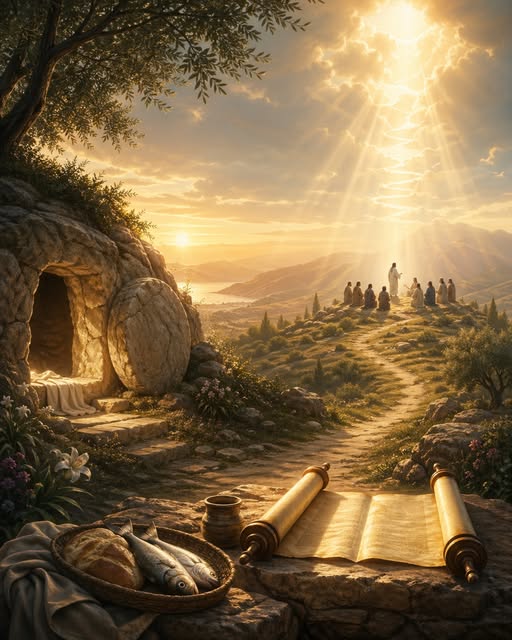
Read in light of Christ, that line lands with enormous force. The resurrection is the moment when the true King rises. The rulers of this age, both earthly and spiritual, conspired against Him and exercised what they imagined was final authority. They condemned Him, mocked Him, crucified Him, and sealed His tomb. Yet the resurrection overturned all of it. The one they tried to silence rose in vindication. The one they handed over to death emerged as the living ruler. The one they treated as defeated stood revealed as the true heir of the nations.
This is why the resurrection cannot be reduced to a private proof of personal immortality. It is much more than that. It is the beginning of the judgment of the powers. Psalm 82 had already declared that the gods would fall, but the resurrection is where that sentence begins to move into history in a decisive way. The corrupt rulers are exposed as unable to hold ultimate authority because they cannot even hold the Son of God in the grave. The true King rises, and by rising, He reveals that the authority of the false rulers is already breaking apart.
The Cross, the Powers, and Their Public Defeat
The New Testament repeatedly presents the death and resurrection of Christ as the turning point in the defeat of hostile powers. Colossians 2:15 states that Christ disarmed the rulers and authorities and put them to open shame, triumphing over them. That language fits perfectly with the world of Psalm 82. The powers that had ruled unjustly are not merely criticized. They are disarmed, exposed, and placed under judgment through the work of Christ.
This does not mean that the powers disappeared immediately at the resurrection. The New Testament clearly teaches ongoing spiritual conflict. But it does mean that their claim to legitimate rule has been shattered. They were already under sentence in Psalm 82. At the cross and resurrection, that sentence begins to be enforced. The powers used human rulers, imperial violence, false accusation, and death itself as instruments of control, yet in doing so, they became agents of their own undoing. What looked like their victory became the means of their humiliation.
That is why Easter is not simply a happy ending after Good Friday. It is the public declaration that the dominion of the corrupt rulers is collapsing. The resurrection is the moment the true King rises into vindicated life, and in that rising, the old administration is marked for ruin. The gods have been judged, and now the one who will inherit the nations has stood up from the grave.
The Ascension as the Transfer of Authority
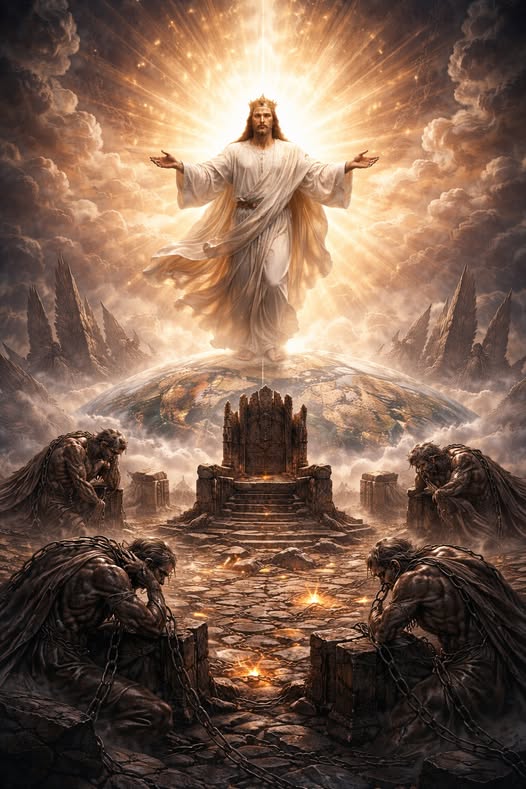
If the resurrection is the rise of the true King, the ascension is the enthronement of that risen King. This is the second major point that must be central to the lesson. The ascension is not Christ merely going away. It is Christ taking His seat at the right hand of the Father and assuming the authority that the corrupt powers had forfeited. What Psalm 82 anticipated, the ascension makes explicit.
Jesus declares in Matthew 28:18 that all authority in heaven and on earth has been given to Him. That statement is not generic. In the context of the Divine Council Worldview, it means the authority once administered through lesser rulers over the nations has now been decisively centralized in Christ. The gods of Psalm 82 have been judged. Their claim has been broken. The nations belong to the risen Son.
Paul says the same thing in Ephesians 1, where Christ is seated at the right hand of God far above all rule and authority and power and dominion. Those categories are not empty abstractions. They refer to the spiritual powers that once held sway over the nations. The ascension means that Christ is now enthroned above them all. Their authority has not merely been challenged. It has been stripped and subordinated. They may still resist. They may still deceive. They may still rage. But they no longer hold rightful dominion.
This is why the ascension is so crucial for reading Psalm 82. The psalm ends by asking God to arise and inherit the nations. The resurrection answers the call to arise. The ascension answers the question of how that inheritance is exercised. The risen Christ takes the throne, and the authority of the powers is returned to its rightful center in Him.
The Great Commission and the Reclaiming of the Nations
Once Christ’s ascension is understood this way, the Great Commission reads very differently. Jesus does not simply tell His followers to travel widely and gather converts in a vague missionary effort. He grounds the command in His enthronement: “All authority in heaven and on earth has been given to Me. Go therefore and make disciples of all nations.” The mission flows directly out of the transfer of authority.
Under the framework of Psalm 82, that makes perfect sense. The nations once stood under corrupt administration. Their rulers have now been judged, and Christ has been enthroned as the rightful heir. The gospel, therefore, goes into the nations not as a private spirituality but as the royal summons of the true King. Every nation reached by the gospel is evidence that the inheritance has begun. Every conversion is a transfer from the dominion of darkness into the kingdom of Christ. Every church is a sign that the old rulers no longer possess a rightful claim.
This is one reason the book of Acts matters so much. The gospel moves from Jerusalem outward into the world because the nations are being reclaimed. Pentecost itself gives a first sign of Babel beginning to be reversed. The nations hear the mighty works of God proclaimed in their own tongues. The inheritance is underway. Psalm 82 had cried out for God to arise and inherit the nations. The resurrected and ascended Christ begins fulfilling that cry through the spread of the gospel.
The Already and the Not Yet of the Powers’ Defeat
At this point, it is important to keep the New Testament tension intact. The powers have been judged, publicly shamed, and stripped of rightful authority, but they have not yet been finally removed. This is why believers still wrestle against rulers, authorities, and powers of this present darkness. The New Testament never presents the church as living in a neutral world. It presents believers as living in the overlap of the ages, where Christ is already enthroned and the enemy is already defeated, yet the final removal of the powers still lies ahead.
That tension actually confirms the reading rather than weakening it. Psalm 82 does not describe the full outworking of the sentence. It declares the verdict and points ahead to God’s arising. The resurrection and ascension begin the enforcement of that judgment, but the final consummation awaits the return of Christ. The powers are therefore like a condemned regime still lashing out while its downfall is certain. They remain dangerous, but they are no longer ultimate.
For the church, this means spiritual warfare is real, but it is not a struggle of uncertainty. Christians do not fight in order to discover who will win. They fight from the position of Christ’s accomplished victory. The King has risen. The King has ascended. The King rules now above the condemned powers, and their final removal is only a matter of time.
Conclusion
Psalm 82 is one of the great judgment texts of the Bible, but it is also one of its great hope texts. It reveals the corruption of the gods, pronounces their sentence, and then looks ahead to the moment when God Himself will rise and inherit the nations. That longing is answered in Christ.
In the resurrection, the true King rises, and the judgment of the corrupt powers begins to break into history. In the ascension, that risen King takes His seat above all rule, authority, power, and dominion, stripping the powers of their rightful claim and centralizing authority in Himself. The nations are no longer under the rightful dominion of the gods of Psalm 82. They belong to Christ, the risen and ascended Son.
This is why Psalm 82 belongs in a full Easter and Ascension theology. The resurrection is not only about life after death. It is the rise of the true King over against the condemned powers. The ascension is not merely about Christ’s departure. It is His enthronement and the transfer of authority back to its rightful center. The gods have been judged. Christ has risen. Christ has ascended. The nations are His inheritance, and the gospel is the announcement that their rightful King now reigns.
Discussing Questions
- How does reading Psalm 82 as a judgment on spiritual rulers instead of human judges change the way you understand the problem of evil and corruption in the nations?
- In what ways does the phrase “Arise, O God” in Psalm 82 take on deeper meaning when connected to the resurrection of Christ?
- How does viewing the ascension as a transfer and centralization of authority in Christ reshape how you read passages like Matthew 28:18 and Ephesians 1:20–22?
- If the nations were once under corrupt spiritual rulers, what does it mean practically that the gospel is now reclaiming those nations under Christ’s authority?
- How does the “already and not yet” reality of the powers being judged but not yet removed affect how Christians should think about spiritual warfare and the mission of the church?
Want to Know More?
- Michael S. Heiser – The Unseen Realm: Recovering the Supernatural Worldview of the Bible
The foundational modern work on the Divine Council Worldview, with detailed treatment of Psalm 82, Deuteronomy 32, and how these texts connect to the New Testament’s teaching on powers and authorities. - Clinton E. Arnold – Powers of Darkness: Principalities and Powers in Paul’s Letters
A focused study on how Paul understands spiritual powers and how Christ’s death, resurrection, and ascension result in their defeat and loss of authority, directly supporting the framework used in this lesson. - N. T. Wright – The Resurrection of the Son of God
A comprehensive historical and theological study showing that the resurrection is not just about life after death but about the inauguration of God’s rule, which aligns with the “Arise, O God” fulfillment theme in Psalm 82. - G. K. Beale – A New Testament Biblical Theology: The Unfolding of the Old Testament in the New
Explores how Old Testament themes develop into their fulfillment in Christ, including kingship, inheritance of the nations, and the defeat of hostile powers. - John H. Walton – The Lost World of the Old Testament: Ancient Cosmology and the Origins Debate
Provides essential Ancient Near Eastern context that helps modern readers understand how biblical authors thought about the structure of the cosmos, divine beings, and sacred space, which clarifies passages like Psalm 82.
About the Author