Joseph of Arimathea often appears in Christian memory as a minor figure, but the Gospels do not treat him that way. He enters the story at one of its most important moments, just after the crucifixion of Christ, and what he does matters enormously. Without Joseph, the burial of Jesus would have looked very different. His actions help confirm that Jesus truly died, that He was truly buried, and that His body was placed in a known tomb. That means Joseph is not a background detail. He is one of the men God used to anchor the historical reality of the death and burial of Jesus.
This matters because the Gospel is not built on vague spiritual ideas. It is built on real events in space and time. Jesus was not said to have merely “passed on” or “left the physical realm.” He was crucified under public authority. His death was confirmed, and His body was placed in a real tomb by identifiable people. Joseph stands right at the center of that chain of evidence. The fact that all four Gospels mention him should immediately get our attention. Men who appear in all four Gospels are not there by accident.
Who Joseph of Arimathea Was
The Gospels present Joseph as a wealthy man, a respected member of the council, and one who was looking for the kingdom of God. That combination is important. He was not a fringe figure. He had status, influence, and reputation. Matthew tells us he was rich. Mark describes him as a respected member of the council. Luke says he was a good and righteous man who had not consented to the council’s decision and action. John adds that he was a disciple of Jesus, though secretly, for fear of the Jews. Put together, those details give us a fuller picture of the man.
Joseph lived in a world where allegiance to Jesus could cost you dearly. This was not a season of public excitement around Christ. This was the hour of shame, apparent defeat, and danger. Jesus had just been condemned and crucified as a criminal. The disciples had scattered. Fear was everywhere. At that exact moment, Joseph stepped forward. That alone tells us something about his character. He may have been quiet before, but when the cost became real, he acted.
There is something deeply human in that. Joseph was not introduced as the loudest voice, the boldest preacher, or the most visible disciple. He seems to have been cautious, perhaps even hesitant. Yet when the moment of decision came, he did not remain hidden. Scripture often reminds us that courage is not the absence of fear. Courage is doing what is right when fear is present. Joseph embodies that truth.
The Courage of Going to Pilate
One of the most striking details in the burial narrative is that Joseph personally went to Pilate and asked for the body of Jesus. That was no small act. Crucifixion was a Roman punishment designed not only to kill but to humiliate. The bodies of the executed were often treated with contempt. To identify yourself with a crucified man was risky. To go directly to the Roman governor and request His body was an act of public association.
Mark’s Gospel especially highlights Joseph’s boldness here. This is remarkable because the man John says had once been a secret disciple becomes, in this moment, publicly linked to Jesus. He is willing to be known as someone who cared for the body of the crucified Christ. At the very point when it seemed safest to distance himself, Joseph moved closer.
This is one of the lesson’s great spiritual themes. There are moments when following Christ is easy because the crowd approves. There are other moments when the crowd mocks, threatens, or withdraws. Joseph shows us the kind of loyalty that appears when there is no earthly advantage to be gained. He honored Jesus when Jesus looked defeated. He honored Jesus when the kingdom did not look triumphant. He honored Jesus when all visible signs suggested loss rather than victory. That kind of loyalty is precious.
Why the Burial Matters So Much
Modern readers sometimes rush past the burial because they want to get to the resurrection, but the burial is part of the Gospel itself. Paul says in 1 Corinthians 15 that Christ died for our sins according to the Scriptures, that He was buried, and that He was raised on the third day according to the Scriptures. The burial is not filler between the cross and the resurrection. It is part of the proclamation.
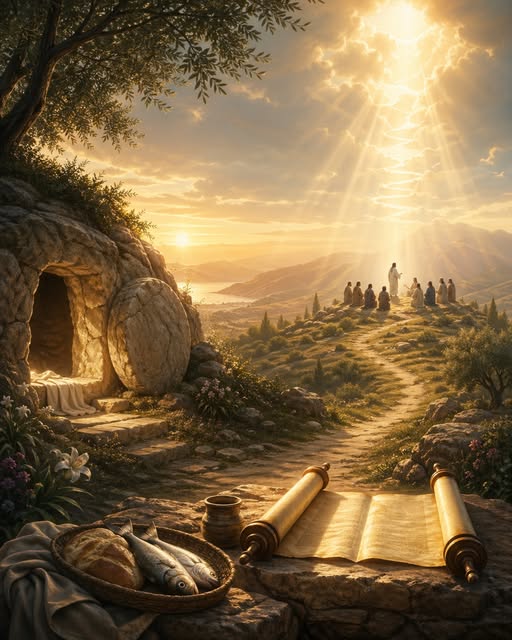
Joseph of Arimathea helps establish several crucial truths. First, Jesus really died. Joseph did not take down a barely conscious man who later revived. He received the body of one whom Pilate had already verified to be dead. Second, Jesus was buried in a specific location. This was not an unknown grave or a mass burial site that could later be confused. Third, the tomb belonged to Joseph himself and was newly cut in stone. That means Joseph would have known exactly where the body was placed. Fourth, the burial was witnessed. The women saw where Jesus was laid. The tomb was known. The location was public. That matters because the resurrection claim did not arise in a vacuum. It arose in the context of a known burial place.
All of this cuts against theories that try to reduce the resurrection to legend, confusion, or wishful thinking. Joseph’s role makes the story more concrete, not less. The Gospel writers are tying the death and resurrection of Jesus to named individuals, public acts, and known places. That is not how myths usually work. Myths prefer distance and fog. The Gospels repeatedly give us texture, names, geography, and verifiable sequence.
Joseph’s Tomb and the Honor Given to Christ
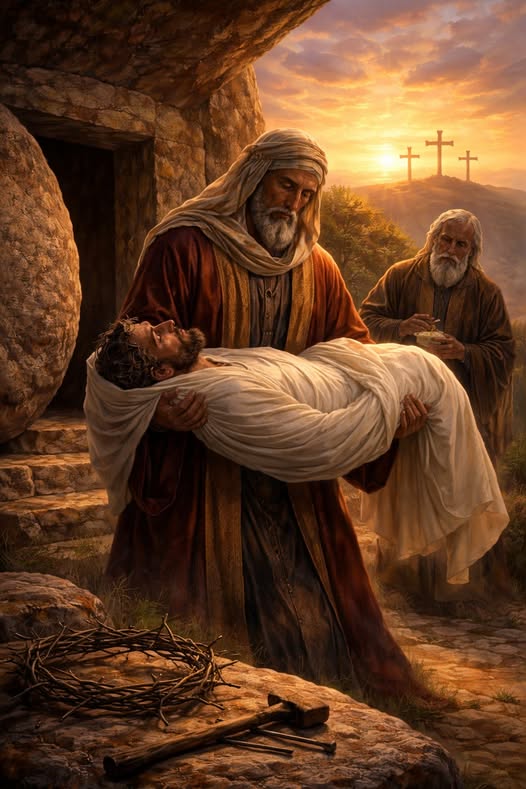
Joseph placed Jesus in his own new tomb. That detail is rich with meaning. On one level, it shows honor. Jesus was not dumped into disgrace. He was wrapped in linen and placed in a tomb that had not previously been used. On another level, it fulfills prophecy, especially Isaiah 53:9, which says that the suffering servant was assigned a grave with the wicked and with a rich man in His death. Jesus was executed like a criminal, yet buried in the tomb of a rich man. Joseph becomes one of the means by which Scripture is fulfilled.
That should remind us that God’s providence is at work even in the darkest scenes. The enemies of Christ were not in control in any ultimate sense. They condemned Him, mocked Him, and crucified Him, but they did not write the final meaning of what happened. Even in death, the Father was fulfilling His word. Joseph may simply have been doing what righteousness required, but he was also participating in a plan written long before.
There is also a tenderness here that should not be missed. The crucifixion is brutal, public, and humiliating. Then Joseph enters and performs an act of reverence. He handles the body of Jesus with care. In a scene full of cruelty, Joseph gives honor. In a moment shaped by violence, he gives dignity. The contrast is powerful. Faithfulness sometimes looks like open proclamation, but sometimes it looks like quiet devotion that refuses to let the Son of God be treated as refuse.
A Secret Disciple No Longer
John’s Gospel tells us that Joseph had been a disciple secretly because of fear. That detail is important because it keeps us from turning Joseph into a flat character. He was not fearless from the beginning. He had struggled. He had remained hidden. Yet that is not where his story ends. When the crisis came, his hidden allegiance became visible.
That is encouraging because many believers know what it is like to wrestle with fear. They know what it is like to hesitate, to stay too quiet, or to wish they had spoken earlier. Joseph’s story shows that failure to be bold at one moment does not mean one is forever disqualified from faithfulness. What matters is what one does when the moment of obedience arrives. Joseph finally stepped into the light, and Scripture remembers him for it.
There is a warning here as well. Fear can keep disciples silent longer than it should. Social standing, reputation, and the approval of important people can become chains. Joseph likely had much to lose. Yet in the end, he discovered something every faithful believer must learn. Christ is worth more than status. Christ is worth more than safety. Christ is worth more than the comfort of staying hidden.
Joseph and Nicodemus
John also tells us that Joseph was joined by Nicodemus, who brought a mixture of myrrh and aloes for the burial. That pairing is beautiful because both men had once seemed cautious in their relationship to Jesus. Nicodemus had first come to Jesus by night. Joseph had been a secret disciple. Yet here, at the burial, both men come into the open.
There is something deeply fitting about that. Men who once moved carefully now act decisively. Men who once approached in partial concealment now give public honor to Christ. Their actions testify that even when the apostles were scattered and afraid, God still had witnesses ready. He still had men positioned within places of power and influence. He still had servants who would act when the appointed hour came.
This also reminds us that the kingdom often advances through people we may underestimate. The most obvious disciples were in hiding, but the Father raised up unexpected faithfulness from men inside the establishment. God is never limited to the people we assume He must use. He has His servants in every sphere, and He knows when to bring them forward.
Joseph’s Role in Apologetics and Gospel Confidence
Joseph of Arimathea is important not only devotionally but apologetically. His presence in the burial narratives strengthens the historical credibility of the account. He was a member of the council, the very body involved in Jesus’s condemnation. If the burial story were invented later, choosing a known council member as the one who honored Jesus would be a strange and risky detail. It ties the claim to a figure who would have been difficult to invent without challenge.
His role also undercuts the idea that the burial traditions were late embellishments. The burial account includes the kind of concrete details that invite memory rather than fantasy. A named man asks Pilate for the body. The body is wrapped. The tomb is identified. The women observe the burial place. A stone is rolled against the entrance. These are not airy theological abstractions. They are embodied claims.
Joseph, therefore, stands as one of the quiet guardians of the Gospel story. He did not preach a sermon in the text. He did not write an epistle. He did not perform a miracle. Yet by obeying in a critical moment, he became one of the men through whom God preserved the shape of the Gospel witness. There is comfort in that. Faithfulness does not always look spectacular. Sometimes it looks like doing the right thing at the right moment and trusting God with the consequences.
What Joseph of Arimathea Teaches the Church
Joseph teaches the church that faithfulness must not depend on appearances. He honored Jesus when Jesus looked defeated. He acted when others hesitated. He used his position, wealth, and access not to protect himself but to serve Christ. That is a needed lesson in every age. It is easy to speak of loyalty to Jesus when such loyalty carries little cost. It is harder when obedience may damage reputation, relationships, or standing. Joseph’s example presses the question home. Will we honor Christ only when the crowd is friendly, or will we honor Him when doing so becomes costly?
He also teaches that God uses different kinds of servants. Not every faithful person is a Peter standing up to preach publicly at Pentecost. Some are Joseph of Arimathea, men or women positioned quietly in places of influence, waiting for the moment when obedience must become visible. The church needs both kinds. The body of Christ is filled with different callings, different temperaments, and different moments of assignment. What matters is not whether one’s role looks dramatic, but whether one is faithful when called.
Joseph also reminds us that reverence for Christ is not sentimental. It is active. He did not merely feel sorrow about Jesus. He did something. He risked something. He gave something. He stepped forward in a way that could not be mistaken. Real devotion is not measured only by inward affection but by outward allegiance.
Conclusion
Joseph of Arimathea is one of those figures who can seem small until we realize how much depends on him. He stands at the meeting point of prophecy, history, courage, and devotion. He helps confirm the real death and real burial of Jesus. He fulfills Scripture by placing Christ in the tomb of a rich man. He models costly loyalty by identifying with Jesus when that identification carried danger rather than reward. He shows us what it means to honor Christ when others have gone quiet.
His story also offers hope. A man who had once followed in secret became a man who acted in public. A man with much to lose chose faithfulness over safety. A man who might have remained a footnote became part of the Gospel witness in all four Gospels. Joseph reminds us that quiet people can still be courageous, that delayed courage can still become real courage, and that God delights to use ordinary acts of faithfulness in extraordinary moments.
When the hour came to honor the body of the crucified Christ, Joseph did not disappear into the crowd. He stepped forward. That is why the church still remembers him. And that is why his example still speaks.
Discussion Questions
- Joseph of Arimathea had been a secret disciple before the crucifixion. What changed in that moment, and what does that teach us about when and how faith should become visible?
- Why is the burial of Jesus such an important part of the Gospel message, and how does Joseph’s role strengthen the historical reliability of the resurrection account?
- Joseph risked his reputation and position by going to Pilate and asking for Jesus’s body. What are some modern situations where honoring Christ might carry a similar social or personal cost?
- Joseph used his wealth and influence to serve Christ by providing a tomb. How can believers today use their own resources, position, or opportunities in a way that reflects that same kind of devotion?
- Both Joseph and Nicodemus moved from cautious or hidden belief to public action. What does their example reveal about spiritual growth, and how should it challenge believers who struggle with fear or hesitation?
Want to Know More
- N.T. Wright – The Resurrection of the Son of God
Wright provides one of the most comprehensive historical studies of the resurrection, including a detailed analysis of the burial accounts. His work highlights why figures like Joseph of Arimathea matter for establishing the credibility of the Gospel narratives and how early Jewish burial practices reinforce the reliability of the story. - Craig L. Blomberg – The Historical Reliability of the Gospels
Blomberg carefully examines the Gospel accounts and addresses skeptical claims about their accuracy. His discussion of named individuals, including Joseph of Arimathea, shows why these details point toward authentic historical memory rather than later invention. - Raymond E. Brown – The Death of the Messiah: From Gethsemane to the Grave
Brown offers an in-depth study of the Passion narratives, including the burial of Jesus. He explores the role of Joseph of Arimathea across all four Gospels and provides valuable insight into the cultural and theological significance of the burial. - Craig A. Evans – Jesus and the Remains of His Day: Studies in Jesus and the Evidence of Material Culture
Evans connects the Gospel accounts to archaeological and cultural evidence from the first century. His work helps illuminate burial practices, tombs, and why the description of Jesus’s burial by Joseph fits what we know of the historical setting. - Gary R. Habermas and Michael R. Licona – The Case for the Resurrection of Jesus
This accessible but well-researched work lays out the strongest historical arguments for the resurrection. It includes a discussion of the burial by Joseph of Arimathea as one of the widely accepted facts among scholars, strengthening the foundation for the resurrection claim.
About the Author