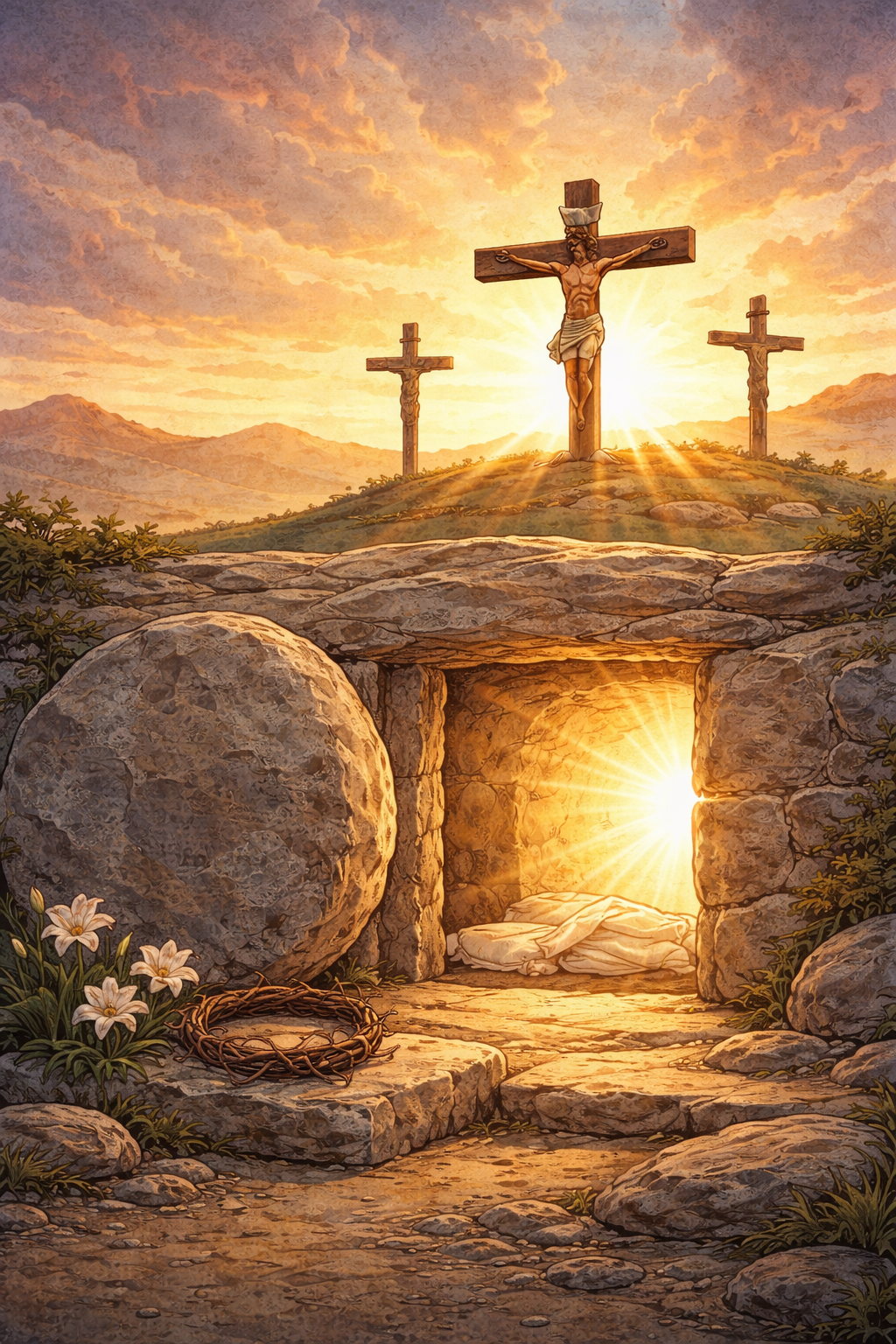
The message of the gospel rests on two events that the New Testament refuses to separate. Jesus died for sin, and God raised him from the dead. These are not independent ideas that happen to sit beside one another in the story of Jesus. They form a single act of redemption. From the earliest preaching recorded in Acts to the letters of the apostles, the Christian message consistently proclaims both the cross and the resurrection together.
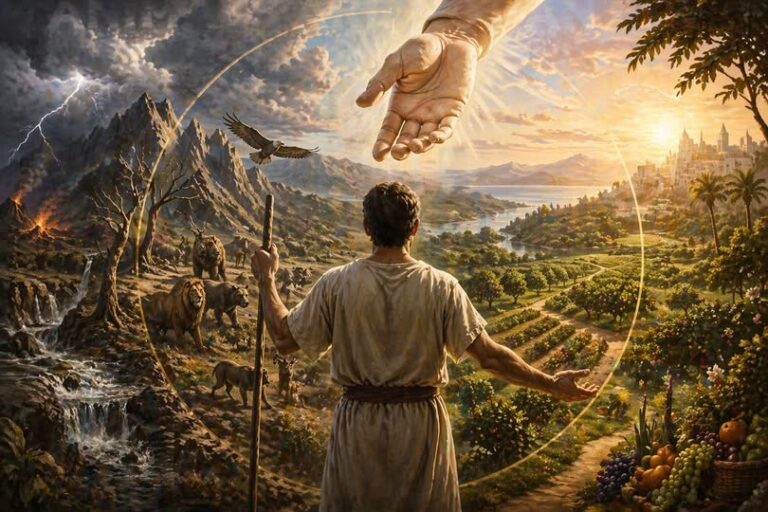
Humanity’s problem, according to Scripture, is not merely moral weakness or lack of knowledge. The biblical narrative describes a deeper issue. Sin entered the world through rebellion against God, and death followed as its consequence. From Genesis onward, death becomes the universal condition of humanity. The sacrificial system later given to Israel served as a reminder that sin carries a cost and that life must be given to address it. Those sacrifices pointed forward to a greater solution that had not yet arrived.
The Meaning of Christ’s Death
The New Testament presents the death of Jesus as the culmination of the sacrificial pattern established in the Old Testament. Jesus is described as the one whose life is given on behalf of others. His death is not portrayed as an unfortunate accident or simply the execution of a controversial teacher. The apostles repeatedly describe it as a deliberate act in which the Messiah gives his life for the sake of humanity.
Jesus himself speaks of this mission during his ministry, describing his life as something he will give as a ransom for many. After the resurrection, the apostles proclaim that his death dealt directly with the problem of sin and made reconciliation with God possible. Because of this, the cross stands at the center of the Christian message. It represents the moment when the power of sin is confronted, and the cost of redemption is paid.
Yet the story cannot end with the crucifixion alone. A Messiah who died and remained in the grave would be remembered as a martyr, not as the victorious king the prophets anticipated. Without something more, the cross would simply be another tragic execution carried out by the Roman Empire.
Why the Resurrection Matters
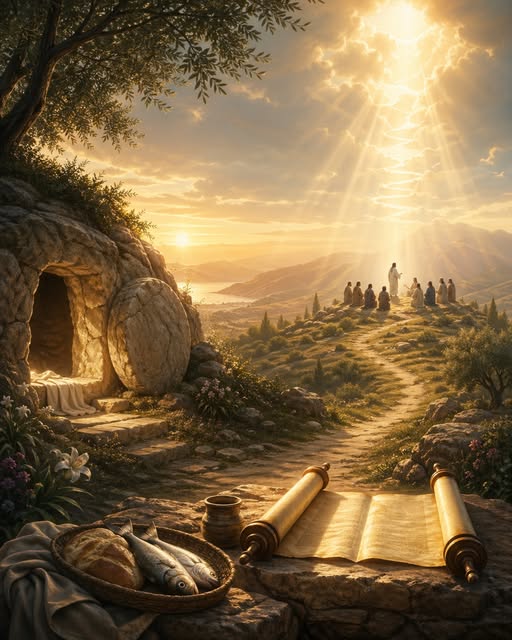
The resurrection changes the meaning of the cross. The New Testament presents it as God’s public vindication of Jesus and the confirmation that the sacrifice accomplished its purpose. The apostles do not merely proclaim that Jesus died. They proclaim that God raised him and exalted him.
Paul addresses this directly when he explains that if Christ has not been raised, Christian faith is empty and believers remain in their sins. The resurrection is therefore not an optional addition to the gospel story. It is the decisive evidence that the work of the cross succeeded.
The resurrection also reveals something profound about the identity of Jesus. Death claims every human life eventually. The New Testament declares that death could not ultimately hold Jesus. His resurrection is not simply the reversal of an execution. It is the beginning of a new reality in which the power of death itself has been broken.
The Victory Over Death
Because the resurrection follows the cross, the meaning of Jesus’ death is transformed. Instead of ending in defeat, the crucifixion becomes the moment when the power of sin and death is broken. The resurrection demonstrates that the sacrifice was accepted and that the Messiah now stands victorious over the very force that entered the world through humanity’s rebellion.
This is why the earliest Christian preaching constantly joins these two events together. The apostles proclaim that Jesus was crucified and that God raised him. The cross addresses the problem of sin, and the resurrection announces the defeat of death. One event explains the other, and together they reveal the full scope of what God has done through Christ.
Why the Two Cannot Be Separated
Separating the cross from the resurrection distorts the gospel. Focusing only on the resurrection can make the cross appear unnecessary. Focusing only on the cross leaves the story ending in tragedy. The New Testament refuses to separate them because together they reveal the complete work of redemption.
The death of Jesus addresses the problem of sin. The resurrection reveals the victory of God over death and the beginning of the restoration of creation. The gospel, therefore, is not simply the story of a sacrificial death. It is the story of a sacrifice that leads to triumph.
Conclusion
The earliest Christians did not proclaim a teacher who died heroically. They proclaimed the crucified and risen Messiah. The cross shows the cost of redemption, while the resurrection proves that the sacrifice was accepted and that death itself has been defeated.
Together, these events form the heart of the Christian message. The Son of God entered fully into human mortality, died for the sins of the world, and rose again as the victor over death. Because of the resurrection, the cross is not remembered as defeat but as the turning point of history, the moment when sin was confronted, and the power of death began to crumble.
Discussion Questions
- Why does the New Testament consistently present the cross and the resurrection as inseparable parts of the gospel message rather than two independent events?
- How does the Old Testament sacrificial system help us understand the meaning of Jesus’ death on the cross?
- According to the apostles, what would the consequences be if the resurrection of Jesus had never happened?
- In what way does the resurrection transform the meaning of the crucifixion from apparent defeat into victory?
- Why is it important for Christians to understand both the cross and the resurrection when explaining the gospel to others?
Want to Know More?
- N. T. Wright, The Resurrection of the Son of God
This massive historical and theological study examines ancient Jewish and Greco-Roman beliefs about resurrection and then analyzes the earliest Christian claims about Jesus rising from the dead. Wright demonstrates that the resurrection was not a later invention but the central proclamation of the earliest Christian communities. - Michael F. Bird, The Gospel of the Lord: How the Early Church Wrote the Story of Jesus
Bird explains how the earliest Christians understood and proclaimed the gospel message. He shows how the death and resurrection of Jesus formed the core of early Christian preaching and why both events were always presented together. - Thomas R. Schreiner, The King in His Beauty: A Biblical Theology of the Old and New Testaments
Schreiner traces the theme of redemption throughout the entire Bible, showing how the sacrificial system, the promises to Israel, and the mission of the Messiah all converge in the death and resurrection of Jesus. - Larry W. Hurtado, Lord Jesus Christ: Devotion to Jesus in Earliest Christianity
Hurtado examines how the earliest Christians worshiped Jesus and proclaimed his resurrection as the decisive act of God. The book provides important historical evidence that belief in the risen Christ emerged immediately within the earliest Christian communities. - Richard Bauckham, Jesus and the Eyewitnesses: The Gospels as Eyewitness Testimony
Bauckham argues that the Gospel accounts are rooted in eyewitness testimony from those who personally encountered Jesus. His work helps explain why the resurrection narratives were taken seriously by the earliest believers and preserved so carefully in the Gospel traditions.
About the Author