One of the most common surface-level objections to Christianity sounds devastating at first glance: “If Jesus is God, how can He be the Son of God? That’s a contradiction.” The argument assumes that Christians are claiming Jesus is both identical to God and distinct from God in the same way at the same time. If that were the claim, it would indeed be irrational. But that is not what historic Christianity teaches, and it is not what the New Testament says.
The objection survives because it imports modern assumptions into biblical language. It assumes that “Son” must imply creation, beginning, or inferiority, and that “God” refers only to a single person rather than to the unique divine identity of Yahweh. Once those assumptions are examined instead of assumed, the supposed contradiction begins to dissolve.
WHAT CHRISTIANS MEAN WHEN THEY SAY JESUS IS GOD
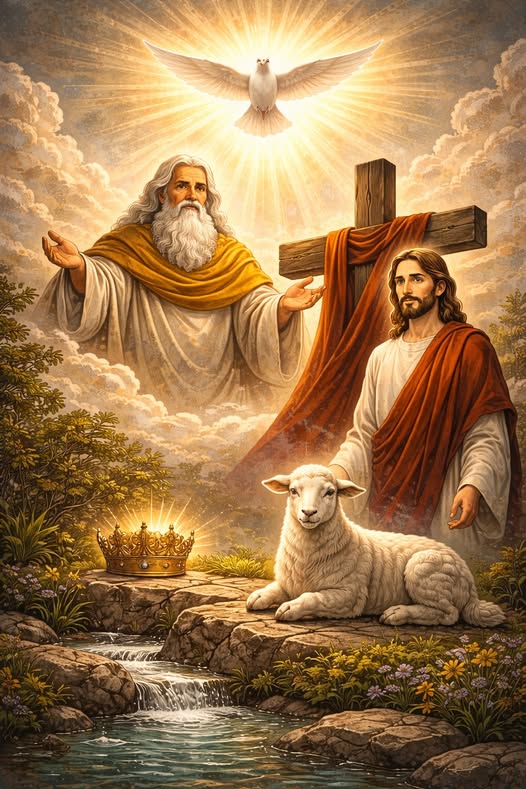
When Christians say Jesus is God, they are making a statement about His nature, not collapsing Him into the person of the Father. Christian theology distinguishes between being and person. Being answers the question “what is it?” Person answers the question “who is it?” Christianity teaches that there is one supreme, uncreated divine being and that the Father, the Son, and the Holy Spirit fully share that divine identity.
This language arises from Scripture itself. The New Testament does not deny the existence of other spiritual beings. Paul explicitly acknowledges that there are “many gods and many lords.” What Scripture insists upon is Yahweh’s uniqueness and supremacy. He is the God of gods. He is Most High. He alone is uncreated, sovereign, and worthy of ultimate worship.
At the same time, the New Testament identifies Jesus within that unique divine identity. He forgives sins, commands the sea, receives worship, and shares in the divine name and glory. He is not presented as one exalted being among others. He is included on the Creator side of the Creator-creature distinction. To confess that Jesus is God is to confess that He fully shares in the uncreated, supreme divine nature of Yahweh.
WHAT “SON OF GOD” MEANS IN SCRIPTURE
The phrase “Son of God” must be read within its ancient context. In the biblical world, sonship communicated shared nature and authorized representation. A son of a prophet shared the prophetic community. A son of David shared Davidic kingship. The language spoke to identity and relationship, not biological origin in time.
When Jesus calls God His Father, His opponents do not hear a claim of inferiority. They hear a claim of equality. John records that they sought to kill Him because He was making Himself equal with God. In that setting, divine sonship communicates shared status and authority. The Son does what the Father does, gives life as the Father gives life, and executes judgment as the Father executes judgment.
The Church later described the Son as eternally begotten, not made. That language denies that the Son is a creature while affirming an eternal relationship within the Godhead. The Son is from the Father, but not after the Father in time. The relationship is eternal, not chronological. The term “Son” describes who He is in relation to the Father, not a beginning of existence.
DISTINCTION WITHOUT DIVISION
The New Testament repeatedly holds together two truths that must not be separated. The Father is identified as the one true God. The Son is included within that same divine identity. Yet the Son prays to the Father, obeys the Father in His incarnate mission, and speaks of the glory He shared with the Father before the world existed. Scripture forces readers to acknowledge distinction without division and unity without collapse.
The doctrine of the Trinity did not invent complexity. It preserved the complexity already present in the text. If one denies the Son’s full divinity, one contradicts the worship and authority Scripture ascribes to Him. If one denies the distinction between Father and Son, one collapses their relational language into confusion. The Church rejected both errors because Scripture rejects both errors.
This is not philosophical abstraction. It is fidelity to the whole witness of the biblical text.
THE INCARNATION AND THE ROLE OF THE SON
Confusion often intensifies when incarnation enters the discussion. The eternal Son assumed a fully human nature. According to that human nature, He could hunger, grow tired, suffer, and die. According to His divine nature, He remained what He eternally is. The New Testament presents one person with two natures. Some statements refer to His humanity. Others refer to His divinity. The categories must be maintained if the text is to be read coherently.
When Jesus says the Father is greater than He, He speaks within the context of His incarnate mission and voluntary humility. When He declares that He and the Father are one, He speaks of shared divine identity. Role and mission differ from essence and nature. Confusing those categories creates contradictions that Scripture itself does not create.
CONCLUSION
The claim that Christianity contradicts itself by calling Jesus both God and the Son of God only succeeds if biblical categories are replaced with modern assumptions. Scripture does not deny the existence of other spiritual beings. It proclaims Yahweh as the supreme God of gods and then identifies both the Father and the Son within that one supreme divine identity.
The Son is not the Father. The Son is not a creature. The Son fully shares the uncreated, sovereign nature that belongs to Yahweh alone while eternally relating to the Father as Son. Unity of being does not erase personal distinction. Personal distinction does not divide the divine essence.
Jesus is God. Jesus is the Son of God. Both are true. Neither cancels the other. The contradiction appears only when the terms are misdefined. When Scripture is allowed to speak on its own terms, the confession stands coherent and intact.
Discussion Questions
- What is the difference between being and person, and why does confusing those categories create the illusion of contradiction when discussing Jesus as both God and the Son of God?
- How does the Old Testament “God of gods” language shape how we should read New Testament statements about “one God”? Does Paul deny the existence of other elohim, or does he redefine supremacy and allegiance?
- In what ways is Jesus’ sonship different from Israel being called God’s son or Adam being called son of God? What specific attributes or actions in the New Testament distinguish His sonship?
- What does it mean that Paul “splits the Shema” in 1 Corinthians 8:6, and how does that passage include Jesus within the unique divine identity of Yahweh rather than placing Him alongside Yahweh as a second deity?
- Why is it important to distinguish between role and essence when reading statements like “the Father is greater than I” alongside statements that affirm Jesus’ unity with the Father?
WANT TO KNOW MORE
- Augustine: On the Trinity
One of the most influential works in Christian theology, Augustine carefully explains how God can be one in essence and three in persons. Though written in the fourth and fifth centuries, this work shaped Trinitarian doctrine for centuries and remains foundational for understanding unity and distinction within the Godhead. - Stephen R. Holmes: The Holy Trinity: Understanding God’s Life
Holmes provides a historically grounded study of how the doctrine of the Trinity developed in the early Church. He demonstrates that Nicene theology was not philosophical speculation but a careful attempt to preserve the full biblical witness about the Father and the Son. - Donald Macleod: The Person of Christ
Macleod offers a rigorous treatment of Christology, explaining how Jesus can be fully divine and fully human without contradiction. His discussion of eternal sonship and incarnation is especially helpful for clarifying why “Son of God” does not imply created status. - Larry W. Hurtado: Lord Jesus Christ: Devotion to Jesus in Earliest Christianity
Hurtado examines early Christian worship and shows that devotion to Jesus as divine emerged within Jewish monotheism itself. His historical research demonstrates that belief in Christ’s full deity was present from the earliest decades of the Church. - Michael Reeves: Delighting in the Trinity
Reeves presents the doctrine of the Trinity in an accessible yet theologically rich way. He shows how the eternal relationship between Father and Son shapes salvation, worship, and the Christian understanding of God’s nature.
About the Author