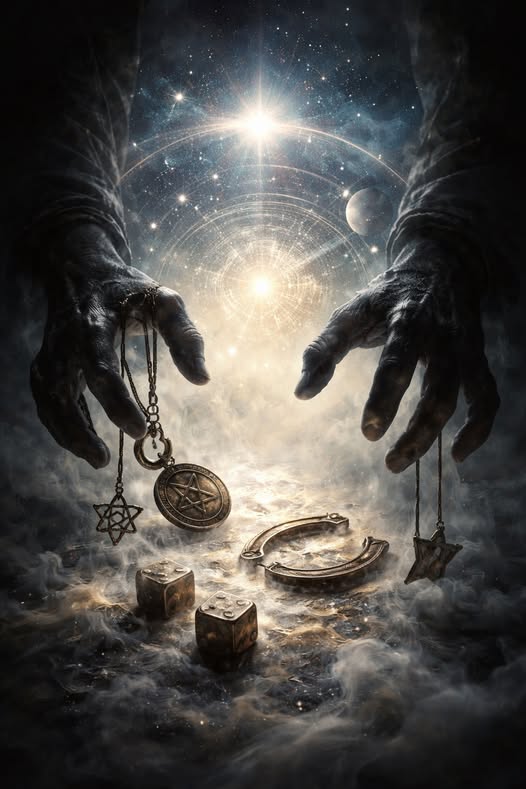
Superstition thrives wherever people believe the world is governed by hidden signals, impersonal forces, or unpredictable fate. Numbers, days, objects, and coincidences are treated as carriers of meaning, warning, or blessing, as though reality itself is whispering clues to those perceptive enough to notice them. While this way of thinking often presents itself as harmless tradition or playful folklore, it is rooted in a far older and more serious theological error. At its core, superstition represents an attempt to explain meaning and control outcomes apart from a personal, sovereign God.
Scripture presents a fundamentally different vision of reality. Meaning does not emerge from patterns waiting to be decoded, nor from omens that must be interpreted correctly to avoid disaster. Meaning flows from covenant relationship with a God who governs history intentionally and communicates clearly. The biblical worldview does not deny order in creation, but it decisively rejects the idea that order is accessed through superstition.
Omens in the Ancient World
In the ancient Near East, reality was understood as a constant stream of coded messages from the gods. Eclipses, unusual births, weather anomalies, animal behavior, dreams, and numerical patterns were all believed to reveal divine intent. Priests, diviners, and astrologers served as professional interpreters, translating these signs so kings and cities could act before calamity struck. Nothing was neutral, and nothing was merely coincidental.
This system produced a culture of anxiety and dependence. A particular day could be dangerous, a number could carry misfortune, and an otherwise insignificant event could be interpreted as a warning of imminent judgment. People did not ask whether something was meaningful, but what it meant and how it should be managed. Superstition functioned as a theological framework that explained suffering, success, and uncertainty while offering the illusion of control.
Israel’s Deliberate Rejection of Omen Thinking
Israel’s law and prophetic tradition reject this entire interpretive framework with striking clarity. The repeated prohibitions against divination, fortune telling, astrology, and omen reading are not narrow moral rules aimed at fringe practices. They represent a wholesale rejection of how surrounding cultures understood reality itself. Israel was not to discover meaning by decoding events but to receive meaning through revelation.
Jeremiah’s warning not to fear the signs of the heavens directly confronts the pagan assumption that the cosmos governs human destiny. The issue is not astronomy, but theology. When people fear signs, they are confessing belief in an impersonal system of control that operates independently of God’s will. Israel was called to trust a God who speaks, commands, judges, and saves, not one who leaves His people guessing through cryptic signals.
What Genesis Says Signs Are Actually For
Genesis does speak of the heavenly lights as being for signs and seasons, but the context sharply limits what that means. These signs regulate time. They mark days, months, and years so human life can be ordered, communal rhythms established, and worship properly observed. They are not tools for predicting fate or deciphering divine intentions hidden within creation.
By placing the lights within the created order and assigning them a functional role, Scripture strips the cosmos of divinatory authority. Creation does not reveal secret knowledge about destiny. It serves God’s purposes openly and obediently. When guidance is needed, God speaks. When correction is required, God commands. When judgment or salvation comes, it is announced, not hinted at through symbols that require expert interpretation.
Providence Replaces Omens
Providence offers a radically different way of understanding meaning. Rather than assuming events must be decoded to uncover hidden intent, providence affirms that God actively governs history according to His purposes. Events matter not because they form patterns, but because they unfold within God’s sovereign care. Meaning is not extracted from circumstances but understood through trust in God’s character and promises.
Even practices like casting lots in Scripture are not expressions of superstition. They are appeals to God’s direct oversight, not attempts to manipulate impersonal forces. Significantly, such practices fade as God’s redemptive plan progresses, culminating in Christ and the giving of the Spirit. Trust replaces ritualized uncertainty, and faith replaces the need to read signs in the world.
Why Superstition Still Appeals to Christians
Superstition continues to appeal because it offers a sense of control in the face of uncertainty. If meaning can be discovered in dates, numbers, or coincidences, then fear feels manageable and chaos appears less threatening. Providence, by contrast, demands trust without guarantees of comfort or predictability. It calls believers to confidence in God rather than confidence in interpretation.
Friday the 13th carries no biblical significance because days do not govern reality. Fear gains power only when believers quietly adopt a pagan assumption that meaning exists apart from God’s revealed will. Superstition persists not because Scripture supports it, but because its assumptions often go unexamined. It survives where theology is shallow and trust is displaced.
Conclusion
The biblical worldview dismantles omen-based thinking at its foundation. Reality is not a puzzle to be solved through symbols, numbers, or hidden signs. It is a creation governed by a sovereign God who reveals what His people need to know and withholds nothing essential for faithful obedience. Meaning does not hide behind coincidence, and destiny does not hinge on avoiding unlucky days.
Christians are not called to read the world for secret warnings or encoded threats. They are called to walk in obedience, trust God’s providence, and reject every rival explanation of meaning that competes with His authority. Where providence is understood, superstition loses its grip and fear gives way to confidence in the God who rules all things.
Discussion Questions
- Where is the line between recognizing patterns in God’s creation and reading meaning into events that Scripture never assigns?
- Why was omen-based thinking so central to ancient cultures, and what modern equivalents of that mindset still exist today?
- How does belief in divine providence change the way a Christian interprets unexpected or difficult events?
- Why is superstition often dismissed as harmless while other theological errors are challenged more directly?
- In what ways can weak or shallow theology allow superstition to survive within Christian communities?
Want to Know More
- John H. Walton, Ancient Near Eastern Thought and the Old Testament
Explains how ancient cultures interpreted reality through omens, signs, and divination, and how the biblical worldview deliberately rejects those systems in favor of covenant and revelation. - Ann Jeffers, Magic and Divination in Ancient Palestine and Syria
A scholarly examination of divinatory practices surrounding Israel that clarifies what biblical prohibitions against superstition were addressing historically and theologically. - Christopher J. H. Wright, Knowing God in the Old Testament
Explores Israel’s understanding of God’s sovereignty, character, and self-revelation in contrast to pagan systems rooted in omen interpretation. - Eugene H. Merrill, The Everlasting Dominion
Presents a theology of the Old Testament centered on God’s rule over history, time, and nations, reinforcing providence over fate or superstition. - Bruce K. Waltke, The Book of Proverbs
A wisdom commentary that contrasts fear-of-the-Lord theology with pagan attempts to control outcomes through signs, luck, or hidden knowledge.
About the Author