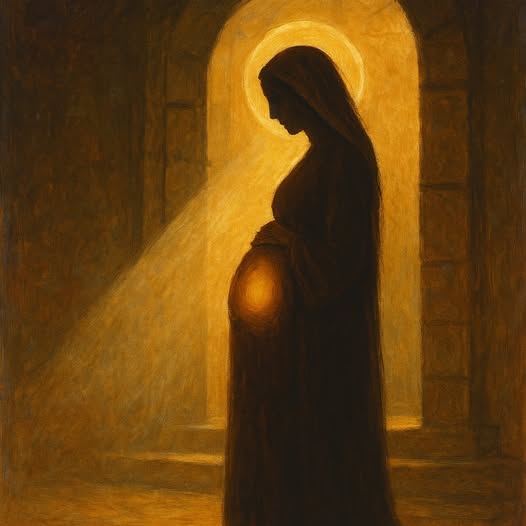
Elizabeth stands as one of the most remarkable women in the New Testament, yet she is often overshadowed by Mary. Her life bridges the Old Covenant expectations and the arrival of the Messiah. She represents the faithful remnant of Israel that waited for the redemption of God. Through her story, we see righteousness, patience, spiritual insight, and the joy that comes when God moves to fulfil His promises.
Elizabeth’s Ancestry and Priestly Line
Elizabeth is introduced in Luke 1 as a descendant of Aaron. This identifies her with the priestly lineage that served in the Temple and preserved the holiness of Israel’s worship. Her husband Zechariah was a priest serving in the division of Abijah. Together, they represent a couple deeply embedded in the spiritual heritage of Israel. Their shared priestly ancestry situates John the Baptist within a faithful priestly household and helps explain his identity as both priestly by birth and prophetic by calling. Elizabeth’s presence creates a bridge between the priestly and prophetic traditions that converge in John.
A Woman Described as Righteous
Luke describes Elizabeth and Zechariah as righteous before God, walking blamelessly in all the commandments and statutes of the Lord. This does not imply sinlessness but rather covenant faithfulness. Unlike the religious leaders who opposed Jesus, Elizabeth embodies genuine devotion. Her righteousness is underscored when Gabriel appears to Zechariah, indicating that the prayers of the couple had been heard despite long barrenness. In the contrast between Elizabeth’s steady faith and Zechariah’s moment of doubt, Luke highlights her spiritual clarity and trust in God’s word.
Barrenness and the Pattern of God’s Work
Elizabeth’s barrenness places her in the long biblical pattern of women through whom God brought key figures into the world. Sarah, Rebekah, Rachel, the mother of Samson, and Hannah all had children through divine intervention. This pattern signals that God was about to act in a decisive way. Elizabeth’s conception of John the Baptist is part of this theme. Her pregnancy becomes a testimony that the age of fulfilment has begun and a preview of the great reversal motif that runs throughout Luke’s Gospel. God lifts up the humble, removes reproach, and turns barrenness into joy.
Elizabeth’s Seclusion and its Significance
After conceiving, Elizabeth remained in seclusion for five months. The text does not explain her reasons, but the context suggests gratitude, humility, and reflection. She saw her pregnancy as the removal of her reproach among the people. Her seclusion parallels Old Testament moments where individuals withdrew to prepare for a divine mission. This quiet period anticipates the prophetic role her son will play and reflects the pattern in Luke where God begins His redemptive works in quiet, humble places before revealing them publicly.
Mary’s Visit and the First Interpretation of the Messiah’s Presence
One of the most powerful scenes in the Bible occurs when Mary visits Elizabeth. At Mary’s greeting, the unborn John leaps in Elizabeth’s womb. Luke emphasises that Elizabeth is filled with the Holy Spirit. She becomes the first person to interpret this sign correctly. Her Spirit-filled proclamation recognises the identity of the Messiah even before His birth. She blesses Mary, affirms the faith that brought her to that moment, and calls Mary “the mother of my Lord.” Elizabeth, therefore, becomes the earliest human witness to the Messiah’s presence and the first to declare His lordship. Her prophetic insight joins her to the stream of faithful Israelites who longed for the redemption of Israel.
Mary remained with Elizabeth for about three months. This likely means she stayed until John’s birth. Elizabeth became one of Mary’s earliest supporters in the mystery of the incarnation, showing how God provides companionship and encouragement at decisive moments in salvation history.
The Birth and Naming of John the Baptist
Elizabeth gives birth to John, and her neighbours rejoice with her. When the time comes to name the child, Elizabeth insists that his name is John. This shows obedience to the angelic message even though Zechariah remained mute. Her insistence reflects spiritual clarity and faithfulness to God’s revealed will. When Zechariah confirms the name on his tablet, his tongue is loosed, and he praises God. Elizabeth’s steadfastness guarded the divine plan. Her obedience helped set the stage for John’s ministry as the forerunner of the Messiah.
Elizabeth’s Relationship to the Coming Messiah
Elizabeth never appears again in the New Testament after the birth narrative, yet her legacy echoes through John’s ministry and ultimately into the ministry of Jesus. Every aspect of John’s life would reflect the faith of his parents. Elizabeth raised the final prophet of the Old Covenant. By blessing Mary and submitting to God’s purpose for her son, she took her place in the unfolding redemptive story. Her faith stands within the faithful remnant of Israel that welcomed the Messiah with joy.
Her story also anticipates the theme of God “visiting” His people. Elizabeth’s conception serves as an early sign of this divine visitation that will be fully realized in Jesus’s birth and ministry. Her role helps launch the great outpouring of praise that fills the first two chapters of Luke, preparing the way for the New Covenant era.
Themes and Lessons from Elizabeth’s Life
Elizabeth provides a model of faithfulness in quiet, unseen ways. Her righteousness was not performative. Her long suffering did not harden her heart. Her Spirit-filled insight shows a life attentive to God’s movement. She rejoiced in someone else’s blessing even when she had waited her whole life for her own. Her story reminds believers that God often works through humble servants rather than through the powerful or publicly celebrated. She shows that spiritual maturity produces humility, joy, and obedience. She demonstrates that God preserves a remnant through whom He advances His purposes.
Conclusion
Elizabeth stands at the turning point of history as a faithful daughter of Aaron, a righteous Israelite, a mother in the line of miraculous births, and a woman who recognized the arrival of her Lord even before His birth. Her life is a testimony that God remembers His people and keeps His promises. She exemplifies the faith that bridges Old Covenant hope and New Covenant fulfillment. Through her story, we see how God prepared the way for the Messiah through ordinary yet faithful servants who were willing to believe and obey.
Discussion Questions
- How does Elizabeth’s priestly lineage shape the significance of John the Baptist’s role as both priestly by birth and prophetic by calling?
- In what ways does Elizabeth embody the theme of reversal in Luke’s Gospel, and how does her story illustrate God lifting up the humble?
- Why is Elizabeth’s Spirit-filled proclamation to Mary so important to the unfolding of the Messiah’s story, and what does it reveal about her spiritual insight?
- How does Elizabeth’s faithfulness contrast with Zechariah’s moment of doubt, and what lessons can believers draw from their responses to God’s revelation?
- What does Elizabeth teach us about joyful humility and supporting God’s work in others, especially when God blesses someone else before He blesses us?
Want to Know More?
- Luke (Baker Exegetical Commentary on the New Testament) by Darrell L. Bock
A thorough and respected commentary that gives detailed historical and theological analysis of Luke’s birth narratives, including Elizabeth’s role and the significance of the Spirit filled proclamations. - The Gospel of Luke (New International Commentary on the New Testament) by Joel B. Green
A highly regarded commentary offering deep insight into Luke’s themes of reversal, righteous remnant, and the interplay between priestly and prophetic traditions present in Elizabeth’s story. - Mary, Mother of the Lord: Volume 1 – The Lady in the Temple by Margaret Barker
While focused on Mary, Barker’s work provides valuable background on Temple tradition, priestly symbolism, and the setting in which figures like Elizabeth and Zechariah operated. - The Birth of the Messiah by Raymond E. Brown
A classic scholarly exploration of the infancy narratives in Matthew and Luke. Brown gives a careful historical and literary analysis of Elizabeth, Zechariah, and the wider theological setting of John’s and Jesus’s births. - Jesus and the Eyewitnesses by Richard Bauckham
Bauckham argues that the Gospels preserve eyewitness testimony. This helps illuminate the reliability and early character of Luke 1, including the personal recollections surrounding Elizabeth, Mary, and the birth events.
About the Author