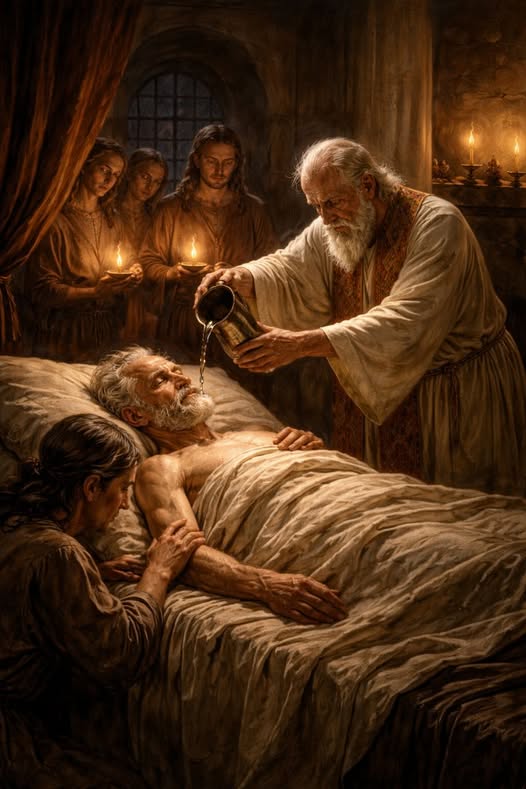
In the earliest centuries of Christianity, baptism was understood as a decisive transfer of allegiance and identity rather than a casual or merely symbolic act. To be baptized was to publicly renounce former loyalties, submit to Christ as Lord, and enter the covenant community marked by His death and resurrection. Because of this weight, baptism was widely regarded as a one-time, irreversible crossing rather than a repeatable ritual or an ongoing mechanism for forgiveness. Baptism was treated as a threshold event that fundamentally altered one’s standing before God and the powers.
That understanding created a theological tension that the early church struggled to resolve. If baptism cleansed sins committed prior to that moment, what provision existed for serious sin afterward? While the New Testament affirms repentance and forgiveness, the early post-apostolic church had not yet articulated a coherent framework for ongoing post-baptismal reconciliation. The result was a climate of caution, rigor, and at times deep anxiety surrounding baptism itself.
Baptism as Final Cleansing in Early Christian Thought
Many early Christians assumed baptism functioned as a once-for-all cleansing of past sins. Repentance after baptism was acknowledged, but it was often treated as extraordinary, severe, or even limited to a single opportunity. Certain sins, especially idolatry, sexual immorality, murder, and apostasy, were widely regarded as spiritually catastrophic once committed by a baptized believer. These were not seen as moral failures to be quietly confessed and restored, but as breaches of allegiance that threatened one’s place among the people of God.
This mindset is reflected in early penitential discipline. Public penance could involve lengthy exclusion from communion, fasting, and visible humiliation, with restoration dependent on episcopal judgment and sometimes permitted only once in a lifetime. The severity of these practices reveals that baptism was not yet situated within a fully developed theology of grace and perseverance. Instead, it functioned as a moment of decisive cleansing, after which failure carried disproportionate spiritual weight.
Within that framework, baptism was not simply the beginning of discipleship. It was perceived as a dangerous threshold. To cross it and then fall was considered worse than never having crossed it at all. That logic did not arise from indifference to holiness, but from an intense seriousness about allegiance, loyalty, and the fear of betraying Christ.
The Rise of Deathbed Baptism
Deathbed baptism emerged naturally from this theological environment. It was not a fringe superstition or a cynical loophole, but a rational response to unresolved assumptions about sin and forgiveness. If baptism erased all prior guilt and if post-baptismal sin carried grave spiritual risk, then receiving baptism as close to death as possible minimized exposure to that danger. The practice became widespread enough to provoke sustained debate, which itself demonstrates how common it was.
Opposition to delayed baptism confirms its prevalence rather than refuting it. Writers who urged early baptism did so precisely because many believers were postponing it. Their warnings focus on the danger of dying unbaptized, not on condemning the practice as novel or illegitimate. The controversy reflects a church in the process of theological clarification rather than one operating from a settled apostolic consensus.
The most prominent example is Constantine the Great. Constantine openly identified with Christianity for years, supported the church publicly, convened councils, and invoked the Christian God, yet delayed baptism until his final illness. His decision was not treated as scandalous by contemporaries nor framed as hypocrisy. It reflected a widely shared belief that baptism was a decisive purification and that post-baptismal sin, especially for someone whose office required violence, coercion, and judgment, was nearly unavoidable.
Constantine and a Transitional Moment
Constantine’s baptism captures a transitional moment in Christian theology. His actions show how seriously baptism was taken, but they also expose unresolved assumptions about grace, repentance, and perseverance. As emperor, Constantine understood that ruling would inevitably involve actions many Christians of his time regarded as incompatible with baptized life. Delaying baptism was therefore seen as prudent rather than negligent.
This does not mean Constantine possessed a superior or more apostolic understanding of baptism. It means he was operating within a theological framework that had not yet fully integrated the New Testament’s teaching on grace, repentance, and ongoing faithfulness. His baptism reflects the moral seriousness of early Christian thought, but also its incompleteness.
The Limits of Early Christian Theology
It is important not to romanticize the early church simply because it is early. Chronological proximity to the apostles did not guarantee theological precision. The post-apostolic period was marked by rapid expansion, persecution, internal disputes, and limited access to written texts. Many Christian communities possessed only portions of what would later be recognized as the New Testament, relied heavily on oral teaching, and interpreted Scripture through local tradition rather than broad textual comparison.
Modern readers often assume that early Christians had clearer access to apostolic teaching than later generations. In reality, they often had fewer texts, fewer copies, and little ability to compare manuscript traditions. By contrast, modern scholarship has access to thousands of manuscripts, multiple textual families, and centuries of accumulated analysis. Later generations are often better positioned to reconstruct the earliest form of the text than those who lived closer in time to its composition.
Theological development, therefore, is not corruption. It is the church learning, often through painful trial and error, how to articulate faithfully what Scripture actually teaches. The anxiety surrounding post-baptismal sin reflects theology still being refined rather than doctrine already perfected.
What the Textual Evidence Shows About Baptism
When the New Testament is examined carefully, baptism consistently functions as an external, embodied declaration of believing loyalty to Yahweh through Jesus rather than as a ritual that mechanically produces salvation. Salvation is repeatedly grounded in trust, allegiance, and faithfulness, not in ritual performance.
Paul regularly ties justification to faith apart from works and explicitly distinguishes the proclamation of the gospel from the act of baptizing. That distinction would make little sense if baptism itself were the saving mechanism. Romans 10 locates salvation in confessing Jesus as Lord and believing in the resurrection, without presenting baptism as a prerequisite for acceptance before God.
Narrative evidence reinforces this pattern. The thief on the cross is promised paradise without baptism. Cornelius receives the Holy Spirit before baptism, forcing the apostolic community to acknowledge that God had already accepted him. Baptism follows as recognition of that reality rather than as its cause. John the Baptist himself presents baptism as the outward sign of repentance already underway, not as a rite that generates repentance or salvation by itself.
Baptism as Allegiance, Not Anxiety
Seen in this light, the fear-driven logic that produced deathbed baptism does not arise from the New Testament text itself. It emerges when baptism is subtly reimagined as the moment salvation is conferred rather than as the public declaration of a loyalty already pledged. Once that shift occurs, baptism becomes dangerous. If baptism saves and sin afterward imperils salvation, then delaying baptism becomes a rational strategy.
The New Testament does not drive believers toward that conclusion. Instead, baptism functions as a public oath of allegiance, a visible declaration that one has transferred loyalty to Yahweh and now lives under the lordship of Christ. It marks entry into the covenant community and publicly identifies the believer with Christ’s death and resurrection. It is commanded, normative, and deeply significant, but it is never portrayed as a ritual that saves apart from faith.
Conclusion
Deathbed baptism offers a revealing window into both the seriousness and the limitations of early Christian theology. It shows how deeply the early church valued holiness, loyalty, and the cost of following Christ, but it also exposes the strain created when baptism was treated as a final cleansing rather than as the public declaration of a life already committed to faithfulness. The fear that drove delayed baptism was not born of indifference or manipulation, but of unresolved assumptions about sin, repentance, and grace.
It is important to recognize that later Christians did speak of baptism in increasingly mystical and sacramental terms. By the second and third centuries, baptism is frequently described as illumination, rebirth, and ontological transformation. That evidence is real and extensive. However, its existence does not settle the interpretive question. It demonstrates theological development rather than original meaning.
The New Testament consistently grounds salvation in believing loyalty to Yahweh expressed through trust, allegiance, and perseverance. Baptism functions as the outward, embodied announcement of that allegiance, marking public identification with Christ and entry into the covenant community. When later theology collapsed faith, repentance, Spirit reception, forgiveness, and baptism into a single ritual moment, baptism inevitably absorbed explanatory weight the apostolic texts do not assign to it.
This distinction helps explain why practices such as deathbed baptism emerged and why they eventually lost theological force. As the church clarified its understanding of ongoing repentance, forgiveness, and sanctification, the fear-driven logic that made delayed baptism appear prudent began to fade. What replaced it was not a diminished view of baptism, but a clearer one.
Baptism is not a moment of mystical automation nor a final transaction performed under duress. It is a public oath of allegiance to Yahweh through Jesus Christ, a visible confession that one now belongs to Him. When baptism is restored to that place, it ceases to be a source of anxiety and becomes what the New Testament consistently presents it to be: a faithful response to salvation already received, not a substitute for it.
Discussion Questions
- How did the early Christian belief that baptism was a one-time, irreversible act shape attitudes toward sin, repentance, and assurance of salvation?
- In what ways does the practice of deathbed baptism reveal both the strengths and the weaknesses of early post-apostolic theology?
- How does the New Testament’s presentation of baptism as an outward declaration of allegiance challenge later assumptions that baptism itself produces salvation?
- Why might proximity to the apostolic period give the appearance of theological authority without necessarily guaranteeing greater textual or doctrinal accuracy?
- How does recovering the concept of believing loyalty to Yahweh help resolve the tension between the seriousness of baptism and the reality of ongoing repentance and grace?
Want to Know More?
- Everett Ferguson, Baptism in the Early Church: History, Theology, and Liturgy in the First Five Centuries
The definitive scholarly treatment of baptism in the early church. Ferguson documents beliefs about baptism as forgiveness of sins, the fear of post-baptismal sin, the rise of delayed and deathbed baptism, and how these views developed over time using primary sources. - J. N. D. Kelly, Early Christian Doctrines
A classic survey of doctrinal development in the early church. Kelly is especially useful for tracing how views of baptism, repentance, grace, and salvation evolved rather than appearing fully formed immediately after the apostolic period. - Maxwell E. Johnson, The Rites of Christian Initiation: Their Evolution and Interpretation
A careful historical study of baptismal rites, catechesis, and initiation practices. Johnson shows how baptism shifted from apostolic proclamation toward later institutional and penitential frameworks. - Alister E. McGrath, Iustitia Dei: A History of the Christian Doctrine of Justification
Provides essential background for understanding how early confusion about justification and forgiveness contributed to anxiety over post-baptismal sin and the perceived finality of baptism. - Aaron Milavec, The Didache: Faith, Hope, and Life of the Earliest Christian Communities
A focused study of one of the earliest Christian instructional texts. Milavec helps situate baptism, repentance, and moral expectation in the lived reality of early Christian communities without later sacramental assumptions.
About the Author