The international community frequently minimizes or outright ignores the brutal persecution of Christians worldwide. Nowhere is this more evident than in Nigeria, where a coordinated campaign of violence by Islamist groups, most notably Boko Haram and its offshoots, has turned regions of the country into slaughterhouses. This is not a vague tribal conflict. It is targeted, intentional, and religious in motivation. Christian communities are being systematically attacked, displaced, and destroyed.
The Rise and Purpose of Boko Haram
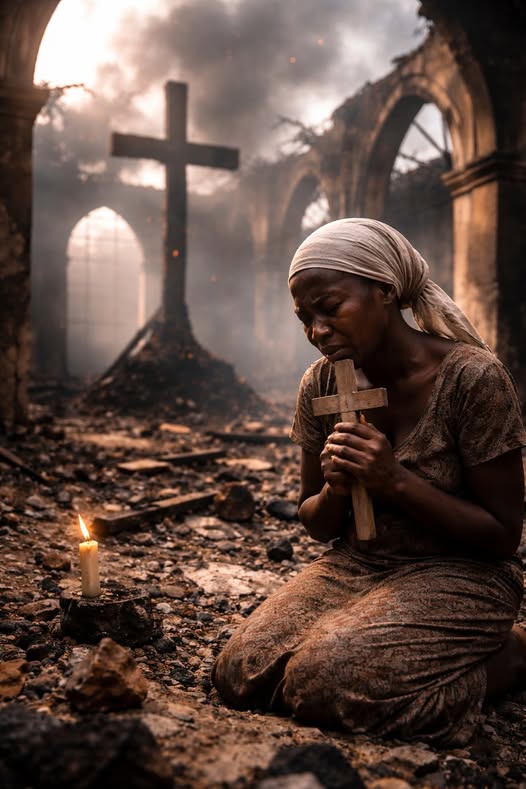
Boko Haram, which roughly translates as “Western education is forbidden,” was founded in the early 2000s by Mohammed Yusuf. It gained international notoriety in 2009 when it launched an armed insurgency against the Nigerian government. Its stated goal is to replace Nigeria’s secular democracy with a strict Islamic caliphate under Sharia law. From the beginning, Boko Haram declared war on Christians. Their doctrine views the presence of Christianity in Nigeria not merely as an error, but as something to be eradicated. Churches were torched, worship services bombed, and pastors executed.
When Boko Haram splintered, one of its factions pledged allegiance to ISIS and renamed itself ISWAP, Islamic State West Africa Province. This newer group has continued the jihad with military discipline and ideological clarity, expanding attacks beyond northeastern Nigeria into the Middle Belt, where Christian farming communities are especially vulnerable.
The Death Toll Is No Longer Deniable
Estimates of the number of Christians killed vary, but they are staggering. Civil liberties and human rights organizations estimate that over 52,000 Christians were murdered between 2009 and 2023. In just the first seven months of 2025, more than 7,000 additional Christians were killed, many by Fulani jihadists or Boko Haram affiliates. Other watchdog groups place the total Christian death toll in Nigeria well over 120,000.
These deaths are not random casualties of civil unrest. They are targeted killings. Villages with Christian majorities are attacked while nearby Muslim-majority towns are left untouched. Churches are destroyed while mosques remain standing. Survivors consistently testify that attackers identify victims by faith before killing them. These patterns are deliberate and repeatable, not coincidental.
Escalating Threats Surrounding Christmas Day
What distinguishes the current moment is not only the ongoing violence, but credible warnings of planned, coordinated attacks timed specifically for Christmas Day. Christian leaders, local security analysts, and humanitarian organizations inside Nigeria have warned that jihadist groups and allied militants are preparing assaults on Christian communities and church gatherings on December 25, particularly in Plateau, Kaduna, Benue, and surrounding states.
This follows an established pattern. Christmas and Easter have repeatedly been used as symbolic targets by Islamist groups seeking maximum psychological and religious impact. In the weeks leading up to Christmas this year, Christians have already faced church shootings, abductions of clergy, and armed assaults on worship services. These are not isolated incidents, but preparatory signals.
In addition to attacks on churches, schools have become soft targets. Large-scale kidnappings from Christian-run schools and institutions have intensified, with hundreds of students and teachers abducted in recent months. These kidnappings function both as terror tactics and as revenue streams for jihadist networks, further destabilizing Christian communities and discouraging families from remaining in contested regions.
The Displacement of Millions
Beyond the killings, millions of Christians have been driven from their homes. The systematic destruction of farms, homes, and schools in Christian areas has created a humanitarian catastrophe. Across sub-Saharan Africa, more than 16 million people have been displaced by Islamist extremist violence, with Nigeria at the epicenter.
Entire Christian villages have been emptied. Survivors now live in overcrowded displacement camps, urban slums, or exile. The objective is not merely to kill Christians, but to remove them permanently from contested land and erase their cultural and religious presence.
Why the Numbers Are Disputed
Mainstream institutions often report lower figures and resist framing the violence as religious persecution. This reluctance is not due to a lack of evidence, but to political and ideological pressure. Media outlets and international agencies fear accusations of Islamophobia, so clear acts of religious targeting are reframed as ethnic disputes or farmer-herder conflicts.
In addition, many of the worst-affected areas are inaccessible to journalists and NGOs, allowing undercounting to persist. These blind spots provide plausible deniability for governments and international bodies that prefer silence. Yet when churches are burned, congregants are executed mid-service, and attackers explicitly invoke jihadist motives, the refusal to name the crime becomes complicity.
Who Is Funding the Violence?
Although Boko Haram originated in Nigeria, it did not grow in isolation. Foreign ideological and financial influence has played a decisive role. Decades of Saudi-funded Salafi expansion in northern Nigeria created fertile ground for jihadist recruitment. Prominent Islamist clerics and movements received foreign backing, while Saudi-based charities were previously sanctioned for terror-financing activities in the region.
Investigations into terrorist financing in West Africa have shown that Boko Haram became one of the world’s deadliest terror organizations through illicit financial flows, regional smuggling networks, and external donors. State-linked charities and ideological pipelines from the Gulf have repeatedly surfaced in these investigations. These are not rogue actors operating independently of state structures. In monarchies where the royal family is the state, plausible deniability wears thin.
The Nigerian Government’s Failure
The Nigerian government has consistently failed its Christian citizens. Despite years of military campaigns and international assistance, Boko Haram and ISWAP continue to operate with relative freedom. Security forces are often under-equipped, poorly coordinated, or compromised by corruption. In some documented cases, military units have failed to respond to attacks or arrived only after villages were destroyed.
Christians increasingly understand that they cannot rely on their own government for protection. This reality forces an impossible choice: abandon ancestral land or remain and risk death.
Growing International Recognition, Limited Action
International awareness has increased, but action remains insufficient. Nigeria has been designated a Country of Particular Concern for religious freedom violations, and foreign governments have issued stronger warnings about the scale of anti-Christian violence. Legislative bodies have formally condemned the persecution, acknowledging that it is targeted, systematic, and ongoing.
Yet Nigerian officials continue to downplay the religious dimension of the violence, insisting it is merely criminal or communal. This refusal to diagnose the problem accurately ensures that proposed solutions remain ineffective.
The Global Church Must Not Look Away
The global Church cannot claim unity while ignoring the suffering of believers in Nigeria. This is not about charity alone. It is about solidarity and truth. The Christians being murdered, displaced, and terrorized are not statistics. They are witnesses of the faith under fire.
Their blood cries out, not for platitudes, but for clarity and action. Churches must speak plainly, support aid and security efforts, and pressure governments to stop enabling the regimes and ideologies that fuel this violence.
Conclusion
The war on Christians in Nigeria is real. It is brutal. And it is being ignored. The deaths are not exaggerated, they are undercounted. The attackers are not generic criminals, they are ideologically driven Islamists. The threats now explicitly include planned attacks on Christmas Day itself, underscoring the urgency of the moment.
Silence is no longer ignorance. It is abdication. The Church must name this for what it is, a religious purge, and then act accordingly.
Want to Know More (WTKM)
- Open Doors – World Watch List (Nigeria Reports)
Open Doors is one of the most widely cited Christian persecution monitoring organizations in the world. Its annual World Watch List consistently ranks Nigeria as one of the deadliest countries for Christians, with detailed documentation of killings, church attacks, displacement, and patterns of religious targeting. Their Nigeria country dossiers include firsthand survivor testimony and long-term trend analysis. - International Society for Civil Liberties and Rule of Law (Intersociety), Nigeria
Intersociety is a Nigerian-based civil liberties organization that has produced some of the most detailed casualty estimates regarding Christian deaths in Nigeria. Their reports are frequently cited by lawmakers, advocacy groups, and international observers and include granular breakdowns by year, region, and perpetrator. - U.S. Commission on International Religious Freedom (USCIRF) – Nigeria Reports
USCIRF is a bipartisan, congressionally mandated U.S. government body. Its annual and special reports on Nigeria document systematic religious freedom violations, identify Boko Haram, ISWAP, and Fulani militants as primary actors, and explain why Nigeria has been designated a Country of Particular Concern. These reports carry significant diplomatic and policy weight. - Genocide Watch – Nigeria Country Alerts
Genocide Watch applies its internationally recognized “Ten Stages of Genocide” framework to Nigeria, warning that targeted attacks against Christian communities meet multiple genocide indicators. Their alerts focus on patterns of dehumanization, displacement, and selective violence, not isolated incidents. - Global Terrorism Index (Institute for Economics and Peace)
The Global Terrorism Index is a data-driven, secular research project used by governments and international institutions. It consistently identifies Boko Haram and ISWAP as among the world’s deadliest terrorist organizations and documents Nigeria as one of the most terrorism-affected countries globally, with religion-based targeting explicitly acknowledged. - Human Rights Watch – Nigeria: Boko Haram and Communal Violence Reports
Human Rights Watch has published multiple investigations into Boko Haram atrocities, mass kidnappings, village raids, and government failures to protect civilians. While often cautious in language, their documentation of church attacks, targeted killings, and displacement provides independent corroboration of the scale of violence. - Aid to the Church in Need – “Persecuted and Forgotten?” Reports
Aid to the Church in Need is a Catholic charity with consultative status at the UN. Its reports compile field data from clergy, aid workers, and displaced Christians, documenting attacks on churches, priests, and Christian villages in Nigeria with photographic and testimonial evidence. - Council on Foreign Relations – Nigeria Security Backgrounders
The CFR provides geopolitical analysis of Nigeria’s security crisis, including the ideological roots of Boko Haram, the regional spread of jihadist violence, and the Nigerian government’s structural weaknesses. These backgrounders are useful for understanding why the violence persists despite military campaigns.
About the Author