John 11 is deliberately constructed to create tension. Jesus is informed plainly that Lazarus is sick, someone He loves deeply and someone He has healed before by a word or a touch. Instead of going immediately, the text states that He intentionally remains where He is for two more days. By the time He arrives in Bethany, Lazarus has been dead for four days. John does not allow the reader to attribute this delay to distance, miscommunication, or circumstance. It is presented as purposeful.
If the account were about compassion alone, the delay would be inexplicable. If it were about demonstrating miraculous ability, the delay would be unnecessary. John is not showing that Jesus can heal the sick. He is revealing the nature of Jesus’ authority and the scope of the confrontation that authority creates, both seen and unseen.
Four Days and the Finality of Death
In Second Temple Jewish thought, death was understood in stages. A widespread belief held that the soul lingered near the body for three days, hoping to reenter it. By the fourth day, decomposition had begun, and hope was gone. Martha’s statement that there will be a stench is not an incidental detail meant to add realism. It is a theological signal that death’s claim is complete and uncontested.
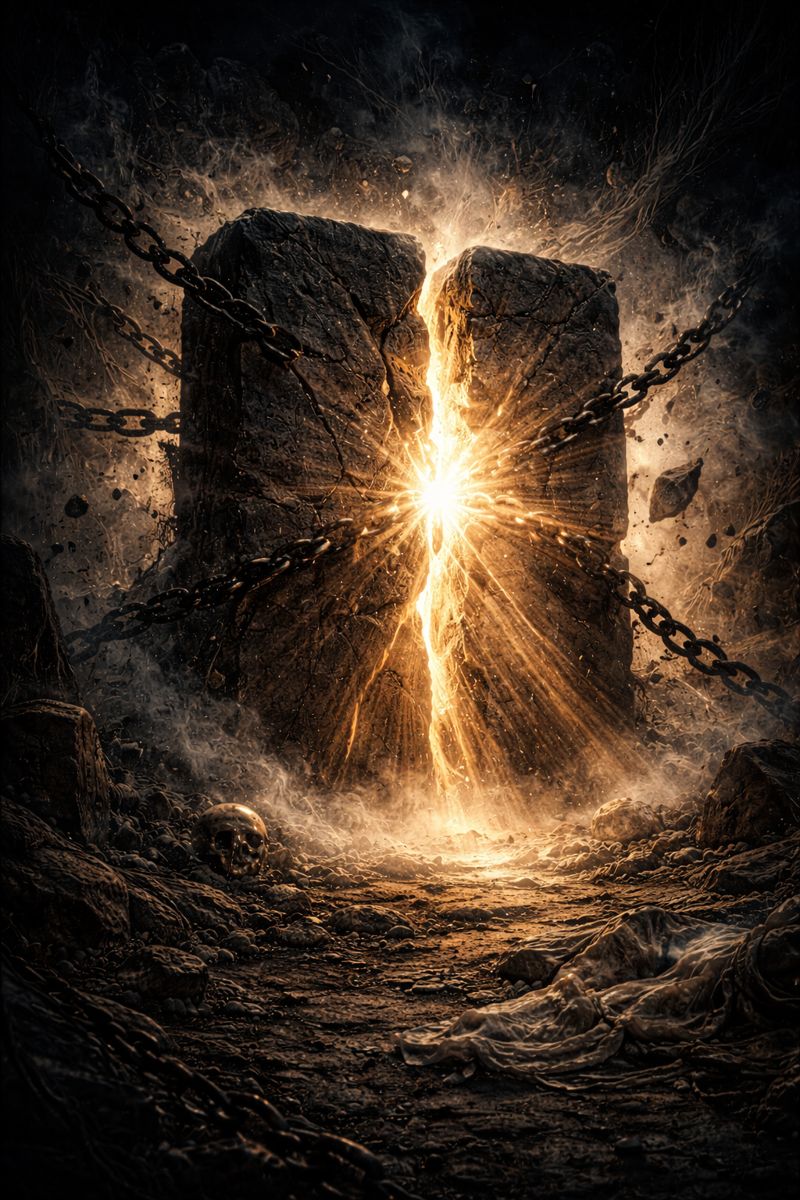
By waiting four days, Jesus removes every possible attempt to soften the miracle. Lazarus is not mostly dead, nor is he recently deceased. He belongs fully to the realm of death as it is understood by everyone present. When Jesus calls him out, He is not interrupting death in progress. He is reversing a settled verdict and reclaiming what death has already claimed.
A Sign, Not a Rescue
John consistently refers to Jesus’ miracles as signs. A sign exists to reveal something beyond itself rather than to stand alone as an act of power or compassion.
Lazarus will die again, which makes it clear that this act is not primarily about extending one man’s life. The delay ensures that the sign cannot be reduced to mercy or healing ability. Jesus does not act at the margins of death or in a moment of ambiguity. He enters death’s domain openly and asserts authority there, making clear that the issue at hand is not rescue but rule.
“I Am the Resurrection and the Life”
Before acting, Jesus draws Martha into a deeper confrontation with what she believes. She expresses a sincere but distant faith in resurrection at the last day, a belief that looks forward but remains abstract. Jesus does not correct her theology, but He does not allow it to remain detached from the present moment.
When He says, “I am the resurrection and the life,” He is not describing a future mechanism or event. He is locating resurrection in Himself. Resurrection is no longer merely something God does at the end of history. It is something embodied in the Son. The act that follows demonstrates that claim physically, and the delay ensures that it cannot be dismissed as symbolic language or theological metaphor.
A Cosmic Provocation, Not Just a Human One
The raising of Lazarus confronts more than human authorities. It also confronts the unseen powers that stand behind the structures of death and rule.
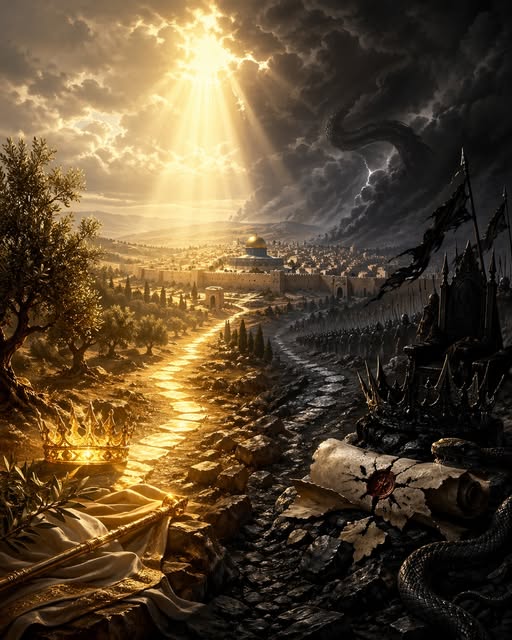
In the biblical worldview, death is not neutral. It is territory. The realm of the dead is associated with hostile spiritual powers that benefit from humanity’s separation from life. For this reason, the reversal of death is never portrayed as a purely restorative act. It is an act of divine invasion. By waiting until death is unquestioned and complete, Jesus turns Lazarus’ tomb into contested ground. He does not negotiate with death or appeal to it. He commands it, and it obeys.
The Transfiguration, Moses, Elijah, and the Defiance of Death
The Transfiguration must be read alongside the raising of Lazarus to understand the full scope of what Jesus is doing. On the mountain, Jesus is revealed in glory and accompanied by Moses and Elijah. Their presence is not sentimental, and it is not accidental. Both figures represent direct violations of death’s assumed permanence and already signal that death’s authority is conditional rather than absolute.
Moses and Elijah also appear for the most straightforward and widely recognized reason. Moses represents the Law and Elijah represents the Prophets, together standing for the full witness of Israel’s Scriptures. Their presence signals continuity rather than replacement. Jesus is not rejecting Israel’s story or introducing a new one. The Law and the Prophets bear witness to Him and then yield to Him, which is why the heavenly voice does not instruct the disciples to listen to Moses or Elijah, but to the Son alone.
More importantly, Moses and Elijah do not appear as independent exceptions to death. They appear in submission to the Son. Moses dies, and his burial becomes a matter of dispute in the unseen realm. Elijah does not die at all but is taken bodily. Both realities confront the powers with evidence that death has never held absolute authority. When the voice from heaven declares, “This is my Son. Listen to Him,” authority is consolidated. Whatever victory over death existed before now finds its fulfillment in Christ, and the message to the unseen realm is unmistakable.
Why the Cross Becomes Inevitable
After Lazarus is raised, the decision to kill Jesus is finalized. This response cannot be explained adequately by theological disagreement or political inconvenience alone. The sign has revealed that death itself is losing its grip. If Jesus can publicly reverse death after four days, then the existing order, both earthly and supernatural, cannot remain intact.
The move toward the cross is therefore not a sign of Jesus losing control but of the powers recognizing what continued restraint would mean. They act to eliminate Him, not realizing that death is the very weapon that will be stripped from them through His obedience and resurrection.
Conclusion
Jesus waited four days because anything less would have revealed less about what He was confronting. The delay allows death’s authority to be fully asserted before it is publicly overturned, removing every attempt to minimize what takes place at the tomb. Lazarus is not restored at the edge of death but called back from a state that everyone present understands to be final, exposing death’s claim as provisional rather than absolute.
When this act is read alongside the Transfiguration, the scope of the confrontation becomes clear. On the mountain, Jesus is identified as the Son who stands above the Law and the Prophets, while Moses and Elijah bear witness and yield to Him. That declaration is made in the heavenly realm, where authority is recognized before it is enforced. At the tomb of Lazarus, that same authority is exercised on the ground, reclaiming territory death claims as its own and signaling to both human authorities and the unseen powers that the existing order cannot continue unchanged.
The raising of Lazarus does not delay the cross but makes it inevitable. By demonstrating authority over death itself, Jesus forces a response from those whose power depends on death’s permanence. The attempt to wield death against Him will not preserve that authority but destroy it. The fourth day marks the moment when death’s claim is publicly defied, setting in motion the final confrontation in which death itself will be entered, emptied, and ultimately undone.
Discussion Questions
- How does the four-day delay in John 11 change the way you understand Jesus’ authority over death compared to other healing or raising accounts in the Gospels?
- In what ways does reading death as “territory” rather than merely a biological event reshape how you interpret the raising of Lazarus and its immediate consequences?
- How does the Transfiguration function as a declaration of authority when read alongside the raising of Lazarus, and what is gained by viewing these events together rather than in isolation?
- Why is it important to distinguish between Lazarus being raised back to mortal life and Christ’s resurrection, and how does that distinction clarify what this sign is meant to reveal?
- If the raising of Lazarus made the cross inevitable, what does that suggest about the relationship between divine authority, human resistance, and the role of death in the Gospel narrative?
Want to Know More
- N. T. Wright, The Resurrection of the Son of God
A foundational work on resurrection in Second Temple Judaism and early Christianity that clearly distinguishes between resuscitation, translation, and true resurrection. Wright’s treatment helps clarify why Lazarus’ raising is not resurrection proper and why that distinction matters theologically. - Craig S. Keener, The Gospel of John: A Commentary
One of the most detailed and historically grounded commentaries on John. Keener gives sustained attention to John 11, the four-day detail, Jewish beliefs about death, and why this sign functions as the catalyst for the Passion. - Richard Bauckham, Jesus and the Eyewitnesses
This work strengthens the reading of John as intentional, carefully structured testimony rather than loose theological reflection. Bauckham’s work supports the idea that details like timing, location, and reaction are purposeful and meaningful. - Michael S. Heiser, The Unseen Realm
A clear introduction to the divine council worldview, the role of the elohim, and the biblical understanding of death, powers, and authority. This provides the conceptual framework needed to understand why death is treated as contested territory rather than a neutral state. - G. K. Beale, Handbook on the New Testament Use of the Old Testament
Helpful for understanding how Law, Prophets, and fulfillment function together, especially in scenes like the Transfiguration, where Moses and Elijah appear as witnesses rather than continuing authorities.
About the Author