Islam divided into Sunni and Shia branches over succession after the death of Muhammad. Sunnis grounded leadership in communal selection. Shia grounded it in divinely appointed lineage through Ali and a line of Imams. Over time, this developed into a theological system centered on sacred authority transmitted through bloodline.
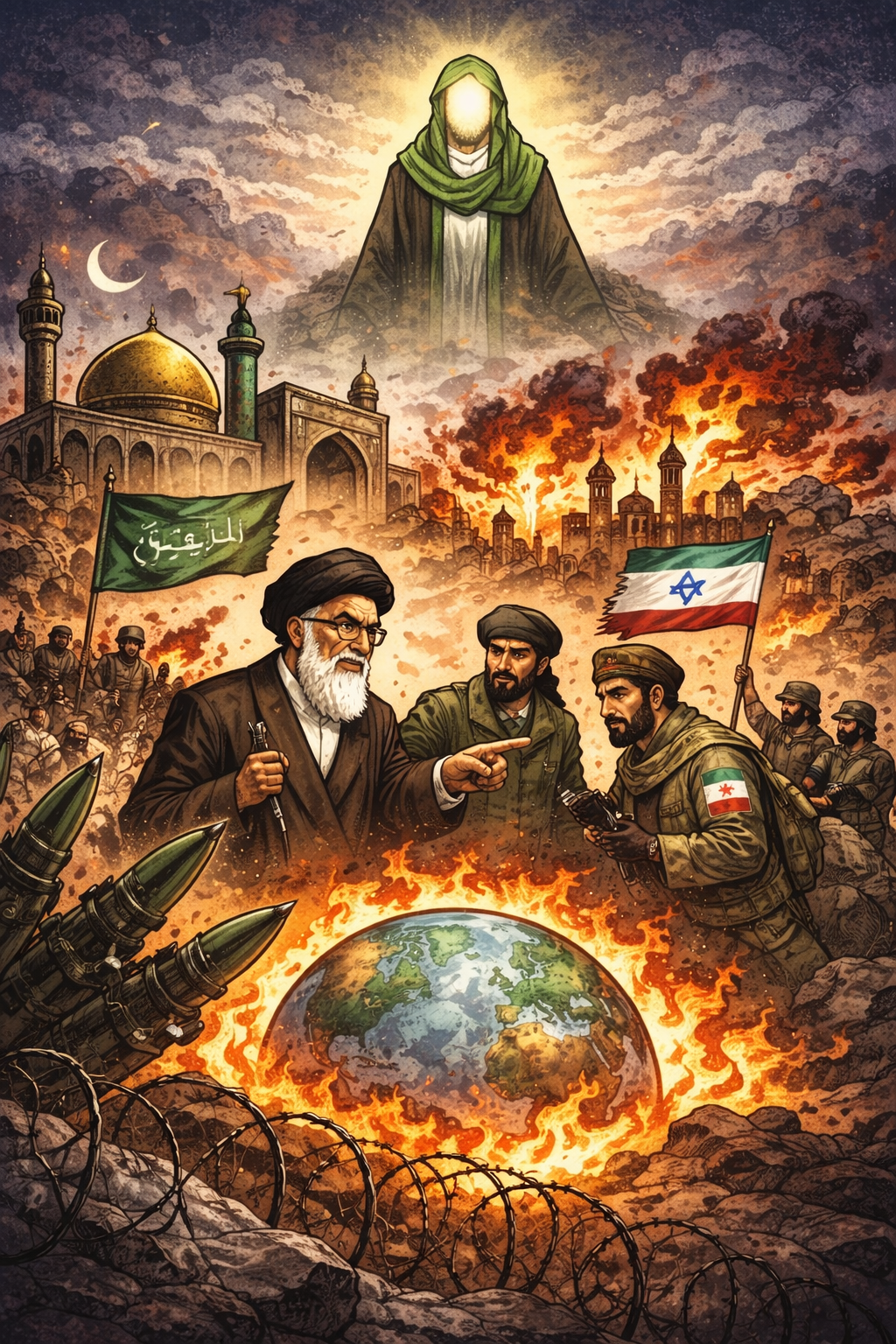
Twelvers, the largest Shia group, believe twelve Imams were appointed through Muhammad’s lineage. The twelfth, Muhammad al-Mahdi, entered occultation in the ninth century and remains alive but hidden. He will return to establish global justice and rule decisively over the world.
Occultation and Sovereignty
The doctrine of occultation creates a structural tension. If the only fully legitimate ruler is absent, what authority can any government claim? For centuries, clerics limited themselves to jurisprudence and religious guidance while political rulers operated without claiming divine infallibility. That restraint ended in the twentieth century.
The Constitutionalization of Guardianship
Ruhollah Khomeini argued that the Imam’s absence did not suspend divine governance. He asserted that qualified jurists must rule as deputies of the Hidden Imam until his return. This doctrine, Velayat-e Faqih, transformed clerical authority into political sovereignty.
After 1979, this interpretation became constitutional law. The Supreme Leader governs not merely as a political head of state but as steward of the Islamic Revolution and representative of the Hidden Imam. The regime’s legitimacy is explicitly theological.
Apocalyptic Expectation as Political Resource
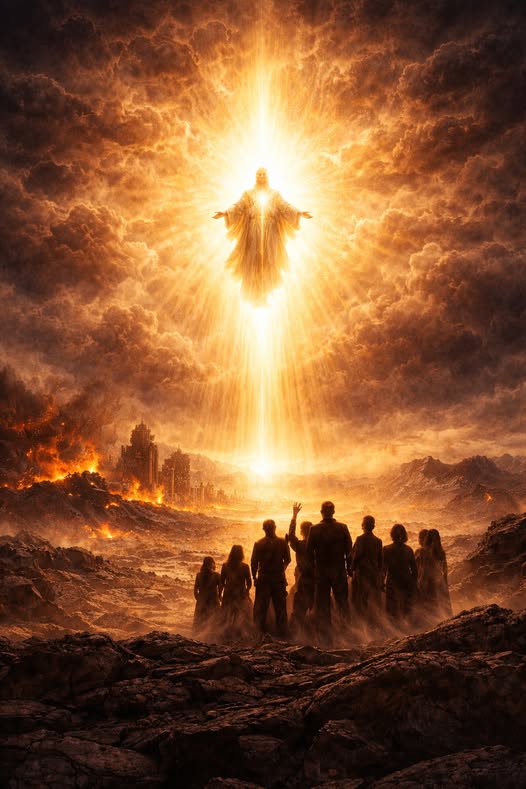
Twelver hadith literature describes the period before the Mahdi’s return as marked by severe injustice, violent upheaval, and widespread bloodshed. Many narrations speak of large-scale conflict in the Middle East and dramatic confrontation preceding the establishment of global justice. The Mahdi’s arrival is portrayed as forceful intervention that overturns existing political orders.
Those themes provide a powerful reservoir of imagery. When a regime defines itself as guardian during the occultation, apocalyptic expectation becomes politically useful. Instability can be framed as prelude. Conflict can be cast as purification. Endurance under pressure becomes participation in sacred history rather than evidence of failure.
Leveraging Sacred Narrative
The Islamic Republic repeatedly frames its struggle in theological terms. Resistance to Western pressure is cast as moral duty. Hostility toward Israel is framed as alignment with ultimate justice. Sacrifice, whether economic or military, is presented as fidelity to the revolution and preparation for a divinely ordered future.
This does not require leaders to openly declare they seek chaos. It requires only that confrontation and hardship can be absorbed into a sacred narrative that promises ultimate vindication. That framing strengthens ideological cohesion and reduces internal pressure to normalize relations or abandon revolutionary posture.
Conclusion
Twelver Shiism teaches that history culminates in the return of the Hidden Imam to establish global justice through decisive intervention. The Islamic Republic has embedded that expectation into its governing structure and uses its imagery to reinforce revolutionary legitimacy.
By leveraging apocalyptic themes, Iran’s leadership turns geopolitical struggle into theological mission. Conflict is not merely strategic competition; it is framed as alignment with sacred destiny. Any serious analysis of the regime must account for how eschatological expectation is used to sustain confrontation, justify sacrifice, and preserve ideological control.
Discussion Questions
- How does the doctrine of the Hidden Imam shape Twelver concepts of political legitimacy, and how did the doctrine of Velayat-e Faqih alter that framework?
- In what ways can apocalyptic expectation function as a source of political cohesion within a revolutionary state?
- How does embedding theology into constitutional authority change how a regime defines success, sacrifice, and endurance?
- What is the difference between a religious belief influencing private devotion and that belief being structurally integrated into state governance?
- How should policymakers analyze a regime that grounds its legitimacy in sacred history without either exaggerating its theology or ignoring it altogether?
Want to Know More
- Moojan Momen, An Introduction to Shiʿi Islam: The History and Doctrines of Twelver Shiʿism.
A foundational overview of Twelver history, doctrine, and development. Momen explains the doctrine of the Imamate, the occultation, and the evolution of Shia political thought in a clear and accessible way. - Said Amir Arjomand, The Shadow of God and the Hidden Imam: Religion, Political Order, and Societal Change in Shiʿite Iran.
A serious scholarly treatment of how Twelver theology shaped political authority in Iran over centuries. Essential for understanding how religious concepts were transformed into political structures. - Hamid Mavani, Religious Authority and Political Thought in Twelver Shiʿism: From Ali to Post-Khomeini.
Examines the development of clerical authority and the theological debates surrounding Velayat-e Faqih. Particularly useful for tracing how Khomeini’s theory diverged from earlier Shia restraint. - Mehran Kamrava, ed., How Islam Rules in Iran: Theology and Theocracy in the Islamic Republic.
Explores how the Islamic Republic institutionalized clerical guardianship and how theology functions within Iran’s political system today. - **Muhammad ibn Ibrahim al-Nuʿmani, Kitab al-Ghayba (The Book of Occultation). **
A classical Shia work focusing on the occultation of the Twelfth Imam and the expectations surrounding his return. Important for understanding the eschatological framework from primary sources.
About the Author