At first glance, Christianity can appear to make a claim familiar to the ancient world. Many religions speak of gods appearing among humans, walking the earth, or manifesting themselves in visible form. Yet when the Christian claim is examined carefully, it refuses to sit comfortably alongside those traditions. Christianity does not proclaim that God merely visited humanity or projected a divine image into history. It insists that the Creator entered His own creation as a real human being, fully assuming human existence and remaining bound to it permanently. This distinction is not cosmetic or semantic. It reshapes how divinity, power, authority, and salvation are understood.
In the religious landscape of antiquity, gods descended without risk and appeared without surrender. The incarnation stands apart because it does neither. It does not preserve divine distance. It collapses it.
Divine Appearances Before the Incarnation
The ancient world was not unfamiliar with the idea that gods could appear in human form, and this included Israel’s own Scriptures. This is why the crowd at Lystra could look at Paul and Barnabas and conclude that Zeus and Hermes had come down among them. That reaction only makes sense in a cultural environment where divine visitations were already conceivable. Pagan mythology contained countless stories of gods walking among mortals, testing hospitality, dispensing favors, or delivering judgment.
The Hebrew Scriptures also record moments where Yahweh appears in human form. He eats with Abraham by the oaks of Mamre. He wrestles with Jacob through the night. The Angel of the Lord speaks as God, receives worship, and bears the divine name. These appearances are real, embodied, and at times unsettlingly personal. Israel was never committed to a theology in which God was incapable of appearing as a man.
Yet these appearances are consistently framed as temporary manifestations rather than permanent assumption. Yahweh appears, accomplishes a purpose, and withdraws. The human form mediates divine presence but does not redefine God’s mode of existence. In both pagan epiphanies and biblical theophanies, divine invulnerability is preserved. The god may look human and speak human language, but hunger, suffering, ignorance, and death are not embraced as enduring realities.
This logic was reinforced throughout the Ancient Near East by cultic practice. While stories of divine appearances circulated, the ordinary mechanism of divine presence was the idol. The statue functioned as a localized residence, animated through ritual so the god could be accessed and served. Even when a god appeared, the distance between divine power and human vulnerability remained intact.
The incarnation does not fit this pattern. Jesus is not a temporary manifestation or a divine visitor who enters and exits humanity at will. He is conceived, born, raised, and formed within human history, and He does not shed that humanity afterward. The resurrection does not reverse the incarnation. It confirms it. Yahweh had appeared as a man before. He had never become one.
What the Incarnation Actually Claims
The incarnation breaks the ancient pattern entirely. Jesus does not appear human. He becomes human. He grows, learns, tires, grieves, fears, hungers, suffers, and dies without bypassing those realities through divine privilege. He refuses to act independently of the Father to escape human limitation. Nothing about His humanity is simulated, and nothing about His suffering is staged.
Most decisively, He does not abandon humanity once His mission is complete. The risen Christ remains embodied. No pagan system imagines a god permanently binding Himself to creaturely existence, because divinity in those systems is defined by immunity and distance. Christianity defines divinity through presence and self-giving.
Sacrifice Reversed
Pagan religion assumes that humans exist to serve the gods. Sacrifice feeds them, appeases them, or secures their favor. Even when offerings are symbolic, the direction remains fixed. Humans give. Gods receive. Divine power is sustained through transaction.
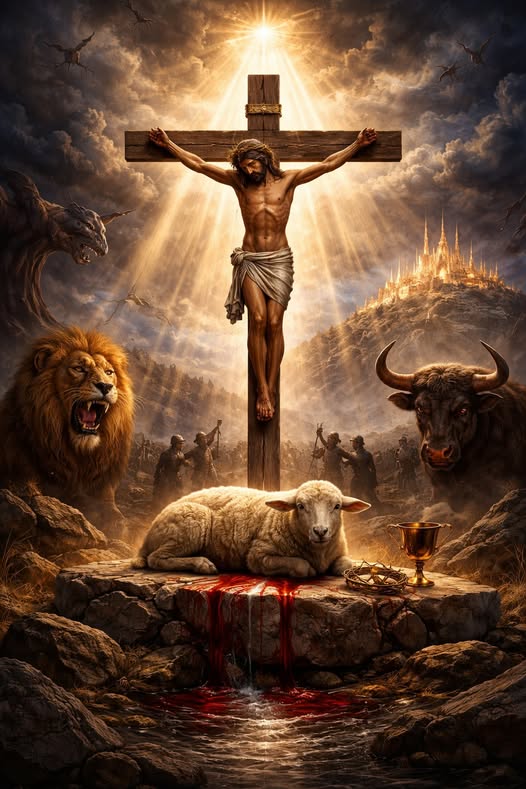
The incarnation reverses that logic completely. God does not demand sacrifice in order to sustain Himself. He becomes the sacrifice in order to restore humanity. Jesus offers Himself once, decisively, bringing the sacrificial economy to an end. The cross is not a ritual exchange meant to satisfy divine need. It is a judgment on every system that treats divine power as something to be managed, fed, or manipulated.
This reversal explains why early Christians were accused of atheism. They had no idols, no sacred images, and no cult statues to dress or feed. Their God had already acted fully and finally and could not be localized or controlled.
Authority Reimagined
In mythic religion, power is demonstrated through domination. Authority is proven by conquest, punishment, and endurance. The gods rule because they outlast those beneath them and impose their will without consequence.
The incarnation reframes authority altogether. Jesus rules not by coercion but by obedience. He washes feet, submits to unjust judgment, and allows Himself to be executed by the very structures He could dismantle. This is not weakness disguised as virtue. It is a redefinition of authority itself. Power is no longer measured by how much suffering one can inflict, but by how much one is willing to bear for others.
Psalm 82 and the Terror of Mortality
Psalm 82 is devastating because it introduces something entirely foreign to the beings it addresses. These elohim are not warned that they will lose influence or prestige. They are told they will die. Death is not a natural endpoint for them, nor a risk they ever had to factor into their rule. They governed humanity from a position of invulnerability, judging creatures who were born, aged, suffered, and died while they themselves remained untouched by decay.
Psalm 82 collapses that asymmetry. “You will die like men” is not insult or metaphor. It is the imposition of a condition they had never lived under. Mortality, once a fate imposed on others, becomes their own end. Their immortality, which insulated them from the cost of injustice, is stripped away. They are forced into the creaturely condition they treated as expendable.
At the same time, the biblical story introduces a second reversal moving in the opposite direction. While these invincible beings are sentenced to die like men, mortal humans who are loyal to Christ are promised immortality through Him. The exchange is deliberate. Those who abused authority lose the life they assumed was theirs by right. Those who lived under the shadow of death are given life they never possessed by nature.
Death, Resurrection, and the Great Reversal
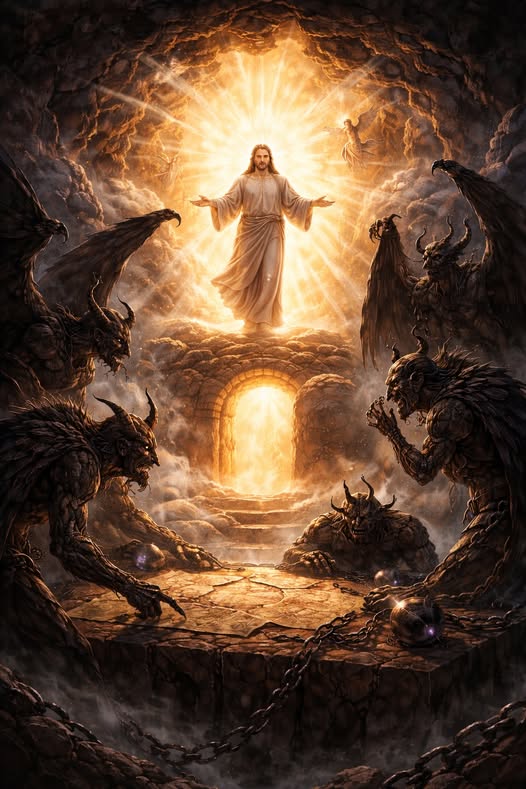
This is where Psalm 82 and the incarnation fully converge. The condemned rulers are dragged into mortality as judgment. The Son of God enters mortality by choice. He dies the death they are sentenced to, but He does not remain there. Through His resurrection, death is transformed from an end into a passage. Those united to Him do not merely survive death. They pass through it into immortality.
The result is a complete inversion of the old order. The beings who ruled without fear of death are marked for it. The beings who lived under the weight of death are freed from it. Authority and life are no longer aligned with invulnerability and power, but with obedience and faithfulness to Christ.
Inheriting the Nations
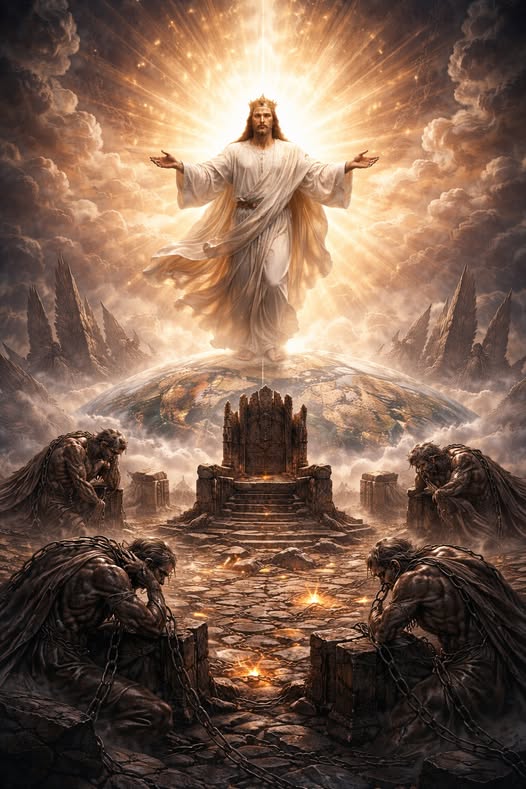
Psalm 82 ends with a plea that God would arise, judge the earth, and inherit the nations. The incarnation is that answer. God does not reclaim the nations through domination from above, but through descent, obedience, death, and resurrection. The nations are not seized by force. They are inherited by faithfulness.
Conclusion
The incarnation is not Christianity borrowing pagan categories. It is Christianity that collapses them. Avatars preserve divine distance. The incarnation abolishes it. Idols localize power. The incarnation releases it. Pagan gods demand sacrifice. The incarnate God becomes it. Immortal rulers are sentenced to die. Mortal believers are promised immortality through Christ.
Psalm 82 announces the end of invincible rebellion. The incarnation reveals what replaces it.
Discussion Questions
- How does the Christian claim that God permanently assumed human nature challenge ancient ideas that divinity must remain distant, invulnerable, and untouched by suffering?
- In what ways does Psalm 82’s sentence that the elohim will “die like men” reshape our understanding of authority, accountability, and judgment in the unseen realm?
- Why is Christ’s real death essential to the argument that He replaces the corrupt rulers of Psalm 82, and what would be lost if His suffering were only symbolic or apparent?
- How does the incarnation redefine power and kingship when compared with pagan models that equate authority with domination, endurance, and coercion?
- Psalm 82 ends with a plea that God would inherit the nations. How does the incarnation, followed by the crucifixion and resurrection, answer that plea in a way that conquest or force never could?
Want to Know More
- Larry W. Hurtado, Lord Jesus Christ: Devotion to Jesus in Earliest Christianity
A landmark study showing that devotion to Jesus as divine emerged immediately within Second Temple Judaism, not through pagan influence. Hurtado’s work is especially helpful for demonstrating why the incarnation cannot be categorized as a pagan avatar or secondary deity. - Richard Bauckham, Jesus and the God of Israel: God Crucified and Other Studies on the New Testament’s Christology of Divine Identity
Bauckham argues that the New Testament includes Jesus within the unique divine identity of Yahweh. This directly undercuts claims that Jesus fits the mold of pagan divine appearances, since the incarnation involves Israel’s God acting within history rather than a lesser god visiting it. - G. K. Beale, We Become What We Worship: A Biblical Theology of Idolatry
Beale traces how idolatry deforms humanity throughout Scripture and contrasts it with God’s goal of restoring humans into His image. This pairs naturally with the incarnation, where God does not localize Himself in an object but transforms people through union with Christ. - John D. Currid, Against the Gods: The Polemical Theology of the Old Testament
Currid demonstrates how the Old Testament consistently confronts and dismantles pagan theological assumptions. This provides an essential backdrop for understanding the incarnation as the climax of biblical polemic rather than a borrowing from surrounding religions. - Robert M. Bowman Jr. and J. Ed Komoszewski, Putting Jesus in His Place: The Case for the Deity of Christ
A clear, text-driven defense of Christ’s full deity that helps bridge scholarly arguments and accessible teaching. It supports the claim that the incarnation represents a unique divine act rather than a mythic pattern shared with pagan gods.
About the Author