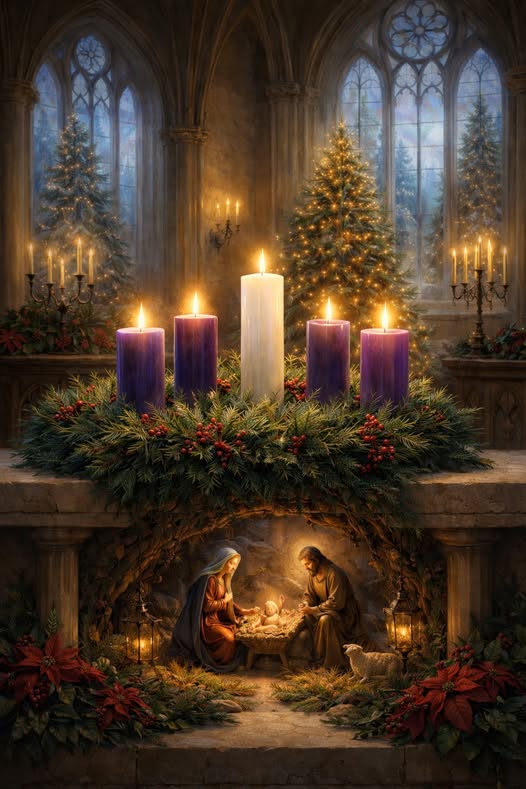
Christmas is one of the most widely recognized celebrations in the world, yet the way it is observed today is the result of a long and complex historical development. The celebration did not appear fully formed, nor was it practiced uniformly across time or place. From the absence of a formal feast in the early church to the rise of a structured liturgical calendar, to the emergence of domestic and cultural traditions, Christmas has taken many different shapes.
The celebration of Christmas has taken many forms across history, shaped by worship practices, calendar development, communal customs, and cultural expression. Over time, the remembrance of Christ’s birth moved from informal proclamation to an established feast and eventually to a global season observed in many different ways. Tracing that development helps distinguish ancient practice from later custom and clarifies how the modern celebration came to be.
Why Christmas Began to Be Celebrated
The celebration of Christmas emerged as part of the church’s effort to order time around the life of Christ. As Christianity spread and developed a liturgical calendar, communities began marking major events of Christ’s life within the year, not only His death and resurrection but also His birth. This development reflects the growing use of sacred time as a means of teaching and communal remembrance.
Christmas was never presented as a commanded observance or a replacement for biblical feasts. It functioned as a commemorative practice, comparable to later celebrations such as Purim, which marked significant acts of God without being mandated in the Torah. The church distinguished between divine command and communal remembrance, and Christmas belonged firmly to the latter category.
Claims that Christmas originated as a Christianized pagan festival misunderstand both chronology and intent. Early explanations for the celebration arise from Christian theological chronology rather than attempts to absorb Saturnalia or Sol Invictus. December 25 fits an internal framework that links conception, death, and resurrection within a unified sacred timeline. The celebration developed as a way to proclaim the incarnation within the church’s own worldview, not as a concession to surrounding culture.
The First Centuries: Worship Without a Nativity Feast
In the earliest centuries of Christianity, there was no annual feast dedicated specifically to the birth of Jesus. Christian worship centered on weekly gatherings marked by Scripture, prayer, and the Eucharist, with Pascha serving as the focal point of the yearly rhythm. Time was experienced primarily through recurring worship rather than through a calendar filled with commemorative dates.
This approach reflected how early Christian communities structured their life together. Sacred time was shaped by repetition and participation rather than by annual observance, and worship emphasized the gathered community rather than specific historical anniversaries.
The Fourth Century: Fixing a Date for the Nativity
The celebration of Christmas as a distinct feast took shape in the fourth century as Christianity became publicly practiced and increasingly organized. The development of a liturgical calendar allowed major events in Christ’s life to be proclaimed in a structured and recurring way. Assigning a date to the Nativity placed the incarnation within the annual rhythm of worship.
In the Western church, December 25 became established as the feast of the Nativity, while January 6 held prominence in parts of the Eastern tradition. Over time, these dates were integrated into a broader calendar that shaped how Christians experienced sacred time throughout the year.
Late Antiquity and the Early Middle Ages: A Liturgical Celebration
As Christmas spread across the Christian world, its celebration was primarily liturgical. Worship services emphasized Scripture readings, prayers, hymns, and the Eucharist. In many places, Christmas was marked by extended vigils and multiple services, reinforcing its communal and ecclesial character.
The celebration expanded into a season rather than a single day, linking Christmas with Epiphany and highlighting Christ’s manifestation to the world. During this period, Christmas was experienced almost entirely within the context of church worship, with meaning communicated through ritual, repetition, and shared participation.
The High Middle Ages: Visual and Communal Expression
During the medieval period, Christmas took on a more visible and communal presence beyond the church walls. Nativity scenes, public pageants, and dramatic reenactments of the birth of Christ became common. These practices communicated the Nativity through image and performance in societies where literacy was limited.
Feasting, hospitality, and acts of charity became closely associated with the season. These customs reflected the integration of religious celebration with local culture and community life. Christmas remained centered on worship while also functioning as a shared social experience.
The Reformation: Reforming or Rejecting the Feast
The Protestant Reformation introduced significant variation in how Christmas was observed. Some reformers retained the celebration while reshaping it around preaching and Scripture. Others rejected it altogether, viewing it as a human tradition rather than a necessary element of Christian worship. In certain regions, Christmas observance was restricted or temporarily abolished.
These differences resulted in distinct Christmas cultures across Europe. Where the feast was retained, it was often simplified. Where it was rejected, the rhythm of the Christian year shifted accordingly. Over time, Christmas returned to most Protestant traditions, though often in modified forms that reflected Reformation priorities.
The Early Modern and Victorian Periods: The Domestic Turn
From the eighteenth century onward, Christmas increasingly moved into the home. Family-centered celebrations, gift-giving, and children’s customs became prominent. Literature, music, and art emphasized themes of warmth, generosity, and moral reflection. Many traditions now associated with Christmas, including decorated trees and popular carols, developed during this period.
This shift marked a change in emphasis. Christmas was no longer experienced primarily as a liturgical season but as a domestic and cultural one. Church observance continued, but it now existed alongside growing social and familial traditions that shaped the public perception of the holiday.
The Modern Era: Culture, Commerce, and Continuity
In the modern world, Christmas functions simultaneously as a religious feast, a cultural tradition, and a commercial season. Media, global markets, and secular institutions have amplified certain elements of Christmas while marginalizing others. The result is a layered celebration that carries different meanings depending on context.
Despite these changes, Christmas remains rooted in its historical development. Worship, proclamation, and remembrance continue within Christian communities, even as the surrounding culture emphasizes celebration, generosity, and seasonal sentiment.
Conclusion
The history of Christmas reveals a tradition shaped by worship, calendar development, and culture across centuries. From its absence in the earliest Christian calendar, to its establishment as a liturgical feast, to its expansion into communal and domestic life, Christmas has continually adapted to changing contexts.
Tracing how Christmas has been celebrated through the centuries allows the season to be approached with greater clarity and intention. Rather than viewing Christmas as either timeless or corrupted, its history shows a living tradition carried forward by communities who marked time in light of Christ’s coming. The form has changed, but the act of remembrance endures.
Discussion Questions
- How did the early Christian emphasis on weekly worship and Pascha shape the way sacred time was understood before Christmas became an established feast?
- What does the development of a liturgical calendar in the fourth century reveal about how the church used time and repetition as tools for teaching and communal formation?
- In what ways did medieval practices such as nativity scenes, public pageants, and communal feasting change how ordinary people experienced Christmas compared to earlier centuries?
- How did the Reformation’s differing approaches to Christmas reshape the celebration in various regions, and what lasting effects of those changes can still be seen today?
- How can understanding the historical development of Christmas help modern Christians navigate the tension between worship, cultural tradition, and commercial influence during the season?
Want to Know More
- Thomas J. Talley, The Origins of the Liturgical Year
A classic and still authoritative study on how the Christian calendar developed, including the emergence of Christmas and Epiphany. Essential for understanding how sacred time was structured in late antiquity. - Susan K. Roll, Toward the Origins of Christmas
A focused historical examination of how Christmas emerged as a feast, addressing early chronological traditions and regional differences between East and West. - Bruce David Forbes, Christmas: A Candid History
A well-researched survey tracing Christmas from the early church through the modern period, addressing liturgical development, cultural adaptation, and commercialization without relying on popular myths. - Andrew McGowan, Ancient Christian Worship: Early Church Practices in Social, Historical, and Theological Perspective
Provides crucial background on early Christian worship patterns and explains why annual feasts like Christmas were slow to develop in the first centuries. - Penne L. Restad, Christmas in America: A History
An in-depth study of how Christmas shifted toward domestic, cultural, and commercial forms in the modern era, especially during the nineteenth century.
About the Author