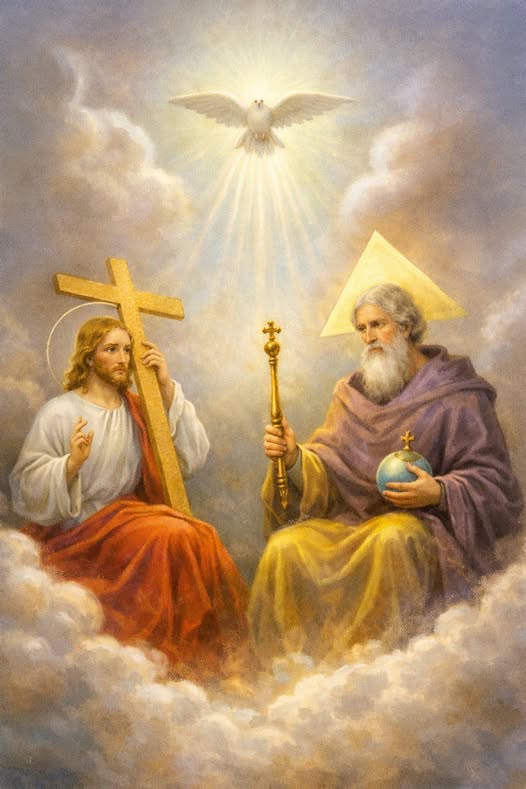
The doctrine of the Trinity stands at the center of historic Christian theology, not as a later philosophical construction, but as a conclusion demanded by the whole witness of Scripture. Christianity confesses that God is one in essence and three in person: Father, Son, and Holy Spirit. These persons are not parts of God, nor temporary roles God adopts, nor ranked beings within a divine hierarchy. Each fully shares the one divine nature, possessing the same authority, glory, power, and eternality.
This doctrine is often caricatured as a contradiction or dismissed as a fourth-century invention. In reality, Trinitarian theology arose because Scripture repeatedly speaks of God’s oneness while also presenting distinctions within God’s own life and activity. The early Church did not impose the Trinity onto the Bible. It was compelled to clarify what the Bible already reveals, because the Father is called God, the Son is called God, the Spirit is called God, and yet God remains one.
A faithful approach starts in the Old Testament, where God’s oneness is explicit, but the building blocks for personal distinction are already present. The New Testament does not create the Trinity from scratch. It unveils what was already there, now seen clearly in the incarnation of the Son and the outpouring of the Spirit.
Old Testament Foundations for God’s Oneness and God’s Distinctions
The Old Testament is uncompromising about monotheism. Israel’s confession is that Yahweh alone is God, unique and unrivaled. The point is not that other spiritual beings do not exist, but that Yahweh is the only uncreated Creator, the only sovereign Lord, and the only proper object of worship. This clear insistence on God’s oneness becomes the guardrail that prevents the Trinity from collapsing into three gods.
At the same time, the Old Testament contains repeated patterns where God is both one and yet described in ways that involve real distinction. One of the clearest is the recurring language of God speaking in the plural. In Genesis, God says, “Let us make man in our image.” This does not prove the Trinity by itself, but it does show that Scripture is comfortable presenting God in a way that is not flattened into a solitary, strictly singular self-reference. The text does not explain the grammar away. It simply presents it as part of the biblical portrait of God.
Another important thread is the way the Old Testament speaks of God’s Word as more than mere sound. God’s Word acts. God’s Word creates. God’s Word goes forth and accomplishes God’s will. This prepares for the New Testament’s identification of the Son as the eternal Word. When the Gospel of John opens by describing the Word as both with God and as God, it is not inventing the concept of divine Word. It is identifying what the Old Testament already treated as God’s personal, active self-expression.
A third thread is the Spirit of God. The Old Testament portrays the Spirit as God’s own presence and power, not as a created helper. The Spirit is active in creation, empowers leaders, speaks through prophets, and brings life. The Spirit is not treated as an angel or a force that can be separated from God. The Spirit is God present and acting. That sets the stage for the New Testament’s direct identification of the Spirit as fully divine and personal.
The Old Testament also introduces a pattern that becomes critical for the doctrine of the Son’s deity: passages where Yahweh is distinguished from Yahweh in relational language. There are texts where Yahweh speaks to a figure who shares Yahweh’s authority or name, and texts where a figure closely identified with Yahweh receives honor and carries divine prerogatives. These passages are not later Christian edits. They are part of Israel’s Scriptures, and they create categories that the New Testament later fills out with clarity when it reveals the Son as eternally with the Father.
One more Old Testament pattern matters because it rules out a common mistake. God’s oneness does not require God to be a solitary individual. Scripture presents God as one divine being who speaks, sends, reveals, and acts in ways that already anticipate personal distinction. The Trinity does not violate Old Testament monotheism. It is the fullest account of it, because it preserves both God’s unity and God’s self-revelation.
Scriptural Foundations for Co-Equality in the New Testament
The Gospel of John opens with language intentionally echoing Genesis. “In the beginning was the Word, and the Word was with God, and the Word was God.” John identifies the eternal Word as personally distinct from the Father and fully sharing the divine identity. The Word is not a created intermediary or a lesser divine agent. John places the Word squarely on the Creator side of the Creator–creation distinction.
This theme continues throughout John’s Gospel. When Jesus declares, “I and the Father are one,” the surrounding context makes clear that this is not merely a claim of shared purpose. His audience understands the statement as a claim to divine identity, responding with accusations of blasphemy. Jesus does not correct their understanding. The narrative reinforces that His unity with the Father is ontological, not symbolic or functional.
The same pattern appears in Matthew’s Great Commission. Jesus commands His followers to baptize “in the name of the Father and of the Son and of the Holy Spirit.” The use of a single name governing all three persons is theologically significant. This is not three gods sharing a ritual mention, nor one person appearing under three titles. It reflects a unified divine identity shared by three distinct persons.
Paul’s writings reflect the same Trinitarian structure. In his closing blessing to the Corinthians, he invokes the grace of Jesus Christ, the love of God, and the fellowship of the Holy Spirit. The Son and the Spirit are placed alongside the Father as equal participants in divine action toward the Church. No hierarchy is implied. Each person is essential, personal, and fully divine.
The deity of Christ is stated with particular clarity in Colossians, where Paul writes that in Christ “all the fullness of the Deity dwells bodily.” This language excludes any notion of partial divinity or delegated authority. The fullness of what it means to be God is present in Christ, even in His incarnate state.
The Holy Spirit is treated with the same divine status. Paul explains that the Spirit searches the depths of God, an activity that presupposes full participation in the divine nature. In Acts, Peter equates lying to the Holy Spirit with lying to God, collapsing any attempt to reduce the Spirit to an impersonal force or subordinate being. Scripture does not argue for the Spirit’s deity. It assumes it.
Taken together, the New Testament does not replace Old Testament monotheism. It sharpens it by revealing the Father, the Son, and the Holy Spirit as distinct persons who share one divine nature.
The Early Church and Doctrinal Clarification
The early Church did not invent the Trinity in response to philosophical curiosity. It defended the Trinity in response to theological distortion. As alternative interpretations emerged, especially those that subordinated the Son or diminished the Spirit, the Church clarified what had already been confessed in worship, prayer, and baptism.
Early theologians argued that salvation itself depended on the Son’s full deity. If the Word were a created being, even the highest of creatures, then humanity would remain separated from God. Only God can unite humanity to God. The incarnation did not limit the Son’s divine power or presence. The Word remained sovereign over creation even while taking on human flesh, demonstrating equality in nature and authority with the Father.
Other theologians emphasized that within the Trinity, there are no degrees of divinity. There is no greater or lesser within God, no sequence of nearness or distance. Each person fully possesses the divine essence, and whatever is true of God’s nature is equally true of the Father, the Son, and the Spirit.
Particular attention was also given to the Holy Spirit. The Spirit sanctifies, gives life, and is worshiped alongside the Father and the Son. These are not the actions of a subordinate agent. They are the works of God Himself, revealing the Spirit’s full co-equality within the Trinity.
What emerges from the early Church is not theological innovation, but theological fidelity. The Trinity was articulated precisely because Scripture demanded a framework that preserved both divine unity and personal distinction.
Co-Equality Without Confusion
Affirming co-equality does not erase personal distinction. The Father is not the Son. The Son is not the Spirit. The Spirit is not the Father. Yet none is lesser, created, or subordinate in nature. Functional distinctions exist in the unfolding of salvation, but these distinctions do not imply inequality of being or authority.
This balance is theologically essential. Without co-equality, Christ cannot fully reveal the Father, the Spirit cannot truly unite believers to God, and salvation becomes mediated by something less than God Himself. The doctrine of the Trinity preserves the Christian confession that God Himself acts to save, reveal, and dwell among His people.
The Trinity, therefore, functions not as an abstract puzzle, but as a safeguard. It protects the biblical claims about who God is and how God acts, without reducing divine reality to simpler but inaccurate models.
Conclusion
The co-equality of the Father, Son, and Holy Spirit is firmly rooted in both Testaments and consistently affirmed by the earliest generations of the Church. This doctrine arose not from speculation, but from obedience to the biblical witness. God is one in essence and three in person, eternally united, equally divine, and inseparable in glory and power.
Far from being a later corruption, the Trinity represents the Church’s careful effort to speak truthfully about the God who has revealed Himself. It remains a cornerstone of Christian theology because without it, the biblical portrayal of God cannot be preserved intact.
Discussion Questions
- How do the Old Testament portrayals of God’s Word and God’s Spirit challenge the idea that the Trinity is a purely New Testament or later theological development?
- In what ways does the Old Testament’s insistence on God’s oneness shape how Christians should understand the co-equality of the Father, Son, and Holy Spirit rather than seeing them as three separate gods?
- Why is the co-equality of the Trinity essential for salvation, and what theological problems arise if the Son or the Spirit is treated as less than fully divine?
- How does the New Testament’s use of shared divine actions and shared divine identity language strengthen the case for Trinitarian co-equality without collapsing the distinctions between persons?
- Why did the early Church need to clarify and defend the doctrine of the Trinity, and how does understanding that historical context help modern Christians respond to claims that the Trinity was invented later?
Want to Know More?
- Robert Letham, The Holy Trinity: In Scripture, History, Theology, and Worship
A comprehensive and carefully argued study that traces Trinitarian theology from the Old Testament through the New Testament and into the early creeds. Letham is especially strong at showing why co-equality is not a philosophical add-on but a theological necessity grounded in the biblical text. - Stephen R. Holmes, The Holy Trinity: Understanding God’s Life
This work focuses on how the doctrine of the Trinity emerged from Scripture and was clarified by the early Church. Holmes gives special attention to why the Church rejected subordinationist views and how co-equality preserves both divine unity and personal distinction. - Athanasius of Alexandria, On the Incarnation
A foundational early Christian text that demonstrates why the full deity of the Son is essential for salvation. Athanasius argues that only God Himself can heal and restore humanity, making this work central to understanding why co-equality became non-negotiable in orthodox Christianity. - Augustine of Hippo, On the Trinity
One of the most influential theological works on the Trinity, exploring divine unity, relational distinction, and equality of essence. Augustine’s careful reasoning helps clarify why there can be no degrees of divinity within God while still maintaining real personal distinctions. - Gregory of Nazianzus, Theological Orations
These sermons were instrumental in shaping Nicene orthodoxy, particularly regarding the deity of the Son and the Holy Spirit. Gregory’s work shows how the early Church defended co-equality while resisting both modalism and subordinationism.
About the Author