The Divine Council Worldview is a biblical framework that affirms the existence of a structured spiritual realm populated by divine beings under God’s supreme authority. This worldview is not speculative or fringe. It is deeply embedded in Scripture and was well understood by the ancient biblical authors. In recent years, it has reemerged as a vital corrective to the overly rationalistic and flattened theology that has dominated much of modern Christianity. As interest in paganism, New Age mysticism, and occult spirituality continues to rise, the Divine Council Worldview offers a grounded, supernatural vision that satisfies the hunger for mystery while remaining rooted in biblical truth.
This is not about reinventing Christianity or adopting foreign ideas. It is about reclaiming what was always present in the biblical text, a vision of God’s cosmic governance that includes a heavenly host, a divine assembly, and spiritual conflict that spans the visible and invisible realms. It helps us read the Bible with ancient eyes while strengthening our grip on the full scope of Christ’s victory.
The Scriptural Foundation
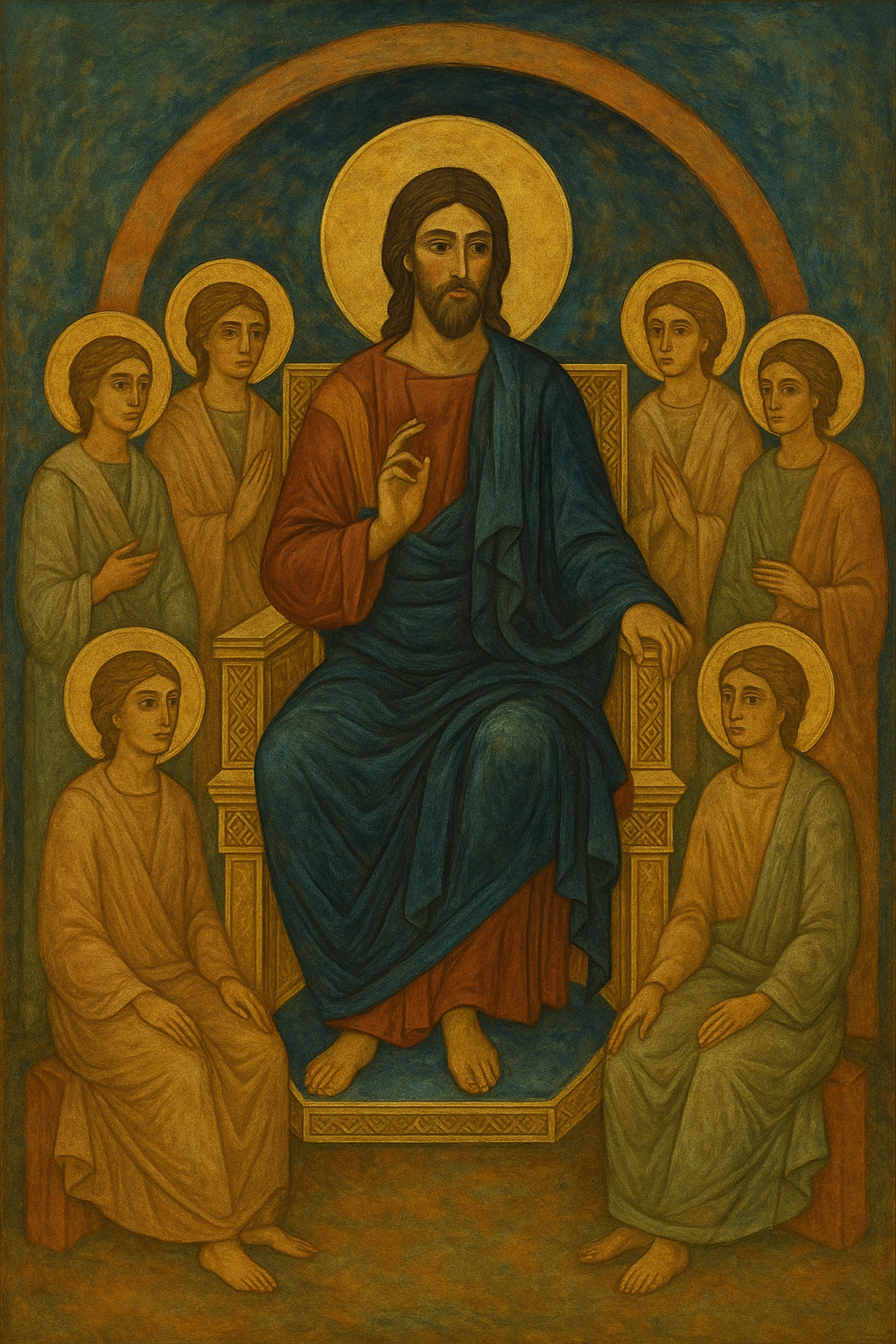
From Genesis to Revelation, the Divine Council is a recurring theme that frames God’s interactions with the heavenly realm and the human world. Psalm 82 depicts God standing in the divine assembly, passing judgment among lesser elohim. Job 1 and 2 show the “sons of God” presenting themselves before the Lord as part of a celestial court. Daniel 7 describes thrones being set up for judgment in heaven, and in 1 Kings 22, a scene unfolds where God consults the heavenly host on how to carry out judgment against King Ahab.
These are not vague poetic moments or literary flourishes. They are windows into a spiritual hierarchy where Yahweh, the Most High, rules over a host of divine beings. These beings are sometimes called “holy ones,” “sons of God,” or “angels,” but their purpose is always to serve the will of God, not to rival it. This council is functional and dynamic, carrying out divine decrees across the cosmos, but it always operates under the absolute sovereignty of the Creator.
Ancient Context and Biblical Distinction
The concept of a divine council was not unique to Israel. Ancient Near Eastern cultures such as those in Ugarit, Babylon, and Egypt also portrayed assemblies of gods who deliberated over human affairs. What sets the biblical account apart is its radical monotheism. In those other cultures, divine councils were pantheons composed of gods with competing wills and often limited powers. In Scripture, however, there is only one Most High God. The other elohim are not peers. They are created beings, subordinate to Yahweh and answerable to His judgment.
This contrast is essential. The biblical authors were clearly aware of the surrounding mythologies, but they reshaped and redirected that imagery to reveal a God who is not merely first among equals but utterly unique. The Divine Council in the Bible reflects not polytheism but a cosmic administration, one where spiritual beings play roles in the outworking of God’s purposes without threatening His supremacy.
Recovering the Supernatural Worldview
Much of modern Christianity has lost its sense of the supernatural. Influenced by Enlightenment thinking and rationalist theology, many churches today present a spiritual worldview that is essentially binary: God and Satan. Angels are sidelined as Christmas ornaments, and demons are often treated as metaphors for bad habits or negative thoughts. The cosmic dimension of spiritual warfare, so prominent in the Bible, has been quietly erased.
The Divine Council Worldview restores what has been lost. It reintroduces a layered and textured spiritual reality filled with loyal and rebellious beings, regional powers, heavenly courts, and divine decrees. It helps make sense of passages like Daniel 10, where angelic messengers are delayed by territorial spirits, or Deuteronomy 32:8–9, where God divides the nations according to the number of the sons of God and assigns them under the authority of lesser rulers while claiming Israel as His own.
It also illuminates Paul’s teaching on spiritual warfare. When he speaks of “principalities and powers,” “rulers in heavenly places,” and “authorities,” he is referencing this very structure. Without the Divine Council framework, these texts become vague and disconnected. With it, they are part of a coherent spiritual narrative that spans both Testaments.
The Gospel in Cosmic Context
Understanding the Divine Council does more than clarify obscure Old Testament passages. It transforms how we view the work of Christ. Jesus is not only the Savior who forgives sins. He is the enthroned King who has taken His seat above all rule, authority, and dominion. His death and resurrection are not only about individual salvation. They mark the turning point in a cosmic rebellion.
In Colossians 2:15, Paul writes that Christ disarmed the powers and authorities, triumphing over them by the cross. This victory is not symbolic. It is legal, visible, and real. Christ has reclaimed dominion not only from human sin but from the rebellious spiritual beings who once held sway over the nations. Psalm 82 anticipates this, showing God’s judgment against the corrupt elohim who failed to rule justly. Revelation confirms it with the final expulsion and punishment of these powers.
The Divine Council Worldview allows us to see the gospel in its full scope. It is not merely a message of personal redemption. It is the announcement that the rightful King has returned, the corrupt administrators have been judged, and the nations are being reclaimed for God’s glory.
A Biblical Alternative to Pagan Enchantment
Modern people are not abandoning religion because they want less meaning. They are walking away from sterile, materialistic expressions of faith in search of something deeper. Paganism, astrology, ancestor veneration, and New Age spirituality are thriving because they offer a structured, enchanted world where spiritual beings are active and involved in daily life. Tragically, many churches have little to offer in response.
The Divine Council Worldview speaks directly to this hunger. It affirms that the world is indeed full of spiritual activity, that unseen beings do exist, and that human life is entangled in a cosmic drama. But unlike paganism, which attributes power to created things and exalts beings who are themselves in rebellion, the biblical vision points us to the One who reigns over all. The hierarchy is real, but the throne belongs to Yahweh alone.
By recovering this perspective, the Church can confront counterfeit enchantment with biblical reality. It offers a spiritual framework that is both intellectually credible and deeply mysterious. It invites believers to reenter the world of Scripture, not as dry doctrine, but as the living, supernatural story it truly is.
Conclusion
The Divine Council Worldview is not a theological novelty. It is the original cosmology of the Bible, one that has been obscured by centuries of reductionist thinking but is now being rediscovered by those seeking the full depth of God’s self-revelation. It brings coherence to difficult passages, reinforces biblical monotheism, expands our understanding of Christ’s kingship, and reclaims territory that the Church has too often ceded to pagan spirituality.
By recovering this vision, Christians are not adding to the faith. They are simply removing the blinders that have kept them from seeing the grandeur of the biblical cosmos. The spiritual world is not flat. It is full. And the One who rules it all is calling His people to see, understand, and worship with eyes wide open.
Discussion Questions
- How does the Divine Council framework help explain passages that seem confusing or contradictory without it?
- In what ways has the modern Church lost sight of the supernatural worldview of the Bible?
- How does the Divine Council Worldview preserve and clarify biblical monotheism?
- What does this framework reveal about the cosmic scope of Christ’s mission?
- How can this theology provide a more compelling alternative to those exploring paganism, astrology, or mystical spirituality?
Want to Know More?
- The Unseen Realm – Michael S. Heiser
Reveals the supernatural worldview of the Bible and explains how understanding the Divine Council brings clarity to Scripture from Genesis to Revelation. - The Bible Among the Myths – John N. Oswalt
Shows how the Bible presents a unique view of God and the spiritual realm, clearly distinguishing it from the myth-based religions of the ancient world. - Old Testament Theology for Christians – John H. Walton
Provides insight into the worldview of the ancient Near East and helps clarify how spiritual realities function within the biblical narrative. - Gods of the Biblical World – Brian R. Doak
Explores how divine beings were understood in the context of ancient Israel and how the biblical writers interacted with these ideas under Yahweh’s supremacy. - The Religion of the Apostles – Stephen De Young
Argues that the early Church understood the world through a supernatural lens rooted in the Old Testament, including the existence of multiple elohim under the authority of the one true God.
About the Author