When Scripture contrasts Yahweh with the gods of the nations, the difference is not primarily numerical. The issue is not monotheism versus polytheism as those terms are often used today. The deeper contrast lies in how authority is exercised. The Bible presents a fundamental divide between order and dominion. Yahweh governs by establishing order that allows life to flourish, while the gods of the nations seek dominion through fear, coercion, and instability. This distinction shapes the biblical worldview from Genesis to Christ and exposes the counterfeit authority claimed by corrupt spiritual powers.
Genesis and the Meaning of Creation in the Ancient World
In the ancient Near East, creation language focused on ordering rather than manufacturing. To create was to assign roles, establish boundaries, bring stability, and give purpose to a world that was unproductive and unstructured. Genesis opens within that shared cultural framework, but it radically redefines it.
This emphasis on order must not be misunderstood. Genesis does not teach that matter existed independently of Yahweh or that He merely organized preexisting materials in the way later philosophical systems or modern LDS theology propose. The biblical text assumes Yahweh as the absolute source of all reality. It does not pause to argue for material origins because, within Israel’s worldview, that question was already settled. Nothing exists apart from Yahweh’s will, and nothing precedes Him.
Genesis begins with the earth described as tohu va-bohu, a phrase that does not mean nothingness but an unproductive, unassigned condition. Darkness covers the deep, and the waters lack boundaries. This is not a rival substance or eternal chaos standing alongside Yahweh. Chaos is not a thing that limits God. It is a state brought under His authority. The waters, the darkness, and the deep are not independent realities. They respond immediately to His word.
Yahweh’s creative acts are acts of separation, assignment, and function. Light is separated from darkness and given authority over time. Waters are divided and restrained, creating habitable space. The heavenly lights are appointed to govern days, seasons, and years. Land and sea are defined so life can flourish within their proper realms. Creation unfolds through speech, not struggle. There is no divine combat, no rival power, and no violence. Yahweh does not conquer chaos. He commands it.
The focus on ordering does not deny material creation. It explains the meaning and purpose of creation. Yahweh is sovereign over both matter and function, existence and purpose.
Creation as Cosmic Temple
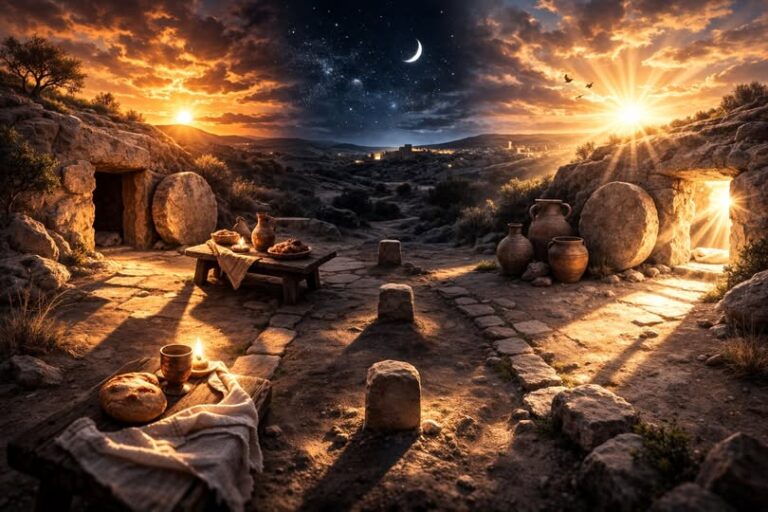
The structure of Genesis also reflects temple theology familiar to the ancient world. In the ancient Near East, when a god finished constructing his temple, he would take up residence and rest. Rest did not mean inactivity. It meant that order had been established and rule could begin.
Genesis follows this pattern deliberately. After ordering the cosmos, Yahweh rests on the seventh day. This is not a withdrawal from creation. It is enthronement. Creation itself functions as Yahweh’s cosmic temple, with heaven and earth ordered as sacred space. The garden is portrayed as a sanctuary, and humanity is placed within it as image-bearers and caretakers.
Unlike pagan temples, which required constant rituals to feed, clothe, or appease their gods, Yahweh’s rest signals stability. His rule does not depend on human labor or sacrifice. The system functions because He has ordered it well. Humanity is not created to sustain Yahweh. Humanity is entrusted to represent Him.
Order That Includes Freedom
A defining feature of Yahweh’s order is that it includes moral agency. Unlike the gods of the nations, Yahweh does not rule through total control. He grants genuine freedom to His imagers, both human and divine. That freedom carries real risk, and Genesis makes that risk explicit.
Adam and Eve are given a genuine choice. Their rebellion introduces disorder into the world, but Yahweh does not revoke humanity’s role or annihilate creation. Instead, He initiates a rescue mission that will restore order without removing freedom. The same pattern appears with the sons of God who are entrusted with authority over the nations and later corrupt their rule. Yahweh permits rebellion, not because He is weak, but because His justice allows moral agency. He will hold all imagers accountable.
Order enforced by coercion is fragile. Order grounded in righteousness is durable. Yahweh’s authority is strong enough to allow freedom because it is rooted in justice, not fear.
The Gods of the Nations and Dominion Through Chaos
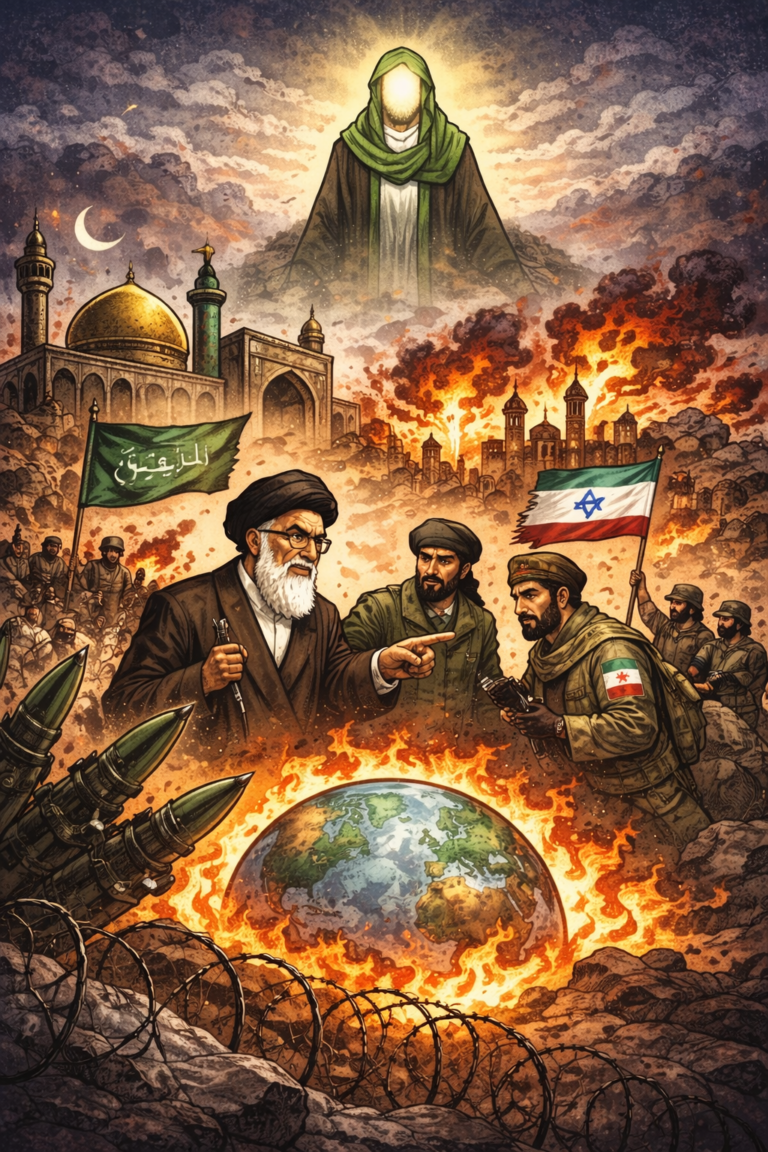
By contrast, the gods of the surrounding cultures rule through domination. In their myths, order is achieved through violence and maintained through fear. Deities battle one another for supremacy, and the world is often formed from the corpse of a defeated rival. Humanity is created as an afterthought, designed to relieve the gods of labor and provide them with offerings.
These gods are insecure. They fear rivals. They require appeasement. Their rule must be constantly reinforced through displays of power. Their authority is unstable because it is rooted in force rather than righteousness. Even when they claim to bring order, they do so by suppressing freedom. Rebellion is met with destruction, not restoration. Dominion is their goal, not partnership.
Biblical Polemic Against Corrupt Powers
The Bible directly confronts these claims. Yahweh is not a storm god who battles the sea. He speaks to the storm, and it obeys. Nature is not a rival force but a servant of His will. His authority does not arise from nature. It commands nature.
Scripture also exposes the failure of the spiritual rulers assigned over the nations. They are judged not for lacking power but for abusing it. They rule unjustly, oppress the vulnerable, and distort the order they were meant to uphold. Yahweh declares their authority illegitimate and their end certain.
While the nations are divided among these rulers, Yahweh claims Israel for Himself, not as a means of domination but as a covenant people meant to model righteous rule and draw the nations back to Him. His purpose is restoration, not exploitation.
Christ and the Revelation of True Kingship
Christ reveals the fullest expression of Yahweh’s rule. His kingdom is not established by force but by sacrifice. He does not seize power. He restores what has been broken. His miracles bring order where chaos has taken hold. The sick are healed. The possessed are freed. The storm is silenced. Death itself is confronted and overcome.
Christ does not eliminate freedom. He redeems it. Those who follow Him do so willingly, not by coercion. His kingship exposes the bankruptcy of all counterfeit dominions built on fear, control, and violence. In Him, the original intent of creation is revealed again: ordered life under righteous rule, where authority serves rather than exploits.
Conclusion
The temptation toward dominion has never disappeared. Political systems, spiritual ideologies, and even religious institutions often imitate the gods of the nations, relying on control, fear, and coercion to maintain power. Scripture offers a different vision.
Yahweh brings order without oppression. He grants freedom even when it risks rebellion. He restores rather than annihilates. His kingdom is built on righteousness, mercy, and truth, not chaos or fear.
To follow Yahweh is to reject counterfeit authority and embrace the kind of order that produces life. It is not domination but partnership. Not tyranny but shalom.
Discussion Questions
- How does understanding “creation” in Genesis as the establishment of order and function, rather than merely material manufacture, deepen our understanding of Yahweh’s authority without denying His role as the source of all existence?
- In what ways does viewing creation as a cosmic temple help explain the significance of God’s rest on the seventh day, and how does this reshape common assumptions about divine withdrawal or inactivity?
- Why is Yahweh’s willingness to allow freedom, even when it risks rebellion, a stronger form of authority than the coercive dominion exercised by the gods of the nations?
- How do ancient myths of divine violence and domination help clarify the biblical polemic against false gods, and why does Scripture repeatedly emphasize Yahweh’s rule through order rather than force?
- In what practical ways might modern political, spiritual, or religious systems mirror the dominion model of the gods of the nations, and how does Christ’s model of kingship challenge those patterns?
Want to Know More
- John H. Walton, The Lost World of Genesis One
Walton explores how creation was understood in the ancient Near East as the establishment of order and function rather than merely material manufacture, while affirming Yahweh as the ultimate source of all reality. This work is foundational for understanding Genesis within its original cultural context without collapsing into non-biblical views of eternal matter. - G. K. Beale, The Temple and the Church’s Mission
Beale traces the theme of creation as God’s cosmic temple, showing how Genesis, the tabernacle, the temple, and Christ all fit within a unified biblical theology of divine dwelling and rule. This book is essential for understanding the significance of God’s rest as enthronement rather than inactivity. - Michael S. Heiser, The Unseen Realm
Heiser examines the biblical worldview of spiritual beings, divine governance, and the rebellion of corrupt powers, providing context for passages like Deuteronomy 32 and Psalm 82. This work helps explain the contrast between Yahweh’s righteous rule and the failed dominion of other spiritual authorities. - Daniel I. Block, For the Glory of God: Recovering a Biblical Theology of Worship
Block connects creation, covenant, and worship, showing how Yahweh’s kingship differs fundamentally from pagan conceptions of divine power. His work helps clarify why humanity is created as image-bearers and stewards rather than divine servants supplying the needs of the gods. - T. Desmond Alexander, From Eden to the New Jerusalem
Alexander traces the theme of sacred space from Genesis to Revelation, showing how Eden functions as the first sanctuary and how God’s purpose has always been to dwell with His people. This book reinforces the temple imagery embedded in the creation account and its fulfillment in Christ.
About the Author