One of the most persistent objections to biblical faith is the problem of evil. If God is good and sovereign, why does evil persist across generations? Why are entire nations shaped by injustice rather than merely isolated acts of sin? Why does corruption appear embedded in the structures of the world itself? Scripture does not respond to these questions by retreating into mystery or abstraction. It responds by explaining how authority was ordered, how rebellion unfolded at multiple levels, and how judgment proceeds in a deliberate and morally coherent sequence.
The Divine Council worldview is essential for understanding this pattern. Scripture presents evil as arising through both human rebellion and failed spiritual governance. Humanity bears real responsibility for its actions, yet those actions unfold within a world whose administration later became corrupt. Because rebellion operates on more than one level, judgment also proceeds in an ordered way. God judges the gods before He judges humanity, without excusing either.
Human Rebellion at Babel
The Tower of Babel is not a generic story about pride, autonomy, or ambition. It is a deliberate attempt to restore access to the divine realm that had already proven catastrophic. In the ancient Near Eastern context, the construction of a ziggurat represents an artificial mountain of assembly, a gateway intended to reestablish contact between heaven and earth. Humanity is not seeking independence from the supernatural world. It is seeking renewed access to it.
This matters because the immediate biblical backdrop to Babel is the memory of the pre-Flood world. Humanity had already experienced a period of unrestrained divine access through the Watchers, which resulted in Nephilim violence, the spread of forbidden knowledge, and the corruption of human society. That access had been judged and cut off. Babel represents humanity’s attempt to reopen it, to regain power, protection, and knowledge from the same spiritual sources Yahweh had already condemned.
Yahweh’s response is judicial and concessive, but also restraining. He does not allow humanity to reconnect with the rebel Watchers or regain uncontrolled access to the divine realm. Instead, He gives humanity what it asks for in a constrained form. The nations are divided and connected to lesser elohim who, at the time of their appointment, are faithful to Yahweh. Humanity is granted mediated governance, but not the dangerous access it seeks. This preserves human responsibility while limiting the destructive potential of their choice.
Delegated Authority After Babel
Deuteronomy 32:8–9 looks back to the aftermath of Babel. After humanity’s attempt to restore forbidden access, Yahweh divides the nations and assigns them to lesser elohim. At this point in history, Israel does not yet exist. Yahweh does not retain a nation for Himself while abandoning the rest. Instead, Israel will be created later as part of Yahweh’s response to how this delegated system unfolds.
The assignment of the nations is administrative rather than punitive. The bene elohim appointed over the nations are legitimate rulers at the moment of their appointment. Scripture does not present them as corrupt from the outset. Their task is to govern peoples who have already demonstrated a desire for mediated divine rule rather than direct covenantal loyalty to Yahweh. Authority is real, responsibility is genuine, and accountability is assumed from the beginning.
It is critical not to collapse this moment into Genesis 6. The Watchers who rebelled before the Flood transgressed their appointed domain and are confined to the abyss. They are not the rulers of the nations in Deuteronomy 32 or Psalm 82. The gods judged later are administrators who fail in their assigned task over time, not imprisoned transgressors from the antediluvian world. Keeping these groups distinct preserves the logic of biblical judgment.
Corruption of the Nations’ Rulers
Psalm 82 reveals the eventual outcome of this delegated authority. The gods appointed to govern the nations abandon justice, favor the wicked, and oppress the vulnerable. Their failure is not instantaneous but progressive. Over time, they corrupt the exercise of real authority, shaping systems that normalize violence, exploitation, and deception rather than restraining them.
This corruption does not remove human responsibility. Babel already demonstrates that humanity is capable of organized rebellion without being coerced by corrupt rulers. At the same time, deteriorating spiritual governance magnifies human sin by legitimizing injustice, rewarding wickedness, and embedding corruption into cultural and institutional structures. What began as human desire for forbidden access becomes entrenched through failed administration.
Scripture describes the foundations of the world being shaken because the structures meant to restrain evil instead entrench it. Evil becomes systemic not because humans cease to choose wrongly, but because corrupted rulers preside over already rebellious peoples and shape societies that perpetuate deception and violence across generations.
Israel was created after the Rebellion
By the time Abraham is called in Genesis 12, both layers of rebellion are already in place. Humanity has attempted to reclaim forbidden access at Babel, and the bene elohim appointed afterward have begun to fail in their governance. Deuteronomy 32 reflects the administrative response to Babel. Psalm 82 reflects the judgment of those administrators once their corruption becomes undeniable. Israel does not exist in either moment.
Israel’s creation, therefore, comes afterward, and that timing is deliberate. Israel is not formed in a neutral world. It is created within a system already marked by human defiance and deteriorating spiritual rule. The call of Abraham immediately following the Babel narrative signals Yahweh’s countermove within history rather than a reset of history.
This reframes Israel’s election. Israel is not chosen instead of the nations, but for the nations after their rulers fall. Its priestly vocation exists because mediation and restoration are necessary in a world where both rulers and peoples are out of alignment. Israel belongs directly to Yahweh so that the nations might one day be reclaimed, not because Israel was spared the problem, but because it was created to address it.
Why Judgment Begins in the Heavenly Realm
Psalm 82 is a courtroom scene, not a poetic metaphor. God stands in the divine council and formally indicts the gods for their failure to govern justly. They are stripped of legitimacy and sentenced to death. This sentence is pronounced long before it is carried out, establishing a clear distinction between judgment declared and judgment executed within a lawful moral order.
This distinction explains a recurring tension in Scripture. The powers are judged, yet they remain active. Paul can speak of rulers and authorities as disarmed while still confronting their influence. Revelation can portray Satan as defeated while still accusing. This is nota contradiction. It reflects lawful judgment operating over time rather than impulsive force.
Judgment begins in the heavenly realm, not because humanity is innocent, but because the rulers of the nations bear responsibility for amplifying, normalizing, and institutionalizing human rebellion. God addresses the highest level of accountability first, without excusing the guilt of those beneath them.
Why God Does Not Simply Stop Evil Immediately
If God were to eliminate evil instantly, He would undo the reality of the authority He granted. Authority that can be revoked arbitrarily is not real authority. Scripture presents governance, both human and spiritual, as meaningful precisely because it is genuine, accountable, and allowed to reach moral clarity before judgment is enforced.
Throughout the Bible, God allows rebellion to expose itself fully before judgment is carried out. This pattern appears in human empires such as Egypt, Babylon, and Rome, and it applies equally to the spiritual powers. Their injustice is allowed to mature so that their condemnation is beyond dispute and their removal is just. Humanity continues to participate willingly in these systems, and that participation remains blameworthy.
This ordered process explains why judgment is delayed without implying indifference. God addresses the deceivers before holding the deceived fully to account, without denying human guilt. Judgment follows order rather than impatience, preserving both justice and responsibility.
Christ’s Victory as Judicial Action
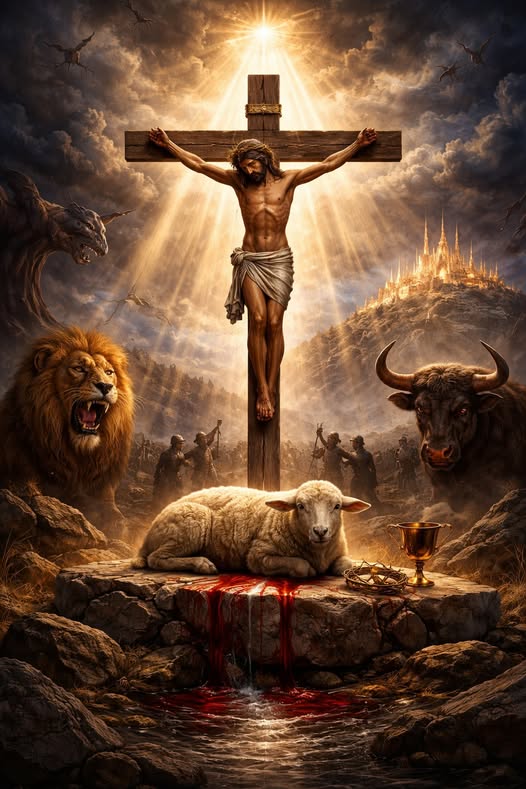
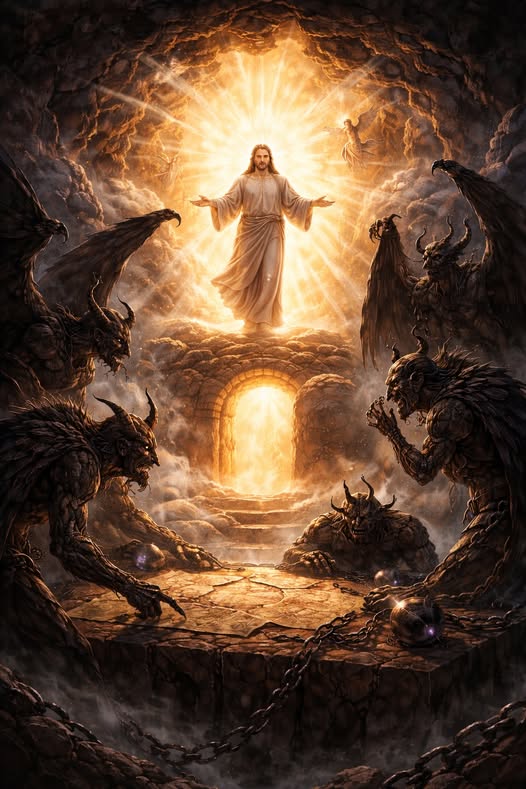
The cross is not only an instrument of personal salvation. It is a legal and cosmic event. Colossians describes Christ disarming the rulers and authorities and putting them to open shame. This language reflects public judgment and loss of legitimacy, not symbolic defeat.
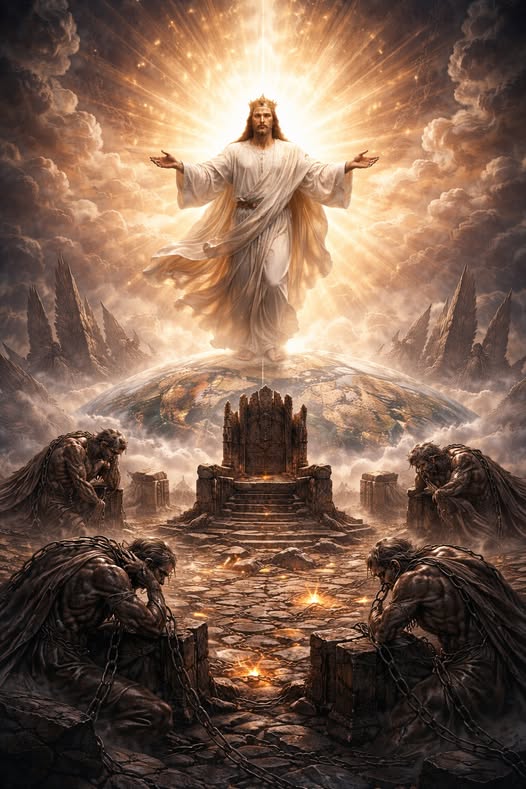
The resurrection and ascension mark the transfer of authority. Christ does not merely forgive sins. He assumes kingship over heaven and earth. This is why the Great Commission is framed in terms of authority rather than persuasion. The nations are summoned to change allegiance from corrupted rulers to the rightful King, reversing the long arc that began with forbidden access and failed mediation.
Final Judgment and the Restoration of Order
Revelation completes the pattern established earlier in Scripture. Judgment begins in heaven before it reaches the earth. Satan is cast down. The powers are destroyed. Only then does the renewal of creation fully unfold. The order of judgment ensures that humanity is not treated as the sole culprit for a cosmic crisis while still holding humanity responsible for its participation in rebellion.
The biblical story ends not with escape from the world, but with a world finally governed without corruption, deception, or injustice. Evil persists not because God is absent, but because judgment unfolds according to divine justice rather than human expectation, ensuring that authority is removed rightly rather than merely replaced.
Conclusion
Scripture offers a structured answer to the problem of evil. Evil exists because real authority was granted and real rebellion occurred, first in humanity’s attempt to reclaim forbidden divine access and later in the failure of those appointed to govern the nations. God responds not by undoing His design, but by judging it in the proper order.
By judging the gods before judging humanity, Yahweh demonstrates both justice and mercy. He removes the source of systemic deception before holding the deceived fully accountable, without excusing human sin. The end of evil comes through lawful judgment and the restoration of faithful rule under Christ, for the sake of the nations.
Discussion Questions
- How does understanding Babel as an attempt to restore forbidden divine access change the way we assign responsibility for evil between humanity and spiritual powers?
- Why is Yahweh’s response at Babel best understood as concessive and restraining rather than purely punitive, and what does that reveal about divine justice?
- How does distinguishing the Genesis 6 Watchers from the bene elohim appointed over the nations affect our reading of Deuteronomy 32 and Psalm 82?
- In what ways does corrupt spiritual governance amplify human sin without removing human accountability?
- Why must judgment begin with the gods of the nations before humanity can be fully judged and restored?
Want to Know More
- Michael S. Heiser, The Unseen Realm
Explains the Divine Council worldview, Deuteronomy 32:8–9, Psalm 82, and the distinction between different classes of spiritual beings, including why the gods of the nations are not the Genesis 6 Watchers. - Michael S. Heiser, Demons: What the Bible Really Says About the Powers of Darkness
Provides a careful treatment of Genesis 6, the Watchers, the Abyss, and the origins of demonic powers, helping clarify why later national rulers are a separate category of beings. - John H. Walton, The Lost World of Genesis One
Supplies the ancient Near Eastern framework for sacred space, divine presence, and cosmic order, which is essential for understanding Babel as a ziggurat event rather than a modern moral fable. - John H. Walton, Ancient Near Eastern Thought and the Old Testament
Explores how ANE concepts of mediation, temples, divine governance, and sacred geography inform biblical narratives such as Babel, divine delegation, and covenantal loyalty. - Stephen De Young, Religion of the Apostles
Shows how early Christianity inherited a worldview shaped by spiritual powers, cosmic rebellion, and ordered judgment, and how Christ’s victory is understood as the reclamation of the nations.
About the Author