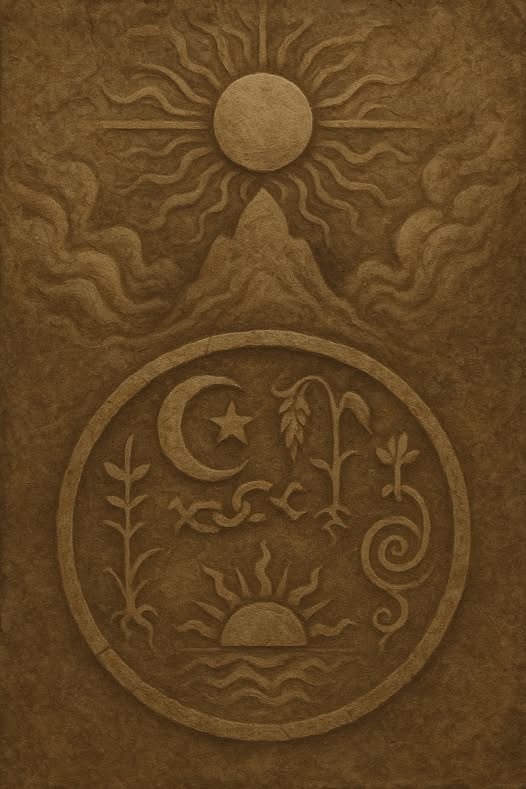
The religions of the Ancient Near East form a wide landscape of connected myths, rituals, and divine hierarchies that shaped the worldview of early civilizations. Their gods rose and fell in power, reacted emotionally to events, and relied on worshipers to sustain them. These beliefs created a religious environment built on cycles, fragility, and mutual dependence.
The biblical portrayal of Yahweh stands in clear contrast. Scripture presents a God who is self-sufficient, unchanging, and sovereign over creation. Examining these differences clarifies the uniqueness of biblical faith within its ancient setting and helps modern readers understand how Israel’s worldview developed in the midst of nations with very different assumptions about the divine realm.
The Cyclical Nature of ANE Deities
ANE religions anchored their divine stories in the rhythms of the natural world. Gods were believed to participate in the same patterns that shaped human experience. Their power rose and fell with the seasons, crops, weather, and the environment. This worldview created a theological system where even major deities could weaken, die, or disappear, only to return when the cycles of nature renewed themselves.
The myths surrounding Inanna and Ishtar reveal this worldview clearly. Their descent into the underworld and eventual return mirrored the cycle of barrenness and renewal that governed agricultural life. Their stories did not present beings who transcended nature but ones who were bound to it. Their vitality could pause or fail, only to be restored when the environment shifted.
Egyptian religion expressed a similar idea through the Osiris myth. His murder and restoration aligned with the yearly flooding of the Nile, which created fertile soil for crops. The story served as a theological explanation for agricultural renewal. Osiris did not stand above the cycles of life. He represented them. This pattern appears again and again in ANE pantheons, where divine life and natural life were deeply intertwined.
Symbiosis Between Gods and Humans
The relationship between the gods and humanity in the ANE was shaped by mutual dependence. The gods depended on humans for food, offerings, honor, and the upkeep of temples. Humans depended on the gods for basic stability, agricultural success, and protection. Religion functioned as a system that maintained cosmic order by ensuring both sides received what they needed.
Baal worship in Canaan demonstrates this dynamic. Baal’s power and presence were tied to the devotion of his followers. If offerings ceased or rituals were neglected, worshipers feared drought, famine, and ecological collapse. Ugaritic texts describe Baal’s strength rising and falling in connection with seasonal struggles against Mot, the god of death. The fortunes of the people depended on Baal’s vitality, and Baal’s vitality depended on the people.
This pattern stretched across Mesopotamia as well. Temples functioned as divine households where priests fed, clothed, and cared for the gods. Worship was not about relationship but maintenance. A god who was not sustained properly could weaken, suffer, or lose influence. These beliefs shaped the ancient expectation that the divine and human worlds were locked in an ongoing exchange of needs and services.
The God of the Bible: Transcendent, Stable, and Self-Sufficient
The biblical portrait of God stands outside the cycles and limitations that characterized ANE religion. Yahweh does not depend on human worship to sustain His power. He does not rise or fall in strength. His nature remains constant, and His authority extends beyond the boundaries of the natural world. Scripture presents Him as the Creator who governs nature rather than one who participates in its fluctuations.
Malachi 3:6 captures this distinction by declaring that God does not change. The prophets frequently challenge the idea that God requires food or ritual maintenance. Psalm 50 portrays God as the owner of all creation rather than a deity who needs sacrifices for sustenance. Isaiah mocks the absurdity of idols that must be carried because they cannot stand on their own. These passages highlight the difference between the dependent gods of the nations and the self-sufficient God of Israel.
Covenant reinforces this distinction. When God binds Himself to Abraham, Moses, or David, His promises flow from His own character and faithfulness rather than human ability to maintain Him. His stability provides a foundation for trust that no ANE god could offer, because their identity and power were subject to the very world they governed.
Supreme Monotheism and the Divine Council
The biblical worldview acknowledges a populated spiritual realm, but it does not portray that realm as harmonious or consistently loyal. Scripture presents a divine council, yet this council reflects a world marked by rebellion and spiritual conflict rather than unity. This stands in sharp contrast with ANE pantheons, where deities had fixed jurisdictions and stable roles.
Psalm 82 reveals that members of the divine council failed in their appointed tasks. God confronts them for injustice, corruption, and the oppression of the nations they were meant to govern. Their rebellion is a verdict on their unfaithfulness. The psalm ends with God declaring their coming judgment, making clear that divine beings are not beyond accountability.
Genesis 6 describes another rebellion in which the sons of God violate the boundaries God established and bring corruption to humanity. This event shaped the Second Temple Jewish worldview and influenced New Testament writers who saw it as a catastrophic turning point in the history of spiritual conflict. These beings did not act out of ignorance but out of deliberate defiance.
The Babel event introduces yet another layer of supernatural rebellion. Deuteronomy 32:8 and 32:9 describe God dividing the nations and assigning them under the authority of lesser divine beings. These beings later led their nations into idolatry and spiritual deception, choosing loyalty to their own agendas rather than to the Most High. Their failures explain the origin of the false gods and territorial powers that Israel confronted throughout the Old Testament.
The biblical writers describe a supernatural realm that is real, complex, and deeply fractured. God alone stands as the supreme Creator. The other divine beings are not competitors to Him, but they are capable of disobedience, corruption, and rebellion. Unlike ANE pantheons defined by competition between gods of similar rank, the Bible presents defiance of the Most High as the central spiritual crisis in human history.
Stability Versus Variability in the Divine Realm
The gods of the ANE were often unpredictable. Their conflicts explained storms, disasters, and political upheavals. Their emotional reactions shaped the lives of their worshipers, who lived in fear of offending them or failing to provide proper care. This instability was a natural consequence of a pantheon filled with beings shaped by the same vulnerabilities as humans.
Yahweh’s actions are presented differently. His behavior is anchored in His covenantal character. His judgments are consistent with His purposes rather than expressions of divine mood. His promises stand firm even when humans falter. By presenting God as trustworthy and stable, Scripture establishes a theological foundation that separates Israel’s faith from the religions around it.
The Purpose of Humanity: Servants or Imagers
ANE creation stories consistently portray humans as laborers created to meet the needs of the gods. In the Enuma Elish, humans are formed from the blood of Kingu after a divine rebellion. Their function is to relieve the gods of work by maintaining temples and performing essential services. Human worth is connected to usefulness, not intrinsic dignity.
The biblical account offers an entirely different vision. Humans are created in the image and likeness of God. They are endowed with authority, creativity, and the capacity to reflect God’s character. Their purpose is not divine maintenance but divine representation. They were designed to bring order, stewardship, and justice into the world. Their value is rooted in their identity, not their labor.
This distinction creates a radically different framework for understanding human purpose. The Bible presents a world in which humans share God’s mission rather than serve as cosmic janitors. This marks a decisive break from the assumptions that shaped ANE religion.
Conclusion
The contrast between ANE religions and the biblical portrayal of God is deep and foundational. ANE gods were bound to nature, subject to cycles, dependent on human worship, and vulnerable to conflict. The God of the Bible stands outside those limitations as the Creator who governs all things without need. The biblical writers also reveal a spiritual world that is far from harmonious. The divine realm is scarred by rebellion, corruption, and defiance, yet the authority of the Most High remains absolute. Humanity, rather than being created as a labor force, is endowed with dignity and purpose as the image bearers of God. These differences highlight the unique character of biblical monotheism in contrast with the surrounding cultures of the ancient world.
Discussion Questions
- How does understanding the cyclical nature of ANE gods help modern readers see the distinctiveness of the biblical portrayal of God?
- In what ways does the mutual dependence between ANE gods and humans differ from the relationship described between Yahweh and humanity in Scripture?
- How do the rebellions of spiritual beings in Genesis 6, Psalm 82, and Deuteronomy 32 shape the biblical understanding of evil and spiritual conflict?
- What does the biblical idea of humans as the image of God reveal about human dignity when compared to ANE creation myths that depict humans as divine laborers?
- How does the stability of God’s character contrast with the variability and unpredictability of ANE deities, and what effect does this have on covenant theology?
Want To Know More
- Pritchard, James B., ed. Ancient Near Eastern Texts Relating to the Old Testament. Princeton University Press, 1969.
This anthology provides direct access to primary sources from Mesopotamia, Egypt, Anatolia, and Canaan. It allows readers to see the actual texts that shaped the worldview of Israel’s neighbors, making comparisons with Scripture far more precise and grounded. - Walton, John H. Ancient Near Eastern Thought and the Old Testament. Baker Academic, 2006.
Walton explains the underlying conceptual world of the ANE and shows how that framework clarifies biblical language, imagery, and theology. His work helps readers understand how Israel was in conversation with surrounding cultures without reducing Israel’s faith to ANE religion. - Walton, John H. The Lost World of Genesis One. InterVarsity Press, 2009.
Walton situates Genesis 1 within the thought patterns of the ancient world and demonstrates how the creation account communicates order, purpose, and divine authority. This is valuable for clearing away modern assumptions that obscure the original meaning of the text. - Hess, Richard S. Israelite Religions: An Archaeological and Biblical Survey. Baker Academic, 2007.
Hess provides a careful and balanced study of Israel’s faith using both archaeology and Scripture. Unlike many academic treatments, this work does not assume Israel borrowed its theology from surrounding nations. It emphasizes continuity, covenant identity, and the distinctiveness of Yahweh, making it far more consistent with a biblical worldview. - De Young, Stephen. The Religion of the Apostles: Orthodox Christianity in the First Century. Ancient Faith Publishing, 2021.
De Young presents the supernatural worldview that runs from the Old Testament through the New. His treatment of the divine council, spiritual rebellion, the corruption of the nations, and the role of Christ in reclaiming the world provides a coherent framework that complements the themes explored in the article.
About the Author