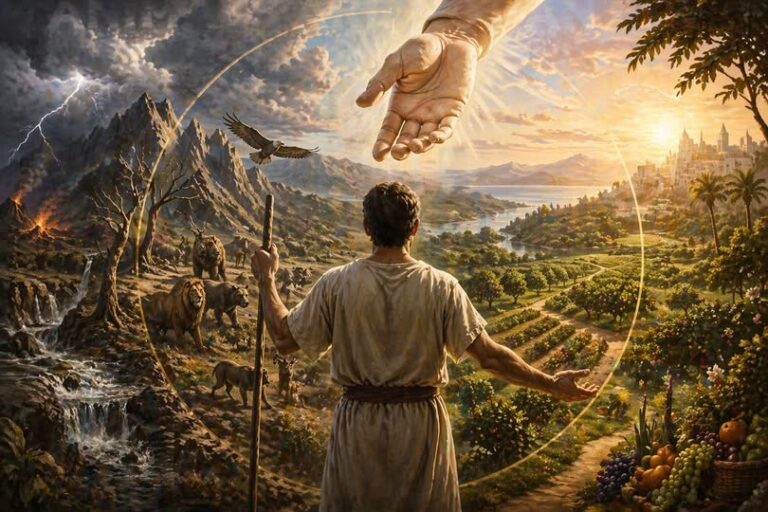
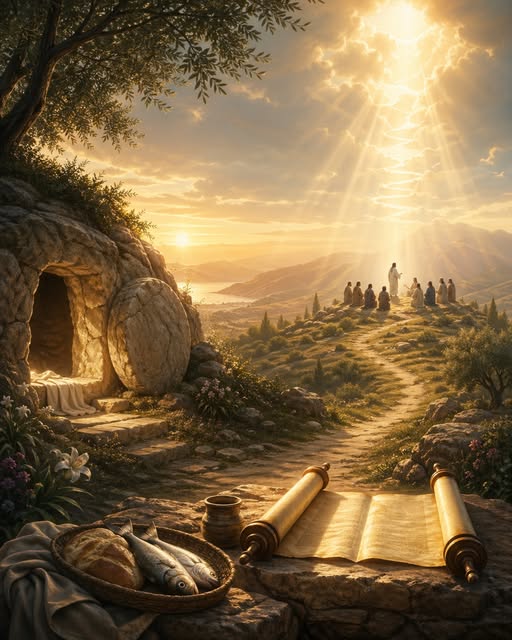
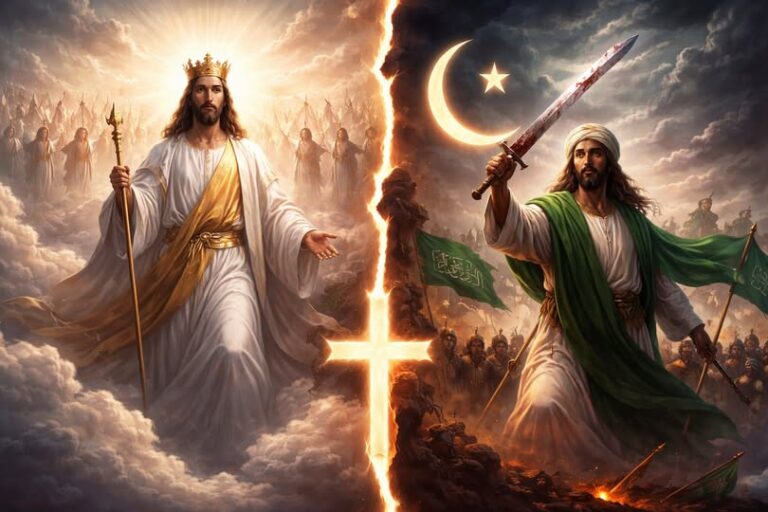
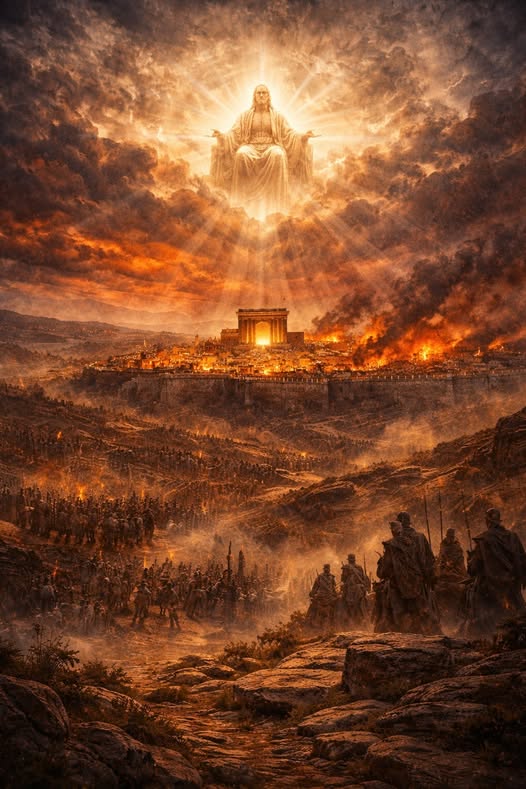
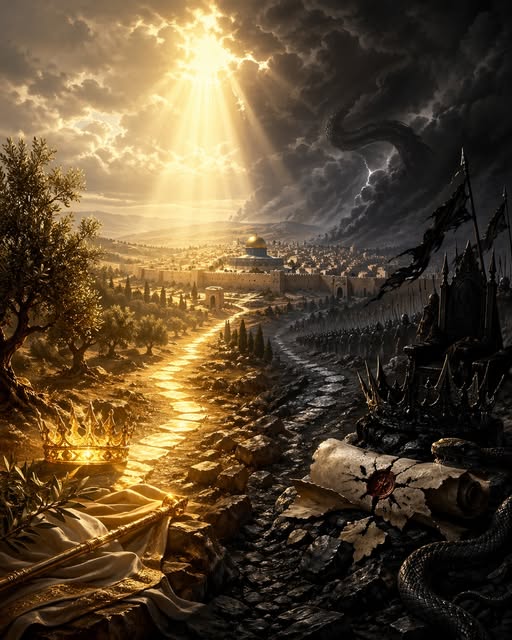
In the ancient world, time itself was understood as sacred, but not in a progressive sense. It did not move forward toward a goal or culmination. Instead, time was believed to revolve endlessly through cycles of decay and renewal. Seasons were not merely markers of agricultural change but ritual reenactments of primordial myths. Festivals did not commemorate unique historical events. They reactivated divine patterns believed to govern fertility, kingship, and cosmic order. Meaning was found not in the unfolding of history, but in the repetition that was carefully maintained.
This cyclical understanding of time shaped religious life across the Ancient Near East. The cosmos was thought to be fragile, constantly threatened by chaos, and dependent on human participation in sacred rituals to preserve order. If the cycle was interrupted, divine favor could falter, and chaos could return. Stability depended not on progress or redemption, but on reenactment. The future was not anticipated as something new. It was expected to mirror the past.
Cyclical Myth and the Eternal Return
Ancient Near Eastern religions were built on this concept of cyclical sacred time. Gods were believed to die and return with the seasons. Kings reenacted creation myths during New Year festivals to reaffirm cosmic stability and their own divine legitimacy. Agricultural fertility rites sought to renew divine vitality through ritual repetition tied to planting, harvest, and astral movements. These rites were not symbolic reminders. They were understood as necessary actions that sustained the world itself.
Within this worldview, nothing fundamentally new was expected to happen. Order was preserved through repetition. Salvation was not historical but ritual. The goal was not the transformation of the world, but its preservation through correct performance. Time was not moving toward resolution or judgment. It was a wheel that had to keep turning, driven by ritual obligation and cosmic anxiety.
The Incarnation as a Rupture in Time
The Christian proclamation of the Incarnation stands in direct contradiction to this entire system. Christianity claims that God entered history once, at a specific moment, in a specific place, through a specific person. This event is not cyclical, symbolic, or repeatable. The Word became flesh and remains flesh. The Incarnation is not a mythic pattern reenacted seasonally. It is an intrusion into time itself.
By taking on human nature permanently, God anchored redemption to linear history. What happened in Bethlehem is not renewed each year through ritual reenactment. It is remembered as a completed act whose consequences continue to unfold forward through time. This is why Christianity insists on genealogy, witnesses, and chronology. Its central claim is historical. If Christ is not born in history, Christianity collapses. Mythic religions do not require this because myth exists outside time. Christianity does not.
Christmas and the End of Mythic Recurrence
Christmas, therefore, proclaims that sacred meaning no longer resides in seasonal repetition. Winter does not summon divine rebirth. The sun does not regenerate a dying god. Nature no longer governs salvation. Instead, salvation enters creation from outside it, through an act that cannot be repeated or reversed.
The Incarnation announces that God is not bound to cosmic cycles but stands over them. The birth of Christ signals that time now has a center. Everything before moves toward Him. Everything after flows from Him. Christian worship does not reenact cosmic myths to keep the universe running. It proclaims a decisive act already accomplished. The anxiety that drove fertility cults and seasonal rites is replaced by confidence in a reigning Lord who has acted once for all.
Conclusion
Christmas marks the moment when sacred time ceased to be cyclical and became purposeful. The Incarnation does not sanctify repetition. It sanctifies history. By entering creation once and permanently, God ended the mythic illusion that meaning must be endlessly reenacted to survive. Time no longer exists to preserve a fragile cosmos through ritual maintenance. It exists to carry creation toward redemption.
This is why Christianity could never truly absorb pagan sacred time. Its central claim makes such absorption impossible. The birth of Christ announces that the age of eternal return is over. History now has a center, a direction, and an end. Christmas does not reset the cycle. It breaks it.
Discussion Questions
- How did the ancient concept of cyclical sacred time shape pagan worship, ritual, and expectations about the future?
- Why does the Christian claim that God entered history once challenge myth-based religions at their core?
- In what ways does the Incarnation permanently distinguish Christianity from seasonal fertility and rebirth cults?
- How does understanding Christmas as a rupture in sacred time change the way believers view history and hope?
- What are the practical implications of living in a world where time has direction rather than endless repetition?
Want to Know More
- Oscar Cullmann, Christ and Time: The Primitive Christian Conception of Time and History
Cullmann’s classic work examines how early Christianity understood time as linear, purposeful, and centered on the Christ event, in deliberate contrast to Greco-Roman and pagan cyclical conceptions of history. - Mircea Eliade, The Myth of the Eternal Return: Cosmos and History
Eliade analyzes ancient religious concepts of cyclical sacred time and ritual reenactment, providing essential background for understanding the worldview Christianity disrupted. - Augustine of Hippo, The City of God
Augustine presents a theological vision of history moving toward divine judgment and restoration, directly opposing pagan ideas of eternal recurrence and cosmic maintenance. - N. T. Wright, The New Testament and the People of God
Wright explores how Second Temple Judaism and early Christianity understood history, fulfillment, and eschatological direction, situating the Incarnation within a linear redemptive narrative. - John H. Walton, Ancient Near Eastern Thought and the Old Testament
Walton provides historical and cultural context for Ancient Near Eastern cosmology, ritual, and myth, clarifying how biblical theology reorients time, meaning, and divine action.
About the Author