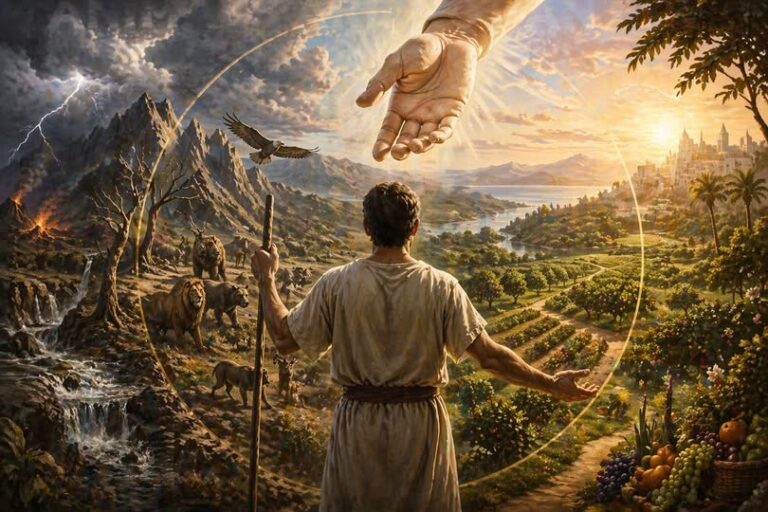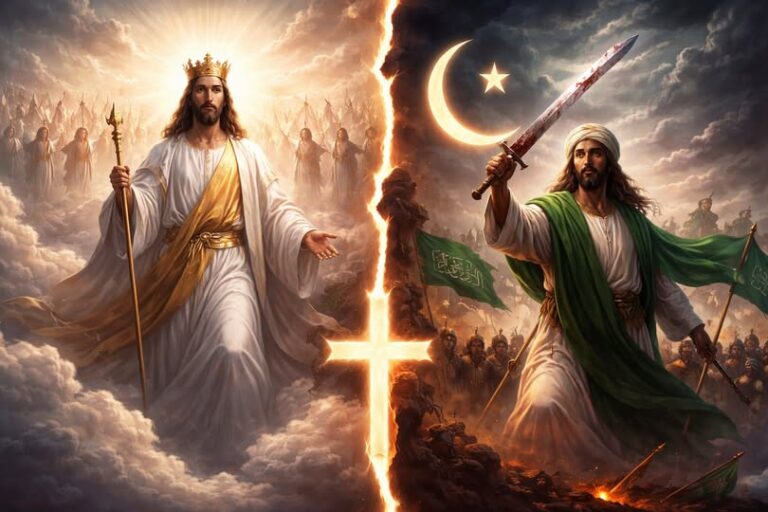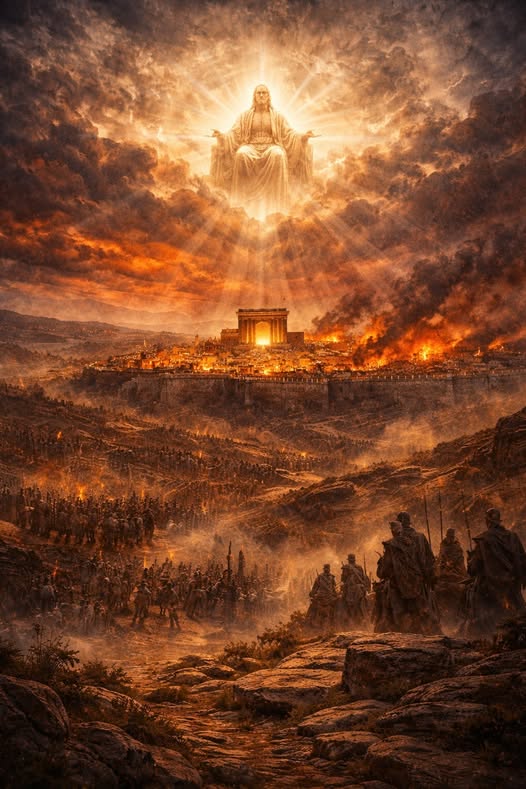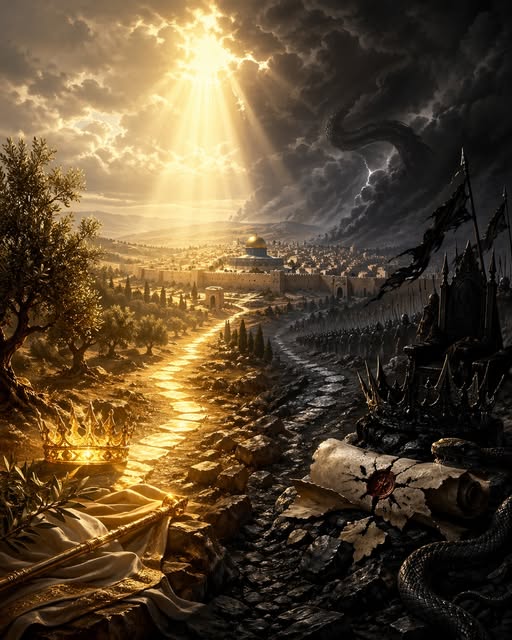
The birth of Christ does not occur in a neutral world. Scripture presents human history as unfolding within a larger conflict that precedes the incarnation and shapes everything that follows. Long before Bethlehem, the Bible describes a fractured order in which both human rebellion and corrupt spiritual powers distort the world Yahweh created to flourish under His rule.
The Old Testament consistently portrays the nations as being under the influence of hostile spiritual forces. These powers are not metaphors for ideas or social systems. They are depicted as real, personal rulers who govern unjustly, demand allegiance, and oppose Yahweh’s purposes. The prophets speak of them as fallen authorities who mislead the nations and perpetuate violence and idolatry. Humanity’s captivity is therefore not only moral. It is cosmic.
Against this backdrop, the incarnation is not simply God drawing near in compassion. It is God entering contested territory. When the Son of God takes on flesh, He steps directly into a world governed by illegitimate rulers who understand exactly what His arrival means. The birth of Christ is not a peaceful interruption of history. It is the moment the conflict enters its decisive phase.
This larger biblical framework is sometimes described as the Divine Council worldview, a way of reading Scripture that takes seriously its consistent portrayal of heavenly rulers, delegated authority, rebellion, and judgment. But the concept itself is not foreign or obscure. It is woven throughout the biblical narrative, from the scattering of the nations at Babel to the prophetic announcements of judgment against the powers that rule them unjustly. Christmas, when read within this scriptural context, marks the opening move in the reclamation of the nations and the dismantling of a corrupt spiritual order.
The Birth of Christ as a Strategic Invasion
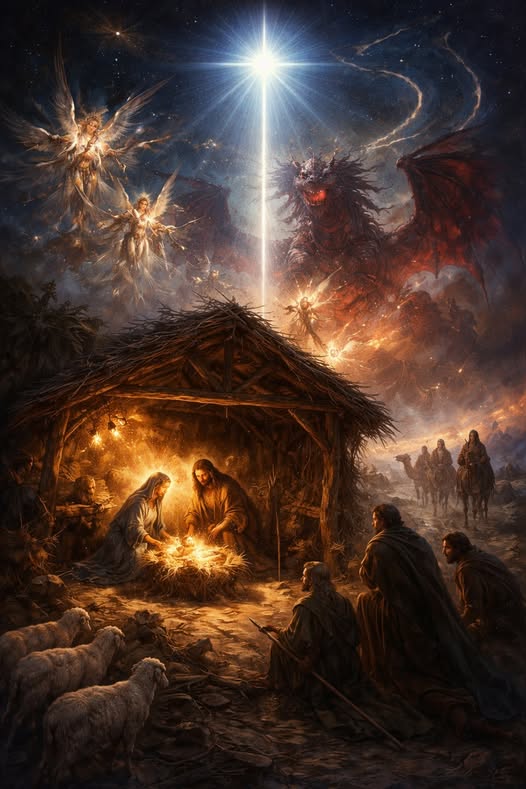
The incarnation is not portrayed in Scripture as a quiet theological abstraction. It is a deliberate invasion into enemy-held territory. The Son of God enters a world already governed by corrupt spiritual authorities who understand precisely what His arrival means. Luke’s Gospel emphasizes the heavenly reaction to this event. Angels appear not as sentimental figures but as royal heralds whose proclamation of peace echoes ancient victory announcements. This peace is not the promise of calm coexistence. It is the declaration that a new king has arrived and that the existing order is about to be displaced.
The shepherds who receive this announcement stand outside the established structures of religious and political power, signaling that the kingdom being inaugurated does not operate according to the systems upheld by corrupt rulers, whether human or divine. Heaven’s response frames the birth of Christ as the decisive opening movement of the war’s final phase.
Herod, the Dragon, and the Attempted Destruction of the Messiah
Matthew’s account reveals that the birth of Christ immediately provokes hostility. Herod’s massacre of the children of Bethlehem is not merely the act of a paranoid tyrant. It is the earthly manifestation of a deeper cosmic reaction. The powers behind Herod recognize the threat and respond with violence, just as Pharaoh did when Israel’s deliverer was born.
This is why Scripture later depicts Satan as poised to devour the Messiah at the moment of His birth. Revelation 12 does not invent new theology. It unveils the spiritual dimension of events already recorded in the Gospels. The dragon waiting to consume the child represents the chief rebel among the spiritual rulers and those aligned with him, fully aware that the incarnation marks the beginning of their end. Satan is not acting blindly. He understands that Yahweh has entered history in human flesh. The child is the promised ruler who will reclaim the nations and judge the powers who ruled them unjustly.
The woman represents the covenant people through whom the Messiah comes, and the dragon’s failure to destroy the child confirms what the Gospel narratives show historically. Every attempt to eliminate Christ at His birth fails because the outcome is already determined. The violence surrounding the nativity reflects recognition rather than confusion on the part of the rebel powers.
Bethlehem, David, and the Restoration of Legitimate Rule
The location of Christ’s birth reinforces the nature of this confrontation. Bethlehem ties Jesus directly to Davidic kingship, which Yahweh established as a challenge to the corrupt rule of the nations. David is portrayed in Scripture as a warrior king who confronts both human enemies and the supernatural legacy of rebellion represented by the giants of the land. His throne symbolizes Yahweh’s claim that legitimate authority on earth flows from Him alone.
By entering the world through the Davidic line, Christ asserts His right to rule not only Israel but all nations. Matthew’s genealogy functions as a legal declaration that Jesus is the rightful heir to the authority that was never meant to remain in the hands of rebellious spiritual rulers. His birth announces the restoration of kingship under Yahweh’s chosen ruler and signals the reordering of power on both earthly and cosmic levels.
The War in the Heavens Literally Played Out in the Stars
The cosmic conflict surrounding the birth of Christ was not confined to earth or the unseen realm. It also unfolded in the heavens themselves. Revelation 12 is written in astrological language in the ancient sense, describing real configurations in the sky that correspond to real events in history. Scripture consistently uses the stars as signs, not as autonomous forces of fate, but as witnesses to Yahweh’s actions.
On September 11, 3 BC, a unique and identifiable heavenly alignment occurred in which Virgo was clothed with the sun, the moon was at her feet, and the dragon stood in opposition. The imagery later recorded in Revelation describes what was visible in the sky at the moment the Messiah entered the world. The woman, the child, and the dragon were written across the heavens as a public declaration. This does not validate astrology as a system of divine authority. Scripture repeatedly rejects the idea that the stars govern destiny. Instead, Yahweh demonstrates that the heavens answer to Him alone.
The spiritual rulers long associated with celestial worship and astral religion are confronted on the very ground they claimed as their own. The heavens themselves announce that their authority is ending and that the ruler of the nations has arrived.
The Magi and the Submission of the Nations
The arrival of the Magi fits directly within this framework. They represent the nations and their wisdom traditions, systems historically tied to other gods. They are summoned not by their gods but by Yahweh’s command of the heavens. The star does not affirm pagan religion. It exposes its impotence.
The Magi kneel before the child, offering gifts fit for a king, and their homage signals the beginning of the nations’ return. Their warning dream and defiance of Herod demonstrate that revelation no longer flows through systems controlled by corrupt powers. What the spiritual rulers claimed as their realm of influence becomes the stage for their humiliation, as Yahweh reasserts exclusive authority over revelation and destiny.
The Incarnation and the Collapse of Illegitimate Authority
The birth of Christ marks the turning point in the cosmic war. The corrupt rulers are not immediately destroyed, but their fate is sealed. Their authority was always contingent and dependent on deception. With Yahweh present in human flesh, their rule becomes open rebellion rather than delegated governance.
This explains why the Gospels move directly from the nativity to confrontations with demons and unclean spirits. These entities recognize Jesus instantly and understand what His presence means. His authority over them is absolute and effortless. The incarnation initiates a campaign that culminates in the cross, the resurrection, the ascension, and the public stripping of power from the rulers and authorities.
Conclusion
When the birth of Christ is read within this broader biblical framework, Christmas emerges as an event of cosmic consequence rather than devotional sentiment. The incarnation represents Yahweh’s direct intervention into a world fractured by both human rebellion and corrupt spiritual powers. The manger, the dragon, and the heavens are not separate symbols layered onto the story after the fact. They are coordinated witnesses to a single moment in which illegitimate authority is challenged on every level of reality.
The rulers who once governed the nations unjustly are exposed, their power constrained, and their judgment set in motion. The nations themselves are summoned back, not through coercion or conquest, but through the arrival of the rightful King who reclaims authority through faithfulness and obedience. Christmas marks the beginning of the end for the corrupt order established after Babel. It announces that the God of gods has entered history, that the sentence of Psalm 82 is now being carried out, and that the dominion of the nations will no longer belong to those who ruled unjustly. The war is not yet complete, but from the moment Christ is born, its outcome is no longer in doubt.
Discussion Questions
- How does viewing the birth of Christ through the Divine Council worldview change the way Christmas is commonly understood in modern Christianity?
- In what ways does Psalm 82 provide an essential backdrop for understanding the incarnation as a cosmic event rather than only a personal or devotional one?
- How does Revelation 12 function as a birth narrative rather than a future apocalyptic vision when read alongside the Gospel accounts?
- What is the significance of the Magi representing the nations within the framework of the rebel elohim and the reclamation of divine authority?
- How does understanding the war as simultaneously earthly, spiritual, and heavenly affect how Christians should think about spiritual conflict today?
Want to Know More
- Michael S. Heiser, The Unseen Realm: Recovering the Supernatural Worldview of the Bible
This book provides the most thorough articulation of the Divine Council worldview in modern scholarship. Heiser traces the role of the elohim, the rebellion of the gods of the nations, and the biblical logic behind passages such as Deuteronomy 32, Psalm 82, and the New Testament language of rulers and authorities. It supplies the theological backbone for understanding the incarnation as a cosmic confrontation. - Michael S. Heiser, Angels: What the Bible Really Says About God’s Heavenly Host
This work expands on the structure and function of the heavenly host, clarifying the distinction between loyal and rebellious elohim. It is especially helpful for grounding discussions of Satan, the dragon imagery of Revelation 12, and the hierarchy of spiritual powers without importing later medieval or Miltonic assumptions. - Colin R. Nicholl, The Great Christ Comet: Revealing the True Star of Bethlehem
Nicholl offers a detailed astronomical investigation into the celestial phenomena surrounding the birth of Christ. While focused on the Star of Bethlehem, the work demonstrates how identifiable heavenly events can align with biblical testimony without appealing to astrology as a governing force. - Ernest L. Martin, The Star That Astonished the World
Martin presents an early and influential attempt to correlate historical, biblical, and astronomical data surrounding the nativity. Though some conclusions are debated, the work is important for understanding how Revelation 12 and the birth narratives have been read in connection with observable heavenly signs. - John H. Walton, Ancient Near Eastern Thought and the Old Testament
Walton provides essential background on how ancient cultures understood divine governance, cosmic order, and the relationship between gods and nations. This context helps clarify why celestial language, divine councils, and cosmic conflict would have been immediately intelligible to the biblical authors and their audiences.
About the Author