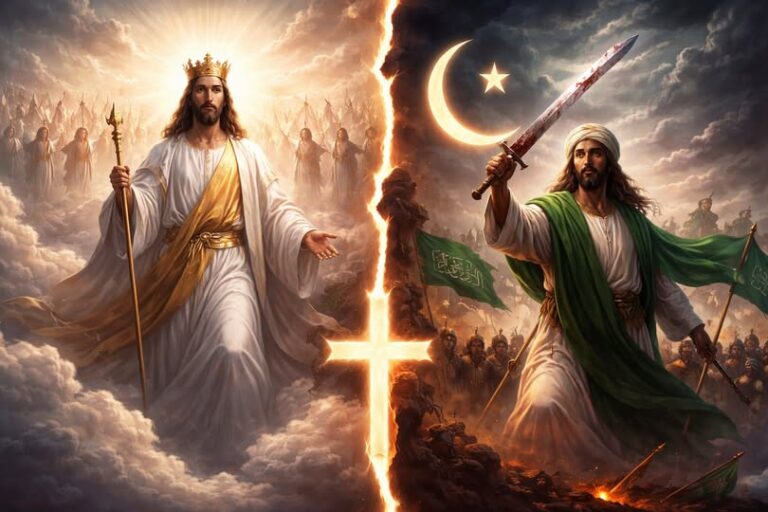
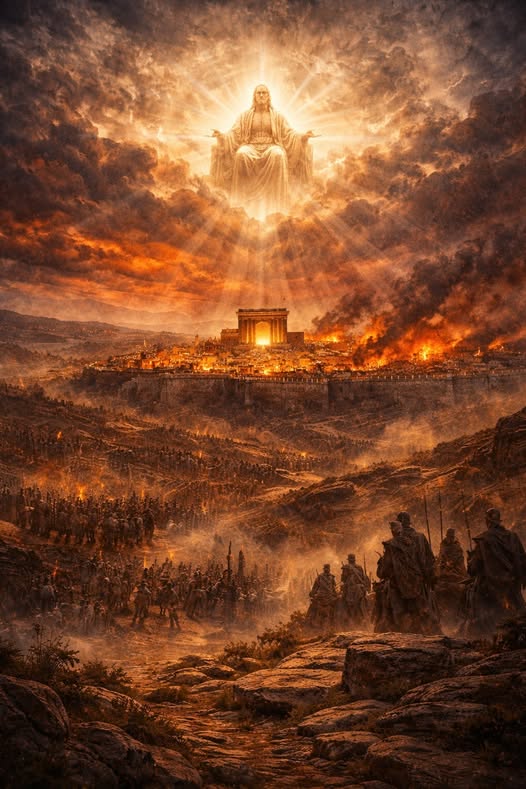
The word heresy comes from the Greek hairesis, which originally meant “choice” or “faction.” In the New Testament, it began to carry the weight of theological rebellion. It referred to false teaching that breaks fellowship and corrupts the truth. Heresy is not simply error or misunderstanding. It is deviation from the foundational truths of the gospel, concerning who God is, who Christ is, and what salvation requires.
The apostle Paul warned against such distortions, calling out those who pervert the message of grace and urging Titus to reject those who sow division after being warned. Heresy is not measured by how controversial an idea is, but by whether it distorts the saving message of Christ or promotes a false gospel. In that sense, heresy is deadly. It is not just wrong. It is soul-destroying.
The Struggle for Doctrinal Clarity in the Early Church
The early church faced enormous pressure to define and defend the truth. As Christianity spread across the Roman world, it encountered competing philosophies and religious systems. Some sought to harmonize the gospel with these foreign ideas, leading to teachings that retained the vocabulary of Christianity but not its meaning. This is where heresy found fertile ground.
Among the earliest and most dangerous of these teachings was Gnosticism, which rejected the goodness of creation and denied the full humanity of Christ. Marcionism took a more radical path by discarding the Old Testament and portraying the God of Israel as cruel and inferior. Pelagianism undermined the doctrine of sin by teaching that humans could achieve righteousness without divine grace. Each of these required a response, not out of fear of disagreement, but out of pastoral urgency to protect the flock from destructive error.
No heresy had a greater impact, both theologically and politically, than Arianism. The teaching of Arius, that the Son was a created being and not fully divine, directly challenged the very identity of Christ. Although condemned at the Council of Nicaea in 325 AD, Arianism did not die. It took root in the outer regions of the Roman Empire and sowed seeds of division that helped bring about its collapse.
Arianism and the Fragmentation of the Western Empire
The theological consequences of Arianism were clear. It reduced Christ to a lesser being, stripping the gospel of its divine foundation. Its political consequences were just as devastating. While the Roman Church clung to Nicene orthodoxy, many of the Germanic tribes who bordered the empire were converted to Arian Christianity. Missionaries like Ulfilas brought a version of the gospel that bore Christ’s name but denied His nature.
When the Visigoths sacked Rome in 410 AD, they did so not as pagans but as heretical Christians. The same was true of the Vandals and later the Ostrogoths, whose kings ruled Italy while holding to Arian doctrine. The theological divide between ruler and people, between Church and state, tore at the fabric of Western society. The Church could not fully unify with leaders who confessed a false Christ, and the people remained culturally alienated from their kings.
This division made the Western Roman Empire vulnerable. It robbed the empire of a unifying spiritual identity at the very moment it needed cohesion to survive external threats. Though not the only factor in Rome’s collapse, Arianism was a theological wedge that fractured its heart. By the time Justinian reconquered parts of the West and reimposed Nicene orthodoxy in the sixth century, the Western Empire was a shadow of what it had been. A heresy that began in theological debate had helped bring down a civilization.
When Everything Becomes Heresy
Over time, the word heresy lost its theological precision. Instead of referring to soul-endangering errors about God, Christ, and salvation, it began to be applied to any disagreement or dissent. This shift had tragic consequences.
In some periods of church history, those who merely questioned traditional practices or sought to reform corruption were branded as heretics. The term became a tool for control rather than a measure of truth. Even within Protestant traditions, theological disagreements over baptism, church polity, or spiritual gifts have sometimes been exaggerated into accusations of heresy, dividing believers unnecessarily.
This misuse of the term does not protect the church. It weakens it. When every disagreement is labeled heresy, the word loses its force, and the real dangers become harder to identify. Instead of guarding the flock, the misuse of heresy becomes a way to suppress thought, enforce conformity, or settle personal disputes.
Ironically, some modern cults and false teachers now invert the accusation. They call orthodox Christianity heretical because it does not conform to their reimagined doctrines. The charge of heresy has become, in some cases, a mirror for pride rather than a tool of discernment.
A Modern Example: Is Pre-Tribulation Rapture Heresy?
In contemporary evangelical circles, one of the most fiercely debated doctrines is the Pre-Tribulation Rapture. This is the idea that believers will be taken up to heaven before a future period of global tribulation. Popularized in the 19th and 20th centuries, this view has deeply shaped modern Christian imagination. But is it heresy?
The answer is no. Pre-Tribulation Rapture theology, while likely incorrect and theologically shallow, does not deny the core tenets of the faith. It affirms the Trinity, the incarnation, the death and resurrection of Christ, and salvation by grace through faith. It is not heresy in the biblical or historical sense.
That said, its influence is not neutral. When taught dogmatically, it can create a fragile form of faith, one that collapses under suffering or real-world trials. It fosters escapism and disengagement, tempting believers to wait for rescue rather than prepare for endurance. In some circles, the view has even been elevated to a test of orthodoxy, dividing churches and condemning dissenters. In these cases, the danger lies not in the doctrine itself, but in the way it is wielded.
This example highlights the difference between heresy and error. Not every mistaken belief is heresy, but not every non-heresy is harmless. Pre-Tribulationism must be confronted with Scripture and pastoral clarity, not because it damns the soul, but because it distorts Christian hope and undermines discipleship.
Holding the Line Without Crossing It
In guarding the truth, the Church must walk a narrow path. On one side lies indifference, where everything is tolerated and nothing is contended for. On the other lies arrogance, where every disagreement is treated as a threat and the word heresy is used like a club. Both lead to ruin.
The example of Arianism shows that heresy is real, and its effects are catastrophic. But the misuse of the term reveals a different kind of danger — the slow erosion of discernment and the collapse of Christian charity. We must learn again to distinguish between essential and non-essential doctrines, between errors that must be confronted and differences that can be endured.
This requires returning to the Scriptures, testing every teaching, and holding fast to what is good. It also means learning from the early church, which took truth seriously without descending into tyranny. They did not shy away from calling out heresy, but they did so with care, consistency, and a clear understanding of what was at stake.
Conclusion
Heresy is not a word to be thrown around lightly. It refers to spiritual poison, distortions of God’s truth that lead people away from salvation. The Church has always had to fight for the gospel, and that fight continues today. But if the sword of truth is swung wildly, it wounds the innocent and weakens the body.
By understanding what heresy truly is, and what it is not, we honor the truth, protect the church, and point people back to the grace of Christ. Not every error is heresy. But every misuse of the word heresy threatens to create new errors of its own.
Discussion Questions
- How does the biblical definition of heresy differ from how the term is commonly used today within Christian communities?
- In what ways did Arianism contribute to the fall of the Western Roman Empire?
- Why is it dangerous to label every theological disagreement as heresy?
- Can a doctrine be spiritually harmful without being heretical? How should the Church respond in such cases?
- What practical steps can believers take to discern between core gospel truths and secondary issues?
Want to Know More?
- González, Justo L. The Story of Christianity: Volume 1 – The Early Church to the Dawn of the Reformation.
A clear and accessible overview of early Christian history, including the development of doctrine and the Church’s response to heresies like Arianism. - Kelly, J. N. D. Early Christian Doctrines.
A classic scholarly work that explores how early church doctrine developed, with detailed explanations of major heresies and the councils that addressed them. - Pelikan, Jaroslav. The Christian Tradition: A History of the Development of Doctrine, Vol. 1: The Emergence of the Catholic Tradition (100–600).
An academic yet readable treatment of how Christian orthodoxy emerged in the early centuries of the church. - Heiser, Michael S. What Does God Want?
A concise and theologically grounded explanation of the gospel and biblical theology that helps readers understand what is central to the faith—and what is not. - MacCulloch, Diarmaid. Christianity: The First Three Thousand Years.
A sweeping historical narrative that includes detailed coverage of early heresies, theological disputes, and the broader impact of doctrinal developments on Western civilization.
About the Author