Many believers wrestle with a serious theological question. If Jesus is the eternal Son of God, and if He rose from the dead, how can His death be considered a true sacrifice? If He is immortal, did He really lose anything? Did the resurrection somehow lessen the cost of the cross?
This question touches the heart of Christology and atonement. To answer it properly, we must define our terms carefully and allow Scripture to shape our categories.
WHAT SCRIPTURE MEANS BY SACRIFICE
In the biblical world, sacrifice is not defined by permanent nonexistence. It is defined by offering, obedience, and the shedding of life. Under the Mosaic system, the sacrificial act was complete when the life was poured out. The value of the sacrifice was measured by the reality of death and covenantal obedience, not by metaphysical permanence beyond it.
When the New Testament describes Christ as our Passover, our sin offering, and the Lamb of God, it draws directly from that sacrificial framework. The emphasis is on the voluntary giving of life, the bearing of sin, and the fulfillment of covenant justice. The sacrifice is complete because death truly occurred.
THE REALITY OF THE INCARNATION
The question often arises because immortality is misunderstood. Christian theology does not teach that Jesus, in His incarnate state, was incapable of dying. The eternal Son assumed a fully human nature. According to human nature, He experienced hunger, fatigue, suffering, and ultimately death.
He did not cease to be divine. He did not divide into two persons. In the mystery of the incarnation, the one Person of the Son possesses both a divine nature and a human nature. According to His humanity, He was mortal. According to His divinity, He remains eternal.
When Christ died, He truly died as a man. His body was buried. His soul entered the realm of the dead. The resurrection was not the reversal of a staged event. It was the raising of One who had genuinely entered death.
WHAT THE CROSS ACTUALLY COST
Reducing the cross to the question of how long Jesus remained in the grave misses the deeper biblical emphasis. The cost of the cross is not measured merely in hours spent dead. It is measured in what He bore.
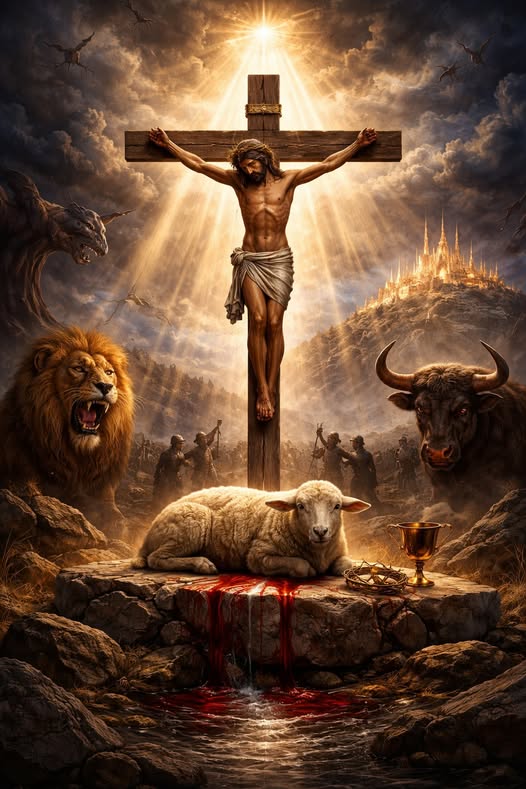
Christ bore sin. He bore the covenant curse. He endured humiliation, injustice, and abandonment. He stood in the place of humanity under judgment. Scripture says He became sin for us and became a curse for us. These are not poetic exaggerations. They describe substitution, representation, and covenantal fulfillment.
The sacrifice was real because the suffering was real and the death was real.
WHY RESURRECTION DOES NOT DIMINISH THE SACRIFICE
The resurrection does not cancel the sacrifice. It confirms it. If Christ had remained in the grave, the cross would represent defeat rather than victory. The resurrection is the Father’s vindication of the Son and the public declaration that the offering was accepted.
Far from diminishing the sacrifice, the resurrection demonstrates its power. Death could not hold Him because the penalty had been paid. The empty tomb is not evidence that the cost was small. It is evidence that the sacrifice was sufficient.
CONCLUSION
Christ’s death is a true sacrifice because He truly offered Himself, truly suffered, and truly died. The resurrection does not reduce the cost of the cross. It reveals that the sacrifice accomplished exactly what it was meant to accomplish.
The immortal Son entered mortality, bore the weight of sin, and submitted to death. Then He rose, not because the sacrifice was insufficient, but because it was complete.
Discussion Questions
- Why do you think many people instinctively define sacrifice as permanent loss, and how does that definition differ from how sacrifice is portrayed in Scripture?
- How does understanding the incarnation, that Christ is fully God and fully man, help resolve the tension between immortality and real death?
- In what ways does reducing the cross to the length of time Jesus remained in the grave distort the biblical meaning of atonement?
- How does the resurrection function as vindication rather than cancellation of the sacrifice, and why is that distinction theologically important?
- What does it mean for your own faith that Christ did not merely suffer, but entered death and defeated it from within?
WANT TO KNOW MORE?
- Athanasius. On the Incarnation.
A foundational early Christian defense of why the Word became flesh and why death and resurrection are central to redemption. Short, clear, and historically significant. - John Stott. The Cross of Christ.
A careful, accessible treatment of substitution, sacrifice, and the meaning of the atonement. Stott walks through what Christ bore and why the cross cannot be reduced to a symbolic gesture. - Thomas F. Torrance. Incarnation: The Person and Life of Christ.
A theologically rich exploration of how Christ’s divine and human natures operate together, including how real human death is possible without denying divine immortality. - Michael F. Bird. The Gospel of the Lord: How the Early Church Wrote the Story of Jesus.
A helpful look at how the early church articulated the death and resurrection of Christ within Jewish sacrificial categories. - N. T. Wright. The Resurrection of the Son of God.
A massive historical and theological study of resurrection in Second Temple Judaism and early Christianity, showing why resurrection confirms rather than weakens the meaning of the cross.
About the Author