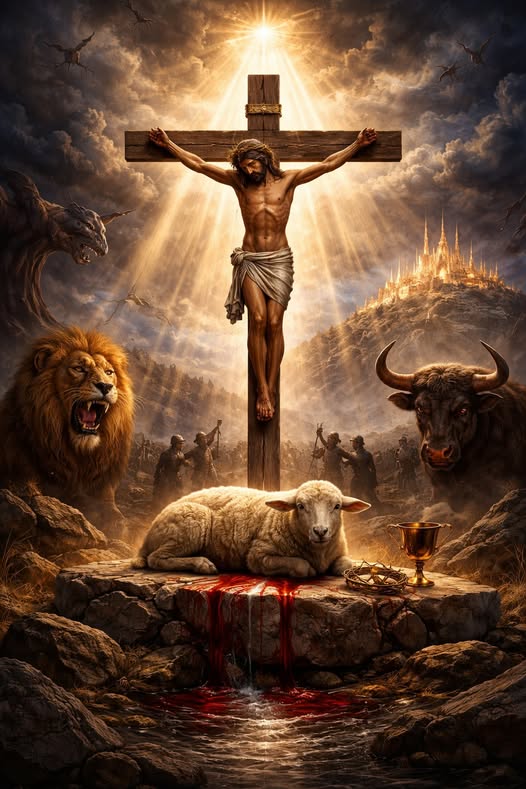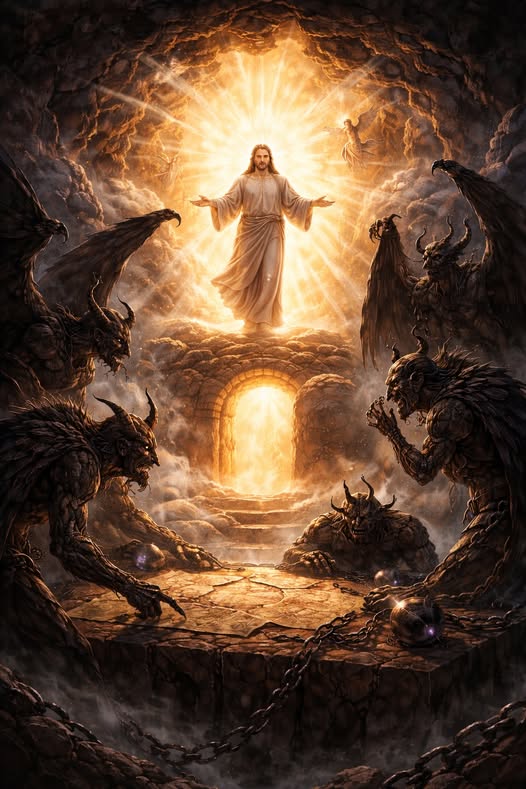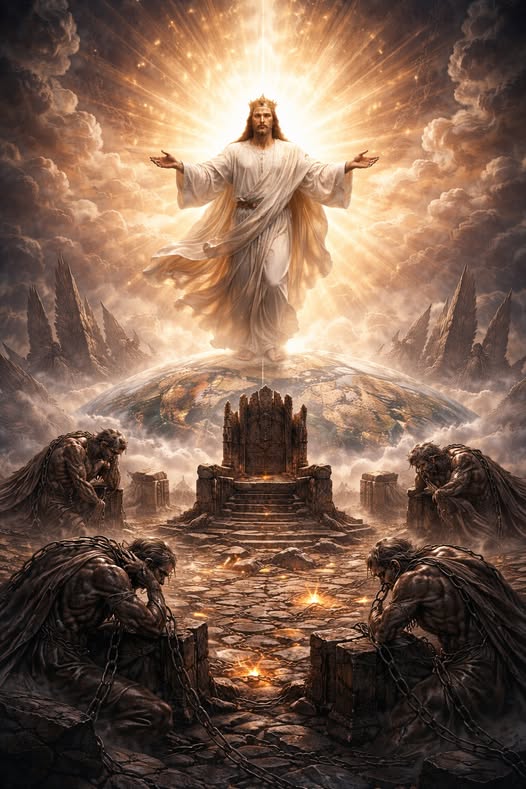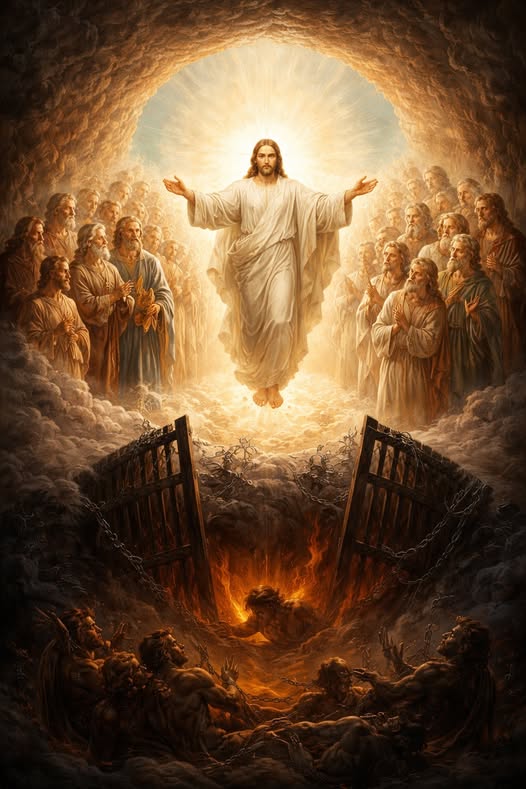
The time between Christ’s death and resurrection is not empty space in the gospel story. It is a continuation of His victory. Scripture does not present Christ as lying inactive in the grave, but as entering the realm of the dead to complete what the Cross secured. The focus of this moment is not primarily Tartarus or imprisoned rebel spirits. The heart of the Harrowing of Hell is that Christ went to the place where the righteous dead were waiting and brought them out. What had been a place of comfort became a place that was emptied, because the Messiah had come and the waiting was over.
Abraham’s Bosom Was a Place of Waiting
Jesus gives the clearest picture of the afterlife before the Resurrection in Luke 16. The righteous dead are described as being in Abraham’s Bosom, a place of comfort and rest. They are not suffering, and they are not under judgment, but they are still in Sheol and still within the realm of death. That detail is easy to overlook, but it is essential for understanding what Christ is about to do.
Abraham’s Bosom is not Gehenna, and it is not a place of torment, yet it is also not the opened Heaven believers experience after the Resurrection. The faithful who died before Christ were truly saved by faith, but they were waiting for the historical accomplishment of the redemption they trusted in. The promises had been given, but the work had not yet been completed in time. So they rested in hope, knowing that God would act, but still awaiting the moment when He would.
Christ Entered the Realm of the Dead as Its Conqueror
When Christ dies, He does not enter the realm of the dead as a victim. He enters it as the one who has already declared that the work is finished. The atonement is complete. What follows is not additional suffering, but the application of that victory to the realm that had held humanity since the fall.
Ephesians 4:9 makes it clear that Christ descended into the lower regions of the earth before He ascended. This is not referring to His birth or incarnation, but to His descent into the realm of the dead. He goes to the place where the righteous have been waiting, not to join them in waiting, but to end it. The Messiah arrives in the place of expectation, and that arrival changes everything.
“Leading Captivity Captive” and the End of Waiting
Paul describes what happens next in Ephesians 4:8 when he says that Christ ascended on high, “leading captivity captive.” To modern readers, that phrase can sound awkward or repetitive, but it is actually a precise expression rooted in ancient victory language drawn from Psalm 68. A conquering king would return from battle leading captives in a triumphal procession, publicly demonstrating that the enemy had been defeated and their power broken.
Paul uses that imagery, but with a deeper meaning. Christ is not simply leading people who were captured in battle. He is conquering the very condition that held them. The captivity itself is what has been overcome. This is why Paul connects it directly to Christ’s descent. Before He ascended, He descended into the realm of the dead, entered the place where the righteous were waiting, and broke the hold that death had over them.
When Christ ascends, He does not leave the righteous in Abraham’s Bosom. He brings them out. The phrase “leading captivity captive” describes that moment of victory. What had held them could no longer hold them. The power of death had been broken from the inside out, and the faithful were no longer confined to the realm of the dead.
The Harrowing of Hell Is About Liberation
This is the true center of the Harrowing of Hell. It is not primarily about confrontation with fallen angels, though that remains part of the broader picture. It is about liberation. Christ empties the place of the righteous dead and brings them into the presence of God. Abraham’s Bosom was a place of comfort, but it was still within the domain of death, and that condition could not remain once redemption had been accomplished.
The Resurrection reveals what has already taken place. Death no longer functions as a holding place for the righteous. It has been defeated. The faithful are no longer waiting in the underworld. They are brought into the presence of God because the work that grants access has been completed.
Tartarus and the Wider Scope of Victory
There is still a place for Christ’s proclamation to the spirits in prison in 1 Peter 3:19, but it belongs in the background rather than at the center. These spirits, identified in 2 Peter 2:4, are rebellious spiritual beings already imprisoned in Tartarus. Christ’s proclamation to them is not an offer of salvation, but a declaration that their rebellion has failed and their authority has been stripped.
This shows that Christ’s victory extends beyond humanity into the supernatural realm. The same act that liberates the righteous also confirms the defeat of the rebel powers. However, the emotional and theological center of the Harrowing remains the liberation of the righteous dead, not the proclamation to imprisoned spirits.
The Ascension and the Restoration of God’s People
The descent and liberation of the righteous reach their fulfillment in the ascension. Christ does not rise and ascend as one who has merely escaped death. He ascends as the one who has entered the realm of death, broken its hold, and brought His people out with Him. This is why the language of triumph is so important. It is not an escape. It is victory.
The waiting that defined the experience of the faithful before the Cross is now over. The way into Heaven is open because the work of redemption has been completed. Christ takes His place above all authority, not as one claiming new ground, but as one reclaiming what had been lost and restoring His people to their intended place in the presence of God.
Conclusion
The Harrowing of Hell is the moment when Christ enters the realm of the dead and ends the waiting of the righteous. Abraham’s Bosom was a place of comfort and hope, but it was still a place of anticipation. The faithful rested there, trusting in what God would do, but they had not yet experienced the fullness of that promise.
Christ brings that waiting to an end. He descends as the conqueror of death, gathers the righteous dead, and leads them out. This is what Paul means when he says that Christ led captivity captive. He did not merely free individuals from a place. He defeated the very power that held them and removed its claim over His people.
The Resurrection then stands as the visible declaration of a victory already accomplished. Death has lost its hold. The righteous are no longer confined to its domain. And Christ reigns as the one who has entered every realm, broken every chain, and brought His people into the presence of God.
Discussion Questions
- How does Jesus’ description of Abraham’s Bosom in Luke 16 shape our understanding of where the righteous dead were before the Resurrection, and what does that imply about what changed after Christ’s work was completed?
- In Ephesians 4:8-10, what does Paul mean by “leading captivity captive,” and how does connecting that phrase to Christ’s descent help clarify its meaning?
- Why is it important to understand Christ’s descent as an act of victory rather than continued suffering, and how does that affect our understanding of the Cross being “finished”?
- What is the difference between Christ’s proclamation to the “spirits in prison” in 1 Peter 3 and His liberation of the righteous dead, and why should those two actions not be confused?
- How does this fuller picture of Christ’s descent, liberation of the righteous, and ascension expand our understanding of the gospel beyond individual salvation to a broader cosmic victory?
Want to Know More
- Michael S. Heiser, Reversing Hermon: Enoch, the Watchers, and the Forgotten Mission of Jesus Christ
Heiser traces the Genesis 6 rebellion and its connection to passages like 1 Peter, 2 Peter, and Jude. This is especially helpful for understanding the background of the imprisoned spirits while keeping that element in its proper supporting role. - Richard J. Bauckham, Jude, 2 Peter
A highly respected scholarly commentary that carefully works through the passages dealing with rebellious heavenly beings, Tartarus, and divine judgment. This is one of the best resources for grounding those texts in solid exegesis. - N. T. Wright, The Resurrection of the Son of God
Wright provides a massive historical and theological study of resurrection in the biblical world. This helps frame why Christ’s victory over death changes the condition of the righteous dead and is essential for understanding the bigger picture. - Metropolitan Hilarion Alfeyev, Christ the Conqueror of Hell: The Descent into Hades from an Orthodox Perspective
A focused study on Christ’s descent and the historic understanding of the Harrowing of Hell. This is especially useful for seeing how the church has traditionally emphasized the liberation of the righteous dead. - William J. Dalton, Christ’s Proclamation to the Spirits: A Study of 1 Peter 3:18–4:6
A detailed examination of one of the most difficult passages in the New Testament. Dalton walks through the major interpretations of Christ’s proclamation, helping clarify what is certain and what remains debated.
About the Author