Many Christians have heard the claim that Sunday worship began when the Roman Catholic Church changed the Sabbath. According to this argument, the earliest followers of Jesus observed the seventh day until Rome imposed a different pattern centuries later.
The claim is often tied to Constantine, later church authority, or pagan influence. The problem is that this theory does not fit the New Testament, and it does not fit the earliest historical evidence. If we want to understand why Christians gather on Sunday, we have to start with the resurrection of Jesus, the practice of the apostles, and the testimony of the early church.
The New Testament Shows First Day Gatherings
The idea that Sunday worship was a late Roman invention runs into an immediate problem. The New Testament already shows Christians gathering on the first day of the week while the apostles were still alive. Acts 20:7 records that believers gathered on the first day of the week to break bread while Paul taught them. This is not presented as a strange exception or a one-time event. It appears as a recognizable gathering of the church. The language of breaking bread points to the communal and worshipful nature of the assembly.
Paul confirms the same pattern in 1 Corinthians 16:2 when he instructs believers to set aside their offerings on the first day of every week. That instruction makes the most sense in the context of a regular gathering day. Paul is not introducing an entirely new custom in that passage. He is speaking within a pattern the churches already knew. Whatever larger conclusions one draws about Sabbath theology, the New Testament clearly shows that first day gatherings were already part of Christian life in the apostolic age.
The Resurrection Is the Center of the Pattern
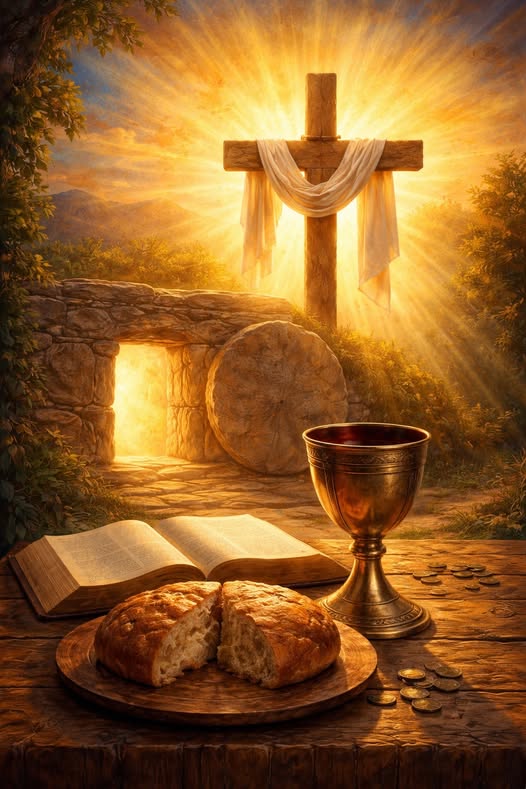
The reason for this first day pattern is not difficult to find. All four Gospels place the resurrection of Jesus on the first day of the week. That matters because the resurrection was not a minor detail in early Christian faith. It was the great turning point of redemptive history. Jesus had been crucified, buried, and then raised in victory. For the earliest Christians, this event confirmed His identity, vindicated His mission, and announced the defeat of death itself.
Because of that, the first day of the week took on special significance. Christians did not gather on Sunday because they were trying to imitate pagans or accommodate Rome. They gathered on Sunday because Christ rose on Sunday. The first day became the weekly reminder that the old age had been broken open by the risen Lord. It marked the triumph of the Gospel, and it naturally became the church’s primary day of assembly.
The Lord’s Day Was Already Christian Language
This resurrection-centered pattern helps explain why Christians came to speak of the first day in a distinct way. In Revelation 1:10, John refers to being in the Spirit on the Lord’s Day. At minimum, this shows that by the end of the first century there was already an identifiable day associated with the Lord in a way John’s readers would understand. Christians were not waiting for medieval councils to tell them that the first day mattered. The language was already there within the orbit of the New Testament itself.
That does not mean every question about Sabbath, continuity, and fulfillment is simple. Christians have debated those issues for a long time. Even so, the basic point remains clear. The first day of the week had already become a meaningful marker of Christian identity in the earliest generations of the church.
The Earliest Christians After the Apostles Confirm It
The historical evidence outside the New Testament points in the same direction. Ignatius of Antioch, writing in the early second century, speaks of Christians as living according to the Lord’s Day rather than according to the Sabbath. His statement matters because he is not writing in the fourth century or the medieval period. He is writing much closer to the apostolic world. His language reflects a church in which the Lord’s Day was already understood as a defining feature of Christian life.
Justin Martyr, writing around the middle of the second century, is even more explicit. In describing Christian worship, he says that believers gathered on Sunday because it was the day on which Jesus rose from the dead. That explanation matters because it gives the reason plainly. Justin does not connect Sunday worship to paganism, imperial policy, or later Catholic claims. He connects it directly to the resurrection. The sources closest to early Christianity therefore undermine the claim that Sunday worship was a much later Roman invention.
Constantine Did Not Invent Sunday Worship
Constantine often appears in these discussions because in A.D. 321 he issued a civil decree referring to the venerable day of the sun. That fact is real, but the conclusion often drawn from it is false. Constantine’s decree did not create Christian Sunday worship. It came long after Christians had already been gathering on the first day for generations. The decree tells us something about imperial law and Roman public life, but it does not tell us that Christians only began worshiping on Sunday because Constantine commanded it.
This is a good example of how bad history is often made. A real historical detail is lifted out of context and then used to erase the earlier evidence. Once the New Testament and second-century writers are put back on the timeline, the Constantine theory falls apart. He may have recognized the importance of Sunday in public policy, but he did not originate it in the church.
The Paganism Charge Does Not Hold Up
The claim that Sunday worship comes from pagan sun worship also fails under scrutiny. The Roman world did contain sun cults, and Roman language for days of the week reflected older deity associations. But a similarity in wording does not prove the origin of Christian worship. Early Christians did not explain their Sunday gatherings by appealing to the sun, Sol Invictus, or any pagan deity. They explained Sunday by pointing to the resurrection of Jesus Christ.
That distinction matters. The earliest Christian rationale is not hidden. It is plainly stated in the sources. When believers gathered on the first day, they did so because that was the day the tomb was found empty and the risen Christ appeared. The paganism argument depends on guilt by association. It sounds dramatic, but it ignores what the earliest Christians actually said about themselves.
What About the Sabbath?
At this point some people will still ask whether honoring Sunday means the Sabbath has been moved, replaced, or fulfilled. That is a broader theological discussion, and Christians have answered it in different ways. Some traditions speak of the Lord’s Day as the Christian Sabbath. Others stress that first day gathering reflects the new covenant pattern without calling Sunday a transferred Sabbath in the strict sense. Still others emphasize fulfillment language more strongly.
What matters for this lesson is that none of those debates rescue the historical claim that Rome invented Sunday worship. Even Christians who disagree on Sabbath theology still have to reckon with the fact that first day worship appears in the New Testament and is confirmed by the earliest post-apostolic sources. The idea that Sunday worship began as a later Roman corruption is not a serious reading of the evidence.
Why This Matters
This issue is about more than one day on the calendar. It is about whether Christians will let slogans and repeated claims replace careful reading of Scripture and history. Confident assertions can spread quickly, especially when they flatter people into thinking they have uncovered a hidden truth that the rest of the church somehow missed. But confidence is not the same thing as evidence.
When the evidence is allowed to speak, the picture is much clearer.
The earliest Christians gathered on the first day of the week. They did so because Jesus rose on the first day of the week. They called it the Lord’s Day because the risen Lord had transformed their understanding of worship, time, and hope. That pattern was not imposed on the church by medieval Rome. It emerged from the heart of the apostolic Gospel itself.
Conclusion
Christians worship on Sunday because the resurrection changed everything. The first day of the week became the church’s regular gathering day not through pagan corruption or papal decree, but through the lived reality of the risen Christ and the practice of the earliest believers. The New Testament shows it, the early church confirms it, and the historical timeline leaves no room for the claim that Rome invented it centuries later. Whatever larger Sabbath theology one holds, the idea that Sunday worship began as a Roman Catholic corruption simply does not match the evidence.
Discussion Questions
- Why do Acts 20:7 and 1 Corinthians 16:2 matter when evaluating the claim that Sunday worship was invented centuries later?
- How does the resurrection of Jesus on the first day of the week help explain why early Christians gathered on Sunday?
- Why is the testimony of writers like Ignatius of Antioch and Justin Martyr important in answering claims about Constantine or the Roman Catholic Church creating Sunday worship?
- What is wrong with the argument that Sunday worship must be pagan simply because the Roman world also had forms of sun worship?
- How can Christians guard themselves against persuasive memes and slogans that sound historical but ignore the biblical and historical record?
Want to Know More?
- D. A. Carson, editor, From Sabbath to Lord’s Day: A Biblical, Historical and Theological Investigation
This is one of the strongest books on the exact question your lesson addresses. It works through the biblical material, the early church evidence, and the theological issues tied to Sabbath and the Lord’s Day, making it especially useful for answering the claim that Sunday worship was a late Roman invention. - Michael W. Holmes, The Apostolic Fathers: Greek Texts and English Translations
This volume is valuable because it gives you the early Christian texts themselves, including Ignatius and other post-apostolic writers. It is especially useful if you want to quote the earliest witnesses directly instead of relying only on later summaries of what they said. - Oskar Skarsaune and Reidar Hvalvik, editors, Jewish Believers in Jesus: The Early Centuries
This book helps place early Christian practice in its Jewish and post-apostolic setting. That makes it useful for showing that first-day Christian worship was not some late Roman corruption, but part of the lived reality of the early church. - Justo L. González, The Story of Christianity, Volume 1: The Early Church to the Dawn of the Reformation
This is a helpful broad church history source for putting the timeline in order. It helps readers see why claims about Constantine, the Papacy, and later councils fall apart once the actual sequence of church history is understood. - Everett Ferguson, Church History, Volume 1: From Christ to Pre-Reformation
Ferguson is especially helpful for careful historical grounding. This volume gives useful background on the life, worship, and development of the early church, which makes it a strong source for testing claims that Sunday worship was invented long after the apostolic era.
About the Author