The Christian idea of martyrdom begins with Stephen in Acts 7. The English word martyr comes from the Greek word martys, which means witness. The emphasis is not on the death itself but on the testimony that the believer refuses to abandon. Stephen openly proclaimed that Jesus was the Messiah and accused the religious authorities of rejecting God’s prophets and murdering the Righteous One. His speech enraged the crowd, and they dragged him outside the city and began stoning him.
What defines Stephen’s martyrdom is the way he died. As the stones struck him, Stephen prayed that Jesus would receive his spirit and then asked God not to hold the sin of his executioners against them. The Christian martyr does not seek revenge and does not sanctify violence. Instead, the martyr bears witness to Christ even while suffering injustice. Stephen’s death demonstrates loyalty to Christ and trust that God will ultimately judge those responsible.
This moment established the Christian meaning of martyrdom. The martyr is someone who remains faithful to Christ under persecution and refuses to deny the truth of the Gospel even when that faithfulness results in death.
The Pattern Established by Christ
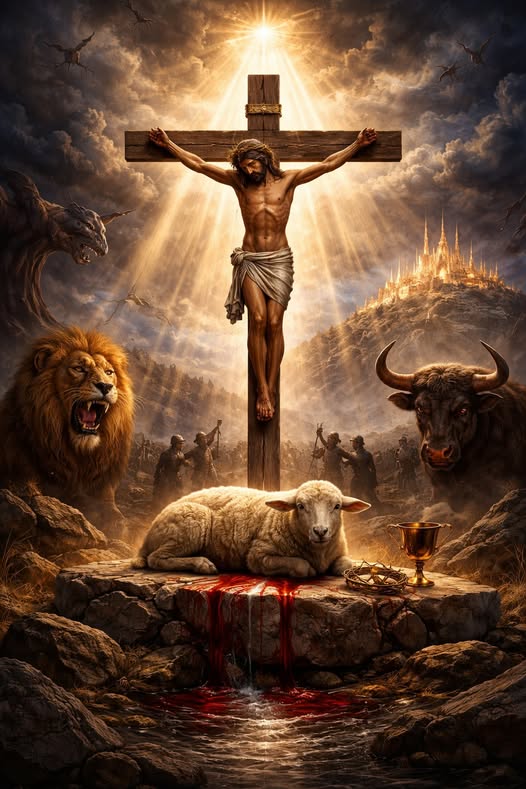
Stephen’s death follows the pattern established by Jesus during the crucifixion. Christ was executed by the authorities of His day, yet He did not attempt to defend Himself with violence or build His kingdom through force. Instead, He willingly accepted death while proclaiming the truth about God’s kingdom.
Even as He was dying, Jesus prayed for those who were killing Him. Stephen’s prayer echoes that moment. The Christian martyr therefore imitates Christ not only in suffering but also in mercy toward persecutors. Martyrdom in Christianity is understood as participation in the suffering of Christ rather than as a means of advancing the faith through conquest.
Because of this foundation, the early church never connected martyrdom with religious warfare or expansion through force. Martyrs were honored because they remained faithful to Christ when pressured to deny Him.
Christian Martyrdom and the Defense of Others
Christian martyrdom does not require a believer to remain passive in the face of evil. Scripture and Christian tradition recognize the legitimacy of defending others from injustice. Christians have sometimes died while protecting the innocent or resisting violence against those under their care.
The defining element of martyrdom is not the absence of all force but the refusal to deny Christ or abandon righteousness. A believer may act to protect others, yet if that faithfulness leads to death while remaining loyal to Christ, the death can still be understood as martyrdom. The martyr’s death, therefore, reflects devotion to Christ and love for neighbor rather than the pursuit of religious conquest.
Early Islamic Martyrdom and the Promise of Paradise
Islamic sources introduce martyrdom in a different framework from the Christian model seen in Stephen. While Islamic tradition does identify early believers who were killed during persecution in Mecca, the concept of martyrdom quickly became connected to participation in jihad. The Qur’an declares that those killed in the path of Allah are not truly dead but alive with their Lord, and the hadith literature expands this theme by describing the extraordinary rewards granted to those who die fighting for Islam.
One well-known example appears during the Battle of Badr, the first major military victory of Muhammad’s followers. According to Islamic tradition, a young man asked Muhammad what would happen if he were killed while fighting in the battle. Muhammad replied that he would enter paradise. The man immediately threw away the dates he had been eating, saying that if he waited to finish them it would take too long, and rushed into the fighting where he was killed.
Another figure associated with the battle, Harith ibn Surāqah, was killed during the conflict, and Islamic tradition records Muhammad assuring his mother that her son had entered the highest level of paradise. These stories illustrate the structure that emerges in Islamic texts. Martyrdom is tied directly to dying while participating in jihad, and the promise of immediate paradise becomes central to the concept.
This reward structure gives martyrdom a very different orientation from the Christian example seen in Stephen. Instead of witness under persecution, martyrdom becomes closely connected to dying within the struggle carried out on behalf of Islam.
How Shia Islam Transformed the Idea of Martyrdom
The concept of martyrdom developed further within Shia Islam through the memory of the death of Husayn ibn Ali at the Battle of Karbala in 680. Husayn, the grandson of Muhammad, was killed while opposing the Umayyad ruler Yazid. His death became the central tragedy of Shia history and the defining symbol of righteous suffering.
In Shia theology, Karbala transformed martyrdom from a battlefield category into a powerful spiritual and political narrative. Husayn’s death is remembered not simply as a military defeat but as a sacred act of resistance against tyranny. The story is commemorated annually during Ashura, when believers recall Husayn’s sacrifice and reaffirm loyalty to his example.
This transformation reshaped the imagination of martyrdom within Shia communities. Death in opposition to the enemies of the faith could be framed as participation in the same sacred struggle represented by Husayn. Martyrdom therefore became a symbol not only of battlefield sacrifice but also of resistance, suffering, and loyalty to the community.
Why Someone Like Khamenei Can Be Called a Martyr
This Shia framework explains why supporters could call Iran’s Supreme Leader, Ali Khamenei, a martyr if he were killed by Israel. Khamenei ruled a powerful state and directed political and military policy across the region, including support for militant groups aligned with Iran. Yet within the ideological framework of the Iranian regime, the conflict with Israel and other enemies is understood as part of the broader struggle of Islam against its opponents.
If such a leader were killed in that context, the death could easily be interpreted as martyrdom. The label would not depend on whether the individual died peacefully, proclaiming faith. Instead, it would depend on whether the death occurred within the struggle against the enemies of Islam. Through the lens of Shia martyr theology, the death could be framed as participation in the same tradition of resistance symbolized by Husayn at Karbala. The title martyr, therefore, transforms the death of a ruler into a sacred narrative tied to the ongoing struggle of the community.
Why the Two Concepts Cannot Be the Same
When Stephen and Khamenei are placed side by side, the difference becomes obvious. Stephen possessed no political authority, commanded no army, and exercised no coercive power. He proclaimed Christ and accepted death rather than deny the truth of the Gospel. His martyrdom revealed the character of Christ through forgiveness and faithful witness.
Khamenei, by contrast, ruled a state, directed military and political power, and participated in regional conflicts through proxies and allies. If supporters described his death as martyrdom, the term would not refer to peaceful witness in the face of persecution. It would refer to dying within the struggle against the enemies of Islam.
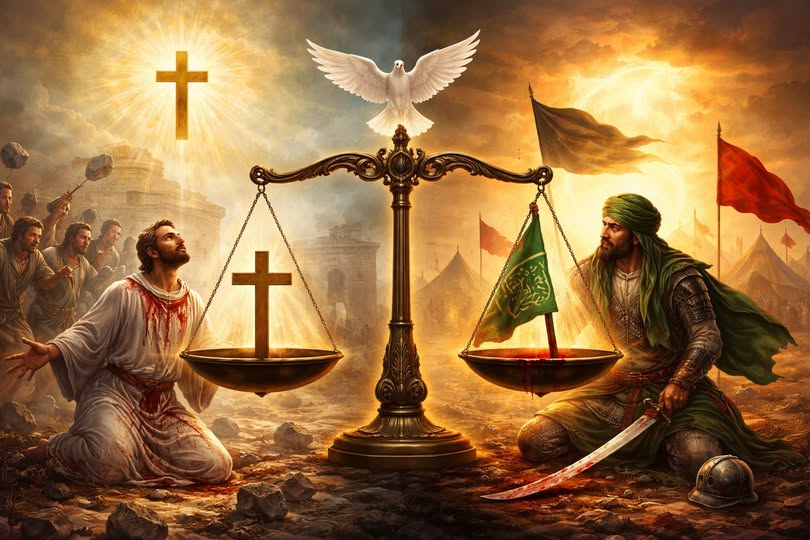
The same English word, therefore, describes two completely different theological ideas. Christian martyrdom is witness to Christ in the face of persecution. Islamic martyrdom, particularly in its Shia political form, is tied to dying within the struggle for Islam and the rewards promised to those who do so.
Conclusion
Stephen established the pattern that defines martyrdom in Christianity. The Christian martyr bears witness to Christ and remains faithful even when that witness leads to death. The martyr does not sanctify violence, pursue conquest, or promise spiritual reward for participation in religious struggle.
The claim that a ruler such as Khamenei could be called a martyr reflects a completely different understanding of the word. Within the Shia revolutionary framework, martyrdom is connected to the struggle against the enemies of Islam and the sacred memory of Karbala.
The two traditions may use the same English term, but the meaning behind it could hardly be further apart. Christian martyrdom reveals faithfulness to Christ through suffering. Shia political martyrdom transforms death in religious conflict into a sacred symbol of resistance.
Discussion Questions
- What does the death of Stephen in Acts 7 reveal about how the New Testament defines a martyr?
- How does the promise of paradise for those killed in jihad shape the Islamic understanding of martyrdom?
- In what ways did the story of Husayn at Karbala transform the concept of martyrdom within Shia Islam?
- Why would supporters of Ali Khamenei describe his death as martyrdom if he were killed by an enemy of Iran?
- When we compare Stephen’s death with the martyr framework used in Shia political theology, what differences appear in how each tradition understands suffering, loyalty, and religious struggle?
Want to Know More
- W. H. C. Frend, Martyrdom and Persecution in the Early Church
A classic historical study examining the development of martyrdom in the early church and the historical reality of persecution under the Roman Empire. Frend traces how the deaths of believers such as Stephen shaped the Christian understanding of witness, suffering, and faithfulness to Christ. - Bryan Litfin, Early Christian Martyr Stories: An Evangelical Introduction with New Translations
Litfin provides accessible translations of early martyr accounts such as the Martyrdom of Polycarp and the Passion of Perpetua and Felicity, along with historical commentary explaining how the early church understood martyrdom and why these stories mattered to Christian identity. - David Cook, Martyrdom in Islam
Cook explores the development of the Islamic concept of martyrdom from the Qur’an and hadith through later Islamic history. The book explains how martyrdom became closely tied to jihad and how the concept evolved in both Sunni and Shia traditions. - Vali Nasr, The Shia Revival: How Conflicts within Islam Will Shape the Future
Nasr explains the historical development of Shia Islam and the central importance of the martyrdom of Husayn at Karbala. The book shows how this event shaped Shia political theology and continues to influence modern Iranian ideology. - Joel Richardson, The Islamic Antichrist
Richardson analyzes Islamic eschatology and compares it with biblical prophecy. The book also examines how Islamic concepts of jihad, martyrdom, and messianic expectation differ from the Christian understanding of sacrifice and witness.
About the Author