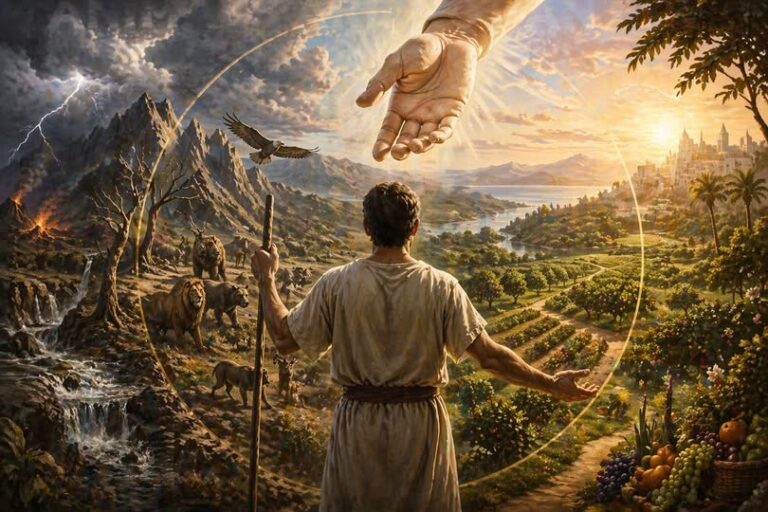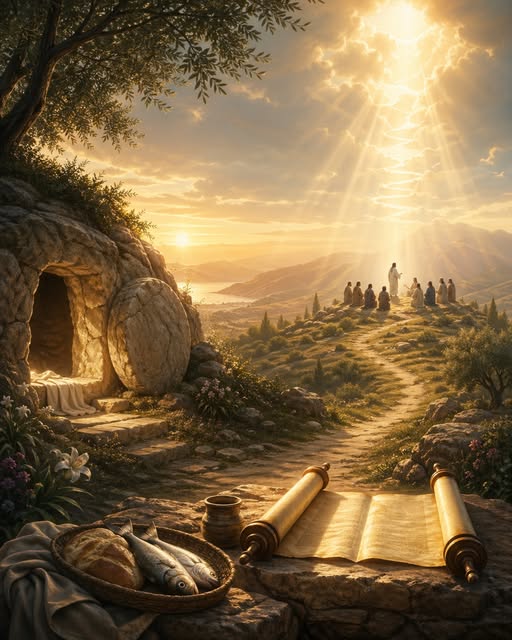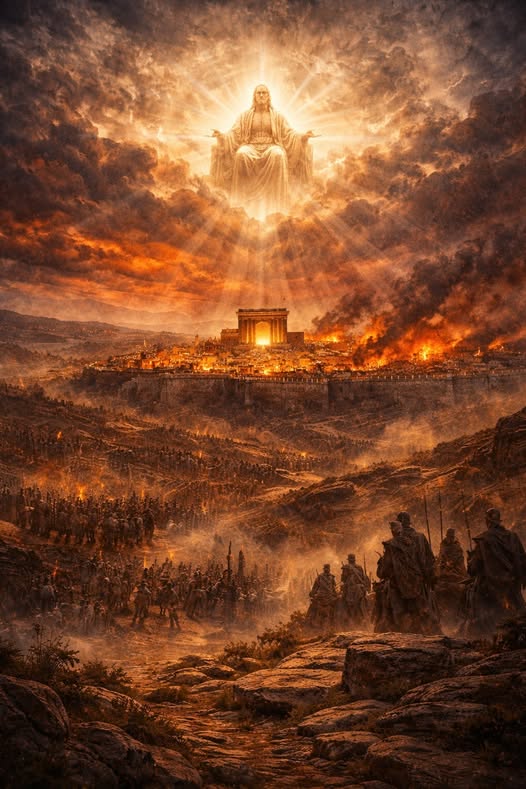
The moment of death is not presented in Scripture as a fading into nothingness, but as a crossing from one mode of existence into another. The biblical worldview assumes continuity of personal identity beyond physical death while also affirming that something real and significant changes. The body returns to the dust, yet the person does not cease. This distinction matters because it frames death not as annihilation, but as relocation. The question is not whether the believer continues, but where and in what condition that continuation occurs. Scripture consistently holds together both continuity and transformation, presenting death as a doorway into a different kind of embodied existence that awaits its final completion.
The Immediate Presence of Christ
The New Testament speaks with remarkable clarity about what happens to believers immediately after death, and that clarity centers on the presence of Christ. Paul does not describe a delay, a holding pattern, or a state of unconscious waiting. Instead, he states plainly that to be absent from the body is to be at home with the Lord. This language is relational, not abstract, and it assumes awareness and fellowship rather than silence or inactivity. His statement in Philippians that departing to be with Christ is far better only makes sense if that state involves real experience and communion.
Jesus reinforces this same reality in His promise to the thief on the cross, declaring that he would be with Him in paradise that very day. The timing is immediate and intentional. Christ does not offer a distant hope, but a present assurance. Taken together, these passages form a consistent pattern in which death becomes the moment a believer enters into conscious, personal fellowship with Christ without delay.
Paradise, Abraham’s Bosom, and the Language of Rest
Scripture uses several images to describe where the righteous go after death, and those images emphasize rest, comfort, and divine presence. Jesus’ description of Abraham’s Bosom presents a place of peace in contrast to the suffering of the unrighteous, while the term paradise evokes a restored garden, a place where God’s presence is once again experienced without barrier. These are not random metaphors, but intentional pictures drawn from the larger biblical narrative.
There is ongoing discussion about how these terms relate to one another, particularly in light of Christ’s resurrection and victory over death. Some see a distinction between a pre-resurrection holding place and the full presence of God, while others understand these descriptions as different angles on the same reality. What remains consistent across these views is that the righteous are received into a state of comfort and awareness, not left in darkness or unconsciousness. The emphasis is always on presence, not absence.
The Witness of the Early Church
The earliest Christian writers echo what is found in Scripture, reinforcing the belief that death brings immediate awareness and encounter. Ignatius of Antioch expresses a longing to depart and be with God, reflecting the same confidence found in Paul’s writings. His perspective is not speculative or uncertain, but grounded in the expectation that death leads directly into God’s presence.
Other early works, such as the Shepherd of Hermas, reflect the belief that souls encounter divine evaluation after death. This does not introduce a new concept, but builds on the biblical pattern that death leads to accountability as well as presence. The early Church did not treat death as a pause in existence, but as a decisive transition into a new phase of relationship with God.
Encounter, Accountability, and the Reality of God’s Presence
The biblical picture of life after death is not merely about location, but about encounter. The believer does not simply arrive somewhere new, but comes face to face with the God they have trusted. Hebrews speaks of judgment following death, and while that reality carries weight, it is not presented as terror for those in Christ. Instead, it is the unveiling of what has already been secured through Him.
This encounter brings clarity. Faith becomes sight, and what was once believed is now fully experienced. Christian tradition has often described this moment as overwhelming, not in fear, but in the intensity of divine presence. While Scripture does not indulge in detailed speculation, it consistently points to the reality that standing before God is transformative. The believer is not lost in that moment, but fully known.
The Communion of Saints
Death does not isolate the believer from others, but brings them more fully into the community of God’s people. The doctrine of the Communion of Saints reflects the idea that all who belong to Christ remain united in Him, regardless of whether they are living or have passed on. This unity is not broken by death, but deepened.
Hebrews describes a heavenly assembly that includes angels and the spirits of the righteous made perfect, presenting a picture of an ongoing, active community. This challenges the idea that the afterlife is solitary or detached. Instead, it is relational, both vertically with God and horizontally with His people. The believer enters not only into the presence of Christ, but into the fullness of His gathered people.
The Intermediate State and the Promise of Resurrection
While Scripture clearly teaches that believers are with Christ immediately after death, it also insists that this is not the final state. The ultimate hope of Christianity is not disembodied existence, but resurrection. Paul’s teaching in 1 Corinthians makes it clear that the final victory over death involves the transformation and restoration of the body, not its permanent absence.
This creates a tension that Scripture holds together without contradiction. The believer is fully with Christ after death, yet still awaits the resurrection of the body and the renewal of creation. The current state is complete in terms of relationship, but not yet complete in terms of the full restoration God has promised. What begins at death reaches its fullness at the resurrection.
Conclusion
The biblical and early Christian witness presents a unified and compelling picture of what happens immediately after death for the believer. Death is not the end of awareness, nor is it a period of unconscious waiting. It is an immediate transition into the presence of Christ, where the believer experiences conscious fellowship, divine encounter, and inclusion in the community of the redeemed.
At the same time, this is not the final destination of the Christian hope. The promise of resurrection reminds us that what begins at death is only the beginning of what God intends. The believer moves from earthly life into Christ’s presence, and from that presence toward the full restoration of body and creation. This twofold hope transforms the way death is understood. It is no longer an unknown abyss, but a doorway into communion, followed by a future that is even greater than what lies immediately beyond it.
Discussion Questions
- Paul describes being “away from the body” as being “at home with the Lord.” How does this shape the way Christians should think about death, especially in contrast to views that teach soul sleep or unconsciousness?
- Jesus tells the thief on the cross that he will be with Him in paradise “today.” What does this passage reveal about the timing of the believer’s experience after death, and how does it challenge delayed or purely future-focused views of the afterlife?
- Scripture presents both an immediate presence with Christ and a future bodily resurrection. How do these two realities fit together, and why is it important not to collapse one into the other?
- The doctrine of the Communion of Saints teaches that believers remain united in Christ even after death. How should this influence the way Christians understand fellowship, loss, and the ongoing unity of the Church?
- If death is described as an encounter with God rather than simply a change of location, how should that shape the way believers live now, especially in terms of faith, obedience, and readiness?
Want to Know More
- N.T. Wright, Surprised by Hope
A clear and accessible treatment of the Christian hope that corrects common misunderstandings about heaven, resurrection, and life after death. Wright is especially helpful for holding together the immediate presence with Christ and the future resurrection. - Randy Alcorn, Heaven
A comprehensive and readable exploration of what Scripture teaches about heaven, the intermediate state, and eternal life. Alcorn does a strong job of gathering biblical data and addressing common questions about what believers experience after death. - John W. Cooper, Body, Soul, and Life Everlasting: Biblical Anthropology and the Monism-Dualism Debate
A detailed theological defense of conscious existence after death. Cooper carefully engages competing views and argues that Scripture supports both an intermediate state and a future bodily resurrection. - Oscar Cullmann, Immortality of the Soul or Resurrection of the Dead?
A short but influential work that contrasts Greek philosophical ideas with the biblical teaching on resurrection. Cullmann helps clarify why the Christian hope is not merely the survival of the soul, but the full restoration of the person. - J. Todd Billings, Rejoicing in Lament
A pastoral and deeply theological work that connects suffering, death, and hope in Christ. Billings helps ground the doctrine of life after death in real-world experience, showing why the promise of being with Christ matters in the face of mortality.
About the Author