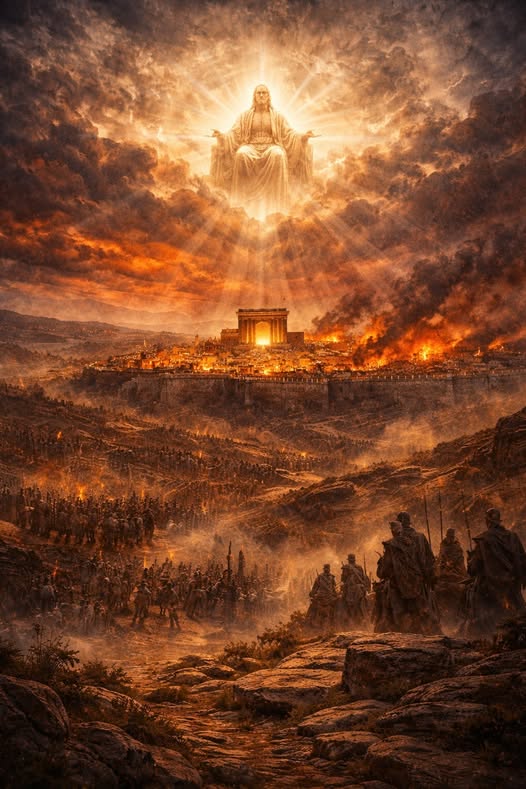
The death and resurrection of Jesus Christ stand at the center of Christianity, not as abstract theology, but as a claim rooted in history. The New Testament does not present these events as symbolic truths or private visions. It presents them as public, verifiable realities that took place in a specific time, under a specific government, in front of identifiable witnesses. When examined closely, the convergence of eyewitness testimony, historical context, physical evidence, and human behavior creates a cumulative case that is extremely difficult to dismiss without introducing far greater problems.
A Public Event, Not a Private Vision
From the beginning, the resurrection was proclaimed as something that happened in history, not something experienced internally. In 1 Corinthians 15:3–8, Paul preserves what is widely recognized as an early creed, likely circulating within just a few years of the crucifixion. In that passage, he names specific witnesses: Peter, the Twelve, over five hundred people at one time, James, all the apostles, and finally himself.
This is not how legends are written. Legends drift into vague language and distant timelines. Paul does the opposite. He anchors the claim in identifiable individuals, many of whom were still alive when he wrote. He is, in effect, inviting verification. The resurrection was not preached in a corner. It was proclaimed in the very region where Jesus had been executed, among people who could challenge the claim if it were false.
Multiple Accounts Without Artificial Harmony
The four Gospels present the same core event from different perspectives, and that is exactly what we would expect from independent witnesses. Matthew emphasizes fulfillment of prophecy and records appearances in Galilee. Mark, in its earliest form, ends abruptly with the empty tomb, emphasizing the shock and fear of the moment. Luke provides detailed narrative movement, including the road to Emmaus. John offers deeply personal encounters, such as Mary Magdalene in the garden and Thomas touching Christ’s wounds.
If these accounts had been artificially harmonized, they would read with forced precision, every detail aligned and every sequence identical. Instead, they display the natural variation of eyewitness testimony. The differences are not contradictions but perspective. They agree on the central facts: Jesus died, His tomb was found empty, and He appeared alive to His followers.
The Disciples: From Fear to Unbreakable Conviction
Before the resurrection, the disciples are not portrayed as bold or unshakable. They scatter at Jesus’ arrest. Peter denies Him publicly. They hide behind locked doors out of fear. Afterward, something changes dramatically. These same men begin proclaiming that Jesus is risen, not in safe environments, but in hostile ones. They do so in Jerusalem, where the events had just taken place. They endure imprisonment, beatings, and eventually death. What they do not do is recant.
People may die for something they believe is true, even if they are mistaken. People do not willingly suffer and die for something they know they fabricated. If the resurrection were a lie, the disciples would have been in the unique position of knowing it was a lie. Yet there is no evidence of collapse, no confession under pressure, no competing story emerging from within their ranks. Instead, their testimony remains consistent and costly.
The Physical Reality of the Crucifixion
Roman crucifixion was not a symbolic punishment. It was a brutal and efficient method of execution designed to ensure death. Before reaching the cross, Jesus was scourged, a process that alone could be fatal due to blood loss and shock. The crucifixion itself caused progressive suffocation, as the victim struggled to breathe while suspended.
The Gospel of John records that a Roman soldier pierced Jesus’ side, producing a flow described as “blood and water.” This detail has drawn attention because it aligns with what would be expected if fluid had accumulated around the heart or lungs, indicating death rather than survival.
The Romans were not amateurs at execution. Their authority depended on their ability to carry out sentences decisively. The idea that Jesus survived crucifixion, convinced hardened Roman soldiers He was dead, and then later appeared as the risen Lord to His followers does not solve the problem. It creates a far less plausible one.
The Secured Tomb and the Empty Grave
The burial of Jesus was not hidden or uncertain. He was placed in a known tomb belonging to Joseph of Arimathea, a member of the council. A large stone sealed the entrance. According to Matthew’s account, a guard was posted, and the tomb was sealed to prevent tampering.
These measures were taken precisely because there was concern about claims of resurrection. Ironically, they strengthen the case rather than weaken it. If the body had been stolen, the presence of guards and an official seal would have made that extremely difficult. If the authorities had the body, they could have produced it immediately once the resurrection began to be preached.
Instead, the tomb was found empty, and the earliest explanation offered by opponents was not that the body was still there, but that it had been taken. That admission alone concedes the central problem: the body was gone.
Why the Alternatives Fail
Every alternative explanation attempts to account for part of the evidence while ignoring the rest. The hallucination theory cannot explain multiple group appearances or the empty tomb. The stolen body theory cannot explain the transformation and persistence of the disciples. The swoon theory cannot account for Roman execution practices or the condition of Jesus after crucifixion. The legend theory collapses under the early dating of the sources and the presence of named eyewitnesses.
Each alternative solves one issue by creating several more. The resurrection, while extraordinary, is the only explanation that accounts for all the data without forcing contradictions.
Conclusion
The crucifixion and resurrection of Jesus are not supported by a single line of evidence, but by a convergence of many. Early and public eyewitness testimony, independent yet consistent Gospel accounts, the radical transformation of the disciples, the medical certainty of death by crucifixion, and the empty tomb under guard all point in the same direction.
This is why the resurrection has endured not only as a matter of faith, but as a claim that continues to withstand historical scrutiny. For the early Christians, it was not merely a doctrine to be believed. It was an event they insisted had happened, one that reshaped their understanding of God, death, and the future of humanity. And that is what makes it so difficult to dismiss.
Discussion Questions
- Why is Paul’s reference to over five hundred witnesses in 1 Corinthians 15 important for understanding the resurrection as a historical claim rather than a private belief?
- How do the differences between the Gospel accounts support the idea of independent eyewitness testimony instead of weakening the case?
- What explains the dramatic shift in the disciples from fearful and scattered to bold and willing to suffer for their message?
- Why does the reality of Roman crucifixion matter when evaluating claims that Jesus may not have actually died?
- When you consider all the evidence together, which explanation best accounts for the empty tomb and the rise of early Christianity, and why?
Want to Know More?
- N. T. Wright, The Resurrection of the Son of God
This is one of the most substantial scholarly works ever written on the resurrection. Wright places Jesus’ resurrection within both Jewish and Greco-Roman views of the afterlife and argues that the rise of early Christian resurrection belief is best explained by the actual resurrection of Christ. - Gary R. Habermas and Michael R. Licona, The Case for the Resurrection of Jesus
This is one of the best accessible books for readers who want a clear presentation of the historical case. It walks through the major evidence, common objections, and the strength of the eyewitness testimony in a readable and structured format. - Michael R. Licona, The Resurrection of Jesus: A New Historiographical Approach
For readers who want a deeper academic treatment, this is an excellent next step. Licona focuses on historical method, how historians assess ancient claims, and why the resurrection deserves serious consideration as history rather than being dismissed beforehand. - Craig L. Blomberg, The Historical Reliability of the Gospels
Because the resurrection accounts are found in the Gospels, this book helps establish why those sources should be treated as historically credible. Blomberg addresses common skeptical arguments while defending the reliability of the Gospel tradition. - Brant Pitre, The Case for Jesus: The Biblical and Historical Evidence for Christ
This is a strong entry-level resource that tackles questions about authorship, dating, and the identity of Jesus. It helps readers understand why the Gospels are far earlier and more reliable than many assume.
About the Author