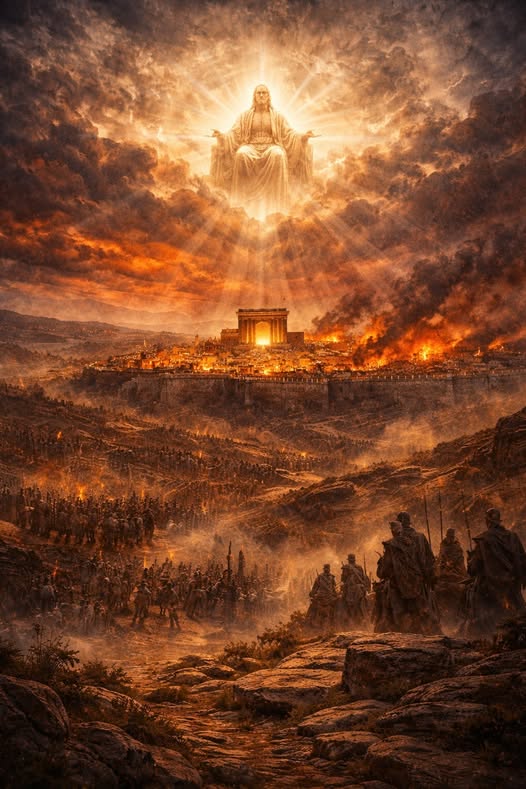
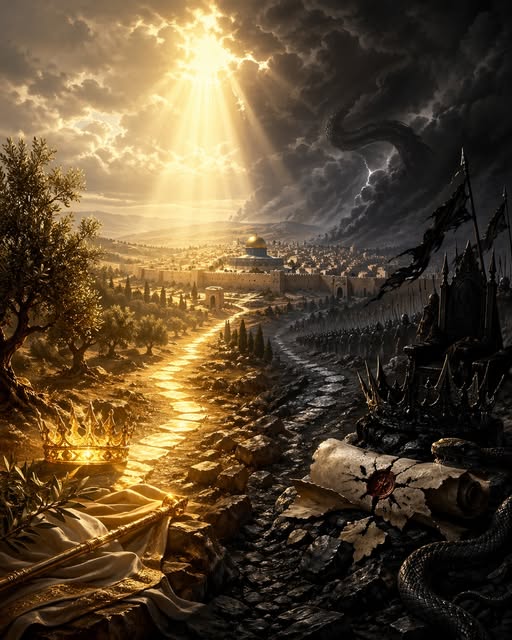
The Forgotten Realms setting in Dungeons and Dragons is often treated as neutral fantasy, a convenient backdrop for adventure with no theological weight. That assumption does not survive close examination when the setting is evaluated at the level of worldview rather than entertainment value. This is not a satanic panic argument. It is a worldview analysis. Forgotten Realms reflects the ancient pagan understanding of reality, one populated by many real spiritual powers with limited authority, territorial rule, and transactional worship, which Scripture identifies as the gods of the nations.
Christianity does not merely disagree with paganism over ritual practice or moral preference. It contradicts paganism at the level of authority, creation, morality, and history itself. The critical issue is not whether spiritual beings exist or whether they once exercised real power. The issue is whether those beings still possess legitimate authority after the Ascension of Christ. Forgotten Realms assumes they do. Christianity explicitly declares that they do not.
A Cosmos of Many Real Gods
In Forgotten Realms, the gods are objectively real beings who exercise genuine authority over the world. They govern peoples, lands, natural forces, war, fertility, death, magic, and culture, and their actions shape history in visible and concrete ways. Divine plurality is treated as the normal and continuing condition of reality rather than a temporary disorder or aberration.
Christian theology partially overlaps with this description before diverging decisively. Scripture affirms that real spiritual powers exist and that they once ruled nations and peoples in a delegated sense. Christianity departs from paganism by declaring that this authority has already been revoked. These beings still exist, still act, and still deceive, but they no longer rule legitimately. Forgotten Realms presents divine plurality as the way the world continues to function. Christianity presents it as the residue of a rebellion whose authority has already been stripped.
Creation as Cosmic Schism, Not Sovereign Act
At the foundation of Dungeons and Dragons cosmology, creation does not begin with a single sovereign will calling reality into existence through command. It begins with division and opposition. The universe emerges from the separation and conflict of two primordial serpents, Jazirian and Ahriman, whose schism generates the structure of existence itself. From this division arise Jazirian and Asmodeus, embodiments of ordered good and ordered evil, whose opposition defines the moral and cosmic framework of the world.
This model assumes moral symmetry at the deepest level of reality. Good and evil are coeval forces, equally foundational and equally necessary to the functioning of the universe. Order exists because these powers oppose one another, and conflict is treated as structural rather than aberrant. Christianity rejects this framework entirely. In the Christian worldview, creation begins with one sovereign Creator who brings reality into being from nothing and declares it good before any rebellion occurs. Evil is not a creative force, not a balancing principle, and not an ordered alternative. There is no such thing as ordered evil in Christian theology.
Ao and Pagan Creation Without Covenant
Above the pantheon of Forgotten Realms stands Ao, the Overgod, who creates Realmspace and its crystal sphere and establishes the boundaries and laws within which the gods operate. The gods do not precede this act and cannot escape it. Their authority exists entirely within a system they did not originate, and Ao enforces that system when it is threatened.
This does not move the setting toward biblical theology. It reinforces its pagan structure. Ao creates a bounded system and then withdraws from relational involvement. He does not dwell with creation, bind himself covenantally to a people, or judge the gods for injustice against humanity. His concern is stability and continuity rather than righteousness or redemption. Christianity does not allow for a highest authority who merely regulates corrupt rule. The Most High does not preserve a fallen system. He replaces it. The Ascension marks the removal of rival authority, not the management of it.
The Forgotten God Pattern
Ao fits a long-standing pagan instinct to acknowledge a highest authority while rendering that authority functionally irrelevant to daily governance. Greek religion acknowledged a supreme principle beyond the Olympians, yet practical devotion centered on the gods who actually intervened in human affairs. Canaanite religion placed El at the top of the pantheon while leaving real power in the hands of Baal and the other active gods. Supreme authority was affirmed in theory while denied in practice.
Forgotten Realms repeats this pattern precisely. Ao exists to explain why the gods are not ultimate while ensuring that their authority remains operational. Christianity breaks this pattern entirely. God is not distant, passive, or merely supervisory. He acts decisively within history to confront rebellion, judge corrupt rulers, and reclaim authority. The Ascension is the point at which this reclaiming occurs, not as a future hope but as an accomplished reality.
Territorial Rule and the Gods of the Nations
In Forgotten Realms, divine authority is explicitly territorial and ongoing. Gods claim cities, regions, races, professions, and political entities, and worship binds land and people together under divine jurisdiction. Prosperity and disaster are interpreted through divine favor and abandonment, and shifts in devotion result in shifts of power. This arrangement is treated as normal and enduring.
Scripture acknowledges that such an arrangement once existed, but it does not treat it as legitimate or ongoing. The nations were placed under other powers, and those powers rebelled. Their rule was real, but it was provisional. At the Ascension, authority over the nations is reclaimed. Christ is given dominion, not as a future aspiration but as a present reign. Forgotten Realms assumes territorial divine rule continues. Christianity declares that it has been superseded, even though resistance continues.
Worship as Mutual Dependency, Not Covenant
Worship in Forgotten Realms is transactional on both sides. Mortals offer loyalty, prayer, sacrifice, and obedience in exchange for protection, healing, and power. The gods require that worship to sustain their strength, relevance, and sometimes their continued existence. Divine power is not intrinsic. It is fueled by devotion, and gods compete for worship because survival depends on it.
Christian worship functions in the opposite direction. God does not need worship to exist, to rule, or to act. Worship is not fuel. It is response. The removal of rival authority at the Ascension also removes the legitimacy of all worship economies that sustain other powers. Continued demands for worship by other beings are not alternative claims. They are acts of rebellion against an authority that has already been established.
Alignment Without Moral Absolutes
Forgotten Realms contains real moral categories and clearly defined alignments. Good and evil exist as meaningful distinctions, and gods, creatures, and actions are consistently classified. What the setting lacks is a moral authority above the gods themselves. Alignment reflects perspective, consistency, and preference rather than holiness or moral perfection.
Christian theology rejects moral symmetry at the cosmic level. Evil is not a legitimate mode of order. There is no ordered evil. What appears organized in rebellion is temporary and parasitic, not a true moral structure. Morality is grounded in the character of God, and that standard now governs reality through the enthronement of Christ. Evil persists only as resistance to a reign that is already in effect.
Mortals as Instruments of Divine Rivalry
History in Forgotten Realms is driven by divine competition under conditions of instability. Gods struggle not only against one another but against loss of worship, loss of relevance, and erasure. The Time of Troubles demonstrated that gods are contingent, replaceable, and vulnerable to collapse, but it did not abolish divine authority as a category. The system survives because substitution is built into it.
Christian history is not cyclical rivalry. It is post-Ascension reality. The rulers have been disarmed, and their authority has been removed. What remains is resistance, deception, and delay rather than legitimate governance. Humanity is no longer caught between competing gods. It is called into allegiance to a King who already reigns.
Conclusion
Forgotten Realms preserves the ancient pagan imagination with remarkable consistency. Real spiritual powers rule real portions of reality, depend on worship for power and survival, rise and fall through replacement, and operate within a system designed to perpetuate divine rivalry. Authority is unstable but continuous, and the system itself endures even as individual gods are displaced.
Christianity declares something fundamentally different. The system itself has been judged. Authority has been taken. The gods of the nations no longer rule. Christ’s Ascension is not a promise of future dominion but the moment dominion was reclaimed. What remains is not balance, rivalry, or succession, but the outworking of a verdict already rendered. Forgotten Realms describes a world where the gods still rule. Christianity declares that they do not.
Discussion Questions
- Forgotten Realms assumes that real spiritual beings legitimately govern nations, territories, and aspects of reality through ongoing authority and replacement. How does the Christian claim that all rival authority was removed at the Ascension change the way history, politics, and spiritual conflict are understood?
- In Forgotten Realms, gods require worship to sustain their power and even their existence, creating a system of mutual dependency between mortals and the divine. How does the Christian understanding of worship as response rather than fuel reshape the meaning of devotion, obedience, and religious practice?
- The creation myth of Jazirian and Ahriman presents good and evil as coeval, structurally necessary forces within reality. How does the Christian rejection of moral symmetry and denial of “ordered evil” affect the way suffering, rebellion, and redemption are interpreted?
- Ao functions as a highest authority who stabilizes the divine system without judging the gods for injustice or dismantling their rule. How does this contrast with the Christian claim that Christ’s Ascension involved judgment, disarmament, and the removal of illegitimate rulers rather than their regulation?
- The Time of Troubles reveals that gods in Forgotten Realms are contingent, replaceable, and vulnerable, yet the divine system itself endures. How does this compare with the Christian assertion that the entire system of rival spiritual rule has already been judged and will not be replaced but brought to an end?
Want to Know More
- Michael S. Heiser, The Unseen Realm
This work provides the clearest biblical framework for understanding the gods of the nations, territorial spiritual rulers, and the divine council worldview that underlies both ancient paganism and settings like Forgotten Realms. Heiser carefully demonstrates that Scripture acknowledges real spiritual powers while also showing how their authority is judged and removed, especially through Christ’s resurrection and Ascension. - John H. Walton, Ancient Near Eastern Thought and the Old Testament
Walton explains how ancient peoples understood creation, divine authority, cosmic order, and the role of the gods. This book is essential for recognizing how Forgotten Realms mirrors ANE assumptions about reality being administered by multiple divine beings rather than ruled directly by a single covenantal Creator. - Clinton E. Arnold, Powers of Darkness: Principalities and Powers in Paul’s Letters
Arnold focuses on how the New Testament, particularly Paul, understands spiritual rulers, their former authority, and their defeat through Christ. This work is crucial for grounding the claim that authority was removed at the Ascension rather than merely promised for the future. - Gregory A. Boyd, God at War
Boyd provides a biblical theology of cosmic conflict that helps clarify the Christian rejection of moral symmetry and “ordered evil.” While differing with some conclusions, the book is valuable for showing how Scripture treats evil as rebellion within creation rather than as a coequal cosmic principle. - Tom Holland, Dominion: How the Christian Revolution Remade the World
Holland, writing as a historian rather than a theologian, demonstrates how radically Christianity disrupted and overturned pagan assumptions about gods, power, morality, and authority. This book helps readers see how deeply ingrained pagan cosmology remains in modern imagination, including fantasy settings, and how foreign the Christian worldview truly was and remains.
About the Author