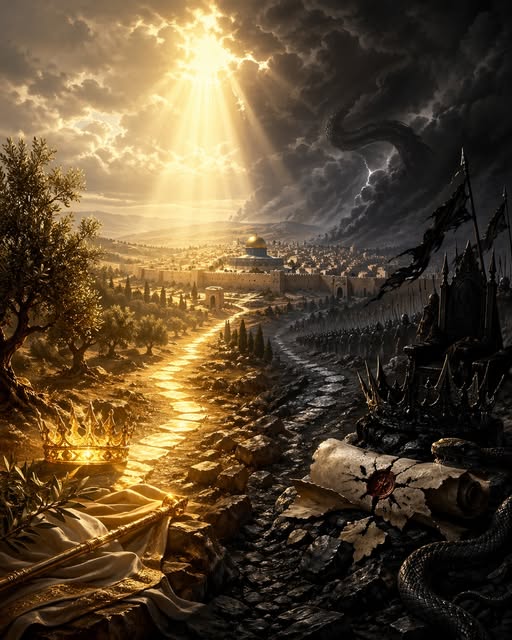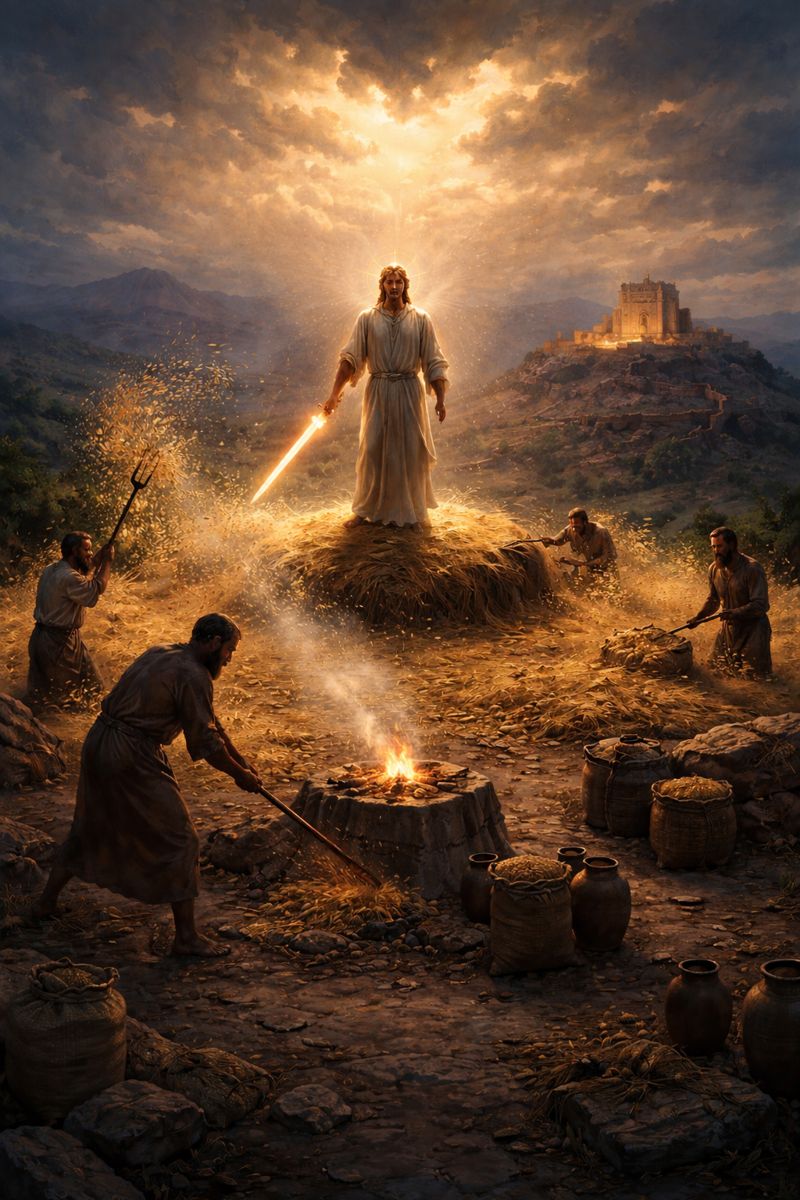
In the Ancient Near East, the threshing floor was never a neutral or merely agricultural space. While it functioned practically as a place to separate grain from chaff, its symbolic and religious meaning far outweighed its economic use. Across Mesopotamian, Canaanite, and biblical cultures, threshing floors were understood as liminal zones where the human and divine realms overlapped. These sites marked moments of judgment, covenant, death, kingship, and divine encounter, making them spiritually charged spaces rather than simple farm infrastructure.
This supernatural understanding explains why threshing floors appear repeatedly at decisive moments in Scripture and why those moments are consistently associated with divine presence, angelic activity, or covenantal turning points. The threshing floor was a place where order was imposed on chaos, where worth was separated from waste, and where the authority of heaven was enacted on earth.
Elevated Space and Cosmic Orientation
Threshing floors were intentionally built on elevated, exposed ground, often hilltops or ridgelines. This choice was not accidental. Wind was required to winnow grain, but elevation also carried symbolic meaning. In the ANE worldview, height corresponded to proximity to the divine realm. Mountains, high places, and raised platforms were universally associated with divine assembly and judgment.
By placing the threshing floor above the surrounding land, ancient peoples created a space that mirrored cosmic order. The grain was cast upward and allowed to fall, echoing the belief that judgment descends from above. This vertical symbolism reinforced the idea that what occurred on the threshing floor was overseen by divine authority rather than human decision alone.
Separation, Judgment, and Moral Symbolism
The act of threshing itself carried deep theological meaning. Grain was beaten, crushed, and thrown into the air so that the valuable kernel would be separated from the worthless chaff. This process became one of the most enduring metaphors for divine judgment in the biblical world.
Throughout Scripture, threshing language is used to describe Yahweh’s evaluation of nations, kings, and individuals. The righteous are preserved like grain, while the wicked are dispersed like chaff. This imagery assumes that the threshing floor is not merely symbolic but participates in divine judgment. It is a place where separation is enacted, not imagined.
This is why prophetic and apocalyptic texts repeatedly return to threshing imagery. The floor is where destinies are determined and where divine justice is made visible.
The Threshing Floor as Sacred Ground
Biblical narratives consistently portray threshing floors as sites of divine encounter. These encounters are not metaphorical. Angels appear, plagues are halted, covenants are established, and kingship is confirmed.
When David purchases the threshing floor of Araunah, he does so because it is already a recognized sacred space. The angel of Yahweh stands there with drawn sword, and the plague upon Israel stops precisely at that location. David’s sacrifice on the threshing floor is accepted immediately, and the site becomes the future location of the Temple. This transition is crucial. The Temple does not replace a secular site with holiness. It formalizes a space that was already understood to be holy.
Similarly, the Book of Ruth hinges on events at a threshing floor. Naomi sends Ruth there not merely for privacy but because the threshing floor functioned as a legal and covenantal space. Oaths, redemption, and lineage decisions were made there under divine witness. Boaz’s actions are framed as righteous precisely because the threshing floor was a place where Yahweh was understood to see and judge.
Kingship, Authority, and Legitimation
Threshing floors were closely tied to royal authority. Kings were often portrayed as threshers of enemies, separating order from chaos on behalf of the gods. This imagery appears throughout ANE royal inscriptions, where rulers describe themselves as those who crush opposition like grain underfoot.
In Israel, this symbolism is reoriented toward Yahweh as the true king. Human rulers act only as agents of divine authority. David’s kingship is affirmed at a threshing floor, not a palace. Solomon’s reign begins with the construction of the Temple on that same site. Authority flows from divine presence, not political power.
This pattern culminates in prophetic descriptions of the Messiah, who is portrayed as both king and cosmic judge, wielding the winnowing fork and threshing the nations. The threshing floor becomes a symbol of eschatological authority, where ultimate kingship is revealed.
Divine Council and Cosmic Order
In the ANE worldview, judgment was not solitary. It occurred within the context of the divine council. Decisions about fate, kingship, and punishment were rendered by heavenly assemblies, and earthly spaces that mirrored this order were considered especially sacred.
Threshing floors functioned as earthly reflections of this cosmic courtroom. They were places where verdicts were enacted rather than debated. This helps explain why angelic beings appear at threshing floors and why sacrifices offered there receive immediate response. The space itself was understood to be aligned with divine governance.
Later biblical texts preserve this worldview by portraying Yahweh as the supreme judge who renders decisions among the heavenly host and enacts them in the human realm. The threshing floor stands as a tangible reminder that heaven’s rulings are not abstract but are worked out in history.
From Agricultural Space to Eschatological Symbol
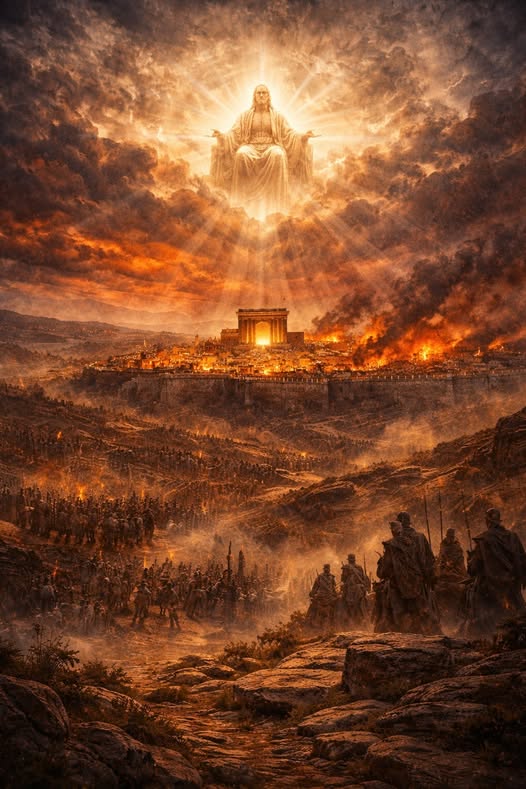
By the time of the Second Temple period, the threshing floor had become a fully developed theological symbol. John the Baptist’s warning that the Messiah would gather wheat and burn chaff assumes a shared understanding of the threshing floor as a place of irreversible judgment. This was not poetic flourish. It was covenantal reality.
Jesus inherits this imagery and intensifies it. Parables about harvest, separation, and final judgment all draw on threshing floor logic. The end of the age is depicted as the final winnowing, where divine justice is fully revealed and no further separation is possible.
Conclusion
The threshing floor in the Ancient Near East was never merely a place of labor. It was a sacred threshold where heaven and earth intersected, where judgment was enacted, and where divine authority was made visible. Its elevation, symbolism, and repeated appearance at moments of covenant, kingship, and divine encounter reveal a shared ancient understanding that separation requires divine presence.
Scripture does not invent this meaning. It redeems and clarifies it. By placing Yahweh at the center of the threshing floor imagery, the biblical authors affirm that judgment belongs to Him alone and that every act of separation, whether temporal or eternal, flows from His righteous rule.
Discussion Questions
- Why do you think the Ancient Near Eastern world consistently associated elevated spaces, such as threshing floors, with divine judgment and authority, and how does this challenge modern assumptions about sacred space being confined to temples or shrines?
- The act of threshing involves violent separation before nourishment is possible. How does this reality shape our understanding of biblical judgment imagery, and why might Scripture choose this process rather than gentler metaphors to describe divine evaluation?
- In narratives like David and Araunah’s threshing floor or Ruth and Boaz, the location itself carries theological weight. How does recognizing the threshing floor as sacred space change the way we read these passages?
- Ancient kings portrayed themselves as threshers who imposed order on chaos. How does Scripture both adopt and subvert this imagery in presenting Yahweh as the true king and human rulers as accountable agents rather than autonomous authorities?
- The threshing floor imagery extends into eschatological judgment in the New Testament. How does understanding its ANE background deepen or complicate modern Christian views of final judgment, accountability, and hope?
Want to Know More
- John H. Walton, Ancient Near Eastern Thought and the Old Testament
Walton provides essential background on how sacred space, judgment, order, and divine authority functioned in the Ancient Near East. His treatment of cosmic order and functional ontology helps explain why locations like threshing floors carried theological meaning beyond their economic role. - John H. Walton, Victor H. Matthews, and Mark W. Chavalas, The IVP Bible Background Commentary: Old Testament
This commentary offers culturally grounded explanations for biblical scenes involving threshing floors, sacrifices, and covenantal acts. It is especially useful for understanding how ancient audiences would have interpreted these locations as legally and spiritually charged spaces. - Michael S. Heiser, The Unseen Realm
Heiser’s work is foundational for understanding the divine council worldview that underlies judgment scenes, angelic appearances, and sacred geography in Scripture. His discussion of cosmic governance clarifies why certain earthly locations were understood to align with heavenly authority. - Othmar Keel, The Symbolism of the Biblical World
Keel explores how physical actions, locations, and images function symbolically in biblical thought. His work is particularly valuable for understanding agricultural metaphors like threshing as expressions of judgment, separation, and divine evaluation. - John Day, God’s Conflict with the Dragon and the Sea
Day examines how chaos, order, and divine victory are portrayed in the Old Testament using ANE imagery. While focused on cosmic conflict, his work helps frame threshing as an act of imposed order that reflects divine kingship and judgment over chaos.
About the Author